Planning a Girls’ Summit comes down to one hard question: how do you build a day students actually remember? Lectures and craft tables rarely pull it off. A mixed group of middle and high schoolers tunes out fast, and the room you wanted buzzing goes quiet. The numbers back up the worry. A 2022 Gallup poll found only 47% of K-12 students feel engaged with school.
The right activities flip that. Students in evidence-based Social and Emotional Learning programs posted an 11-percentile-point academic gain over their peers, according to research in the journal Child Development. Interactive, collaborative experiences do double duty. They build confidence and lift academic results. Pick activities built for participation, not observation.
Planning a girl empowerment event at your school? Our team game shows build confidence and connection, anywhere in NJ, NYC and CT.
Where Large Student Empowerment Events Usually Fall Apart
School counselors, administrators, and DEI coordinators run into the same wall with large student events. The hardest part is finding activities that scale from 20 to 200-plus students without losing personal meaning. Solo activities like journaling or vision boards have their place, but they rarely create a shared, high-energy experience. Students drift or feel lost in the crowd.
Facilitation is the other hurdle. An activity lives or dies on the energy of whoever runs it. Asking teachers to turn into professional event hosts on top of a full workload is a tall order. Without a clear format and an experienced host, even a strong plan slides into awkward silence or scattered chatter, and the day falls flat.
Three more constraints shape every plan. Budget comes first: enrichment funding is tight, and coordinators often have to justify the spend or chase a grant before they can book anything. Curriculum alignment comes next, since many districts want the day to map to an SEL framework like CASEL’s rather than read as a one-off party. Inclusivity is the third, because an activity has to land for students of every background, ability, and identity in the room, or it quietly leaves some girls on the sidelines. A format that misses any of the three looks fine on paper and stalls in practice.
What Makes a Girl Empowerment Activity Successful?
Strong empowerment activities run on active participation. They get students out of their seats and into teams, working toward a shared goal. That structure builds communication, sparks new friendships, and fills the room with real energy.
The best formats share three traits:
They are interactive. Students do the work, not just listen. They compete, create, present, and solve problems in real time.
They are collaborative. The activities demand teamwork and push students to lean on each other’s strengths. Real connection starts there.
They are skill-oriented. Past the feel-good factor, the best activities hand girls real skills in public speaking, critical thinking, leadership, and respect.
1. Team-Based Trivia & Game Shows
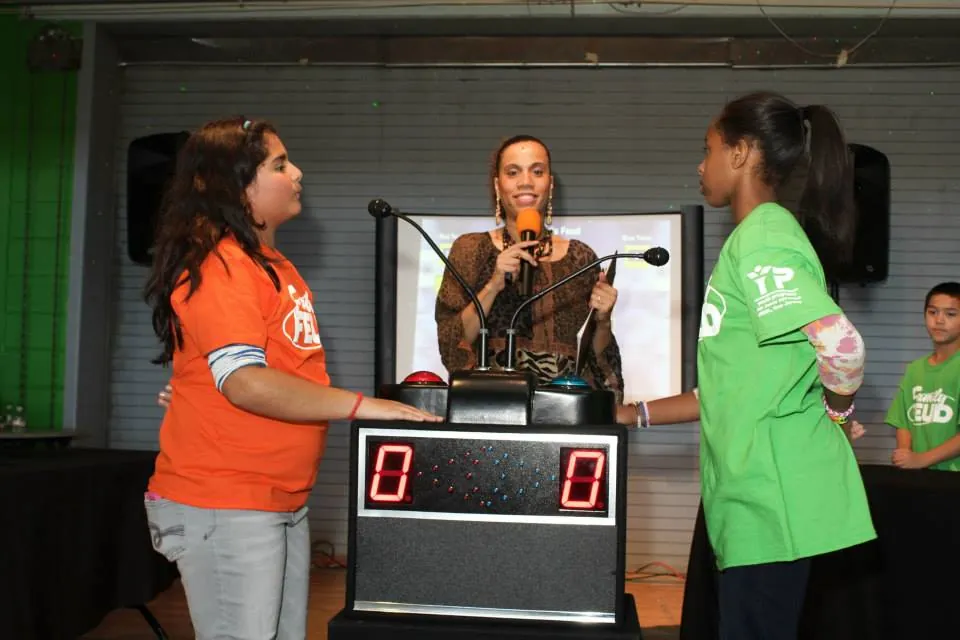
Nothing fills a room with energy like a professionally hosted game show. The format turns learning and teamwork into a live competition where every student has a buzzer and a reason to lean in. It’s PlayTyme Game Shows builds these events for schools across New Jersey and the New York City area. You get a complete, turnkey event run by an expert host, not a DIY kit. Founder Lisa Lawrence has personally run more than 3,000 events and knows how to command a room.
Formats like Face-2-Face Feud or custom trivia on women’s history, STEM leaders, and pop culture pull every student in. Teams buzz in together, debate answers, and think fast under pressure. Mixing students into new teams breaks up cliques and builds confidence through friendly competition. It’s PlayTyme Game Shows also backs the day with a 100% satisfaction guarantee.
2. “Shark Tank” Style Innovation Challenge
A “Shark Tank” style pitch competition asks small teams to spot a problem in their school or community and build a solution. Over a set time, each group brainstorms, drafts a simple action plan, and prepares a persuasive pitch for a panel of judges, whether teachers, administrators, or local leaders.
The format teaches public speaking, basic financial literacy, critical thinking, and teamwork against a deadline. It shows students their ideas carry weight and that they can drive real change. The competition keeps the energy high, and the final pitch gives every group its moment.
3. Mentorship Speed-Networking
Connecting students with real role models sits at the heart of empowerment. A mentorship speed-networking event puts a fast, high-energy spin on the traditional career day. Invite female professionals from tech, the arts, business, healthcare, and the trades. Seat students and mentors in two facing rows or in small, rotating table groups.
Set a timer for five to seven minutes per round, then ring a bell and rotate. Students meet a dozen career paths in under an hour. The structure takes the fear out of networking and gives girls a safe space to practice professional conversation and ask for real advice.
4. Improv and Public Speaking Activities for Girls
Fear of public speaking blocks confidence for a lot of young women. Improv workshops fix that by teaching communication in a no-stakes setting built on laughter and quick thinking. A facilitator leads games that reward spontaneous ideas, active listening, and backing up a teammate.
Students get comfortable thinking on their feet and speaking without a script. The point is participation, not perfection. An improv session warms up a larger summit or stands on its own, and students leave with real poise.
5. Skill-Building Stations
A rotational model packs several girl empowerment activities for school into one event. Split students into small groups and rotate them through stations every 30 to 45 minutes. The day keeps moving, and everyone finds something that clicks.
Strong stations include:
An Hour of Code: an intro coding lesson from a tech professional.
Financial Fitness: a crash course in budgeting, saving, and investing from a financial advisor.
Basic Self-Defense: a hands-on session on awareness and simple techniques.
Advocacy 101: a workshop on writing to an elected official or running a small campaign.
6. Collaborative Mural or Art Installation
Solo art projects can isolate students. A large collaborative piece does the opposite and unites the whole group around one lasting symbol of the day. Before the event, outline a simple, large-scale design on a canvas or a designated wall, built around the school’s values or the day’s theme.
During the event, students add to the piece in groups or in turns with paint, markers, and mixed media. The work builds teamwork and shared ownership. The finished mural stays up long after, a daily reminder of the day’s message of unity and strength.
Want every student involved and cheering? We can build game rounds around your empowerment themes.
The Future of School Events: Interactive and Experience-Based
The old assembly model is fading. Students raised on interactive media expect to take part, not sit and watch. Impactful school programming now runs on experiences that put doing, creating, and competing first. That means trading generic presentations for professionally run events built to hold attention and hit specific goals.
Real growth happens through interaction. A team competition, a hands-on workshop, or a shared art project all chase the same target: a story-worthy moment. Those are the events that build a positive school culture and send students home with stronger social skills and more confidence.
Choosing the Right Activity for Your Girls’ Summit
The right girl empowerment activities for your school depend on your goals, group size, and resources. Before you decide, put these questions to your planning committee:
What is our number one goal? Communication skills, teamwork, career exposure, or a high-energy shared experience? A clear answer points to the format.
How big is the group, and what space do we have? An event for 20 looks nothing like one for 200. Be honest about what your gym, auditorium, or classrooms hold.
Who runs it? Do you have the in-house expertise and the bandwidth for a complex, multi-part event? Or would students be better served by a turnkey, professionally hosted program?
What should students remember? Name the feeling and the message you want them to carry out the door. The activity should drive straight at that outcome.
For coordinators in New Jersey and New York who want a proven, low-stress option for large groups, a fully hosted game show delivers. It runs on maximum participation, takes zero work off your staff, and sends students home talking.
Frequently Asked Questions (FAQs)
What’s the ideal group size for a game show activity?
Game shows flex from 20 students to well over 200. The format splits a big audience into smaller competing teams, so every student stays an active player instead of a face in the crowd.
Can the game show content be customized for our school’s themes?
Yes. Questions and rounds get tailored to your curriculum, school-wide themes, Women’s History Month, or specific goals for your girl empowerment day.
How do you measure the success or impact of a girl empowerment event?
Start with the goal you set before the day and measure against it. Quick pulse surveys before and after capture shifts in confidence and connection. Counselors track participation rates, new friendships, and follow-up interest in clubs or mentorships. For a hosted game show, the clearest signal is simple: students still talking about it the next week.
How much space is needed for a game show event?
A school auditorium, gym, or large multi-purpose room works well. The setup uses a stage or presentation area for the host and equipment, with seating for the student audience. Exact needs depend on the format and group size.
What does “fully hosted” mean?
Fully hosted means the entertainment is handled start to finish: a professional host, all game equipment like buzzers and displays, the sound system, and an assistant to keep things running. You and your staff get to join in and enjoy the day.
A strong culture starts with clear, shared expectations. Frameworks like Positive Behavioral Interventions and Supports (PBIS) move the focus from punishment to teaching and rewarding the behavior you want.
Skip the long list of don’ts. Define three to five core values, such as Be Respectful, Be Responsible, and Be Safe, and teach what each one looks like in the hallway, cafeteria, and classroom. Recognize the students and staff who live them out. You build a common language that cuts down on confusion and conflict.
Students who feel seen by their teachers do better, academically and socially. Encourage staff to connect beyond the lesson plan.
Small habits matter. Greet every student at the door by name, run quick one-on-one check-ins, and show up at a game or recital. Give teachers practical training for building relationships, especially with students facing real challenges. When a student knows an adult in the building cares, their sense of belonging grows.
3. Implement a Peer Mentoring Program
Pairing older and younger students through a structured program pays off on both sides. High schoolers can mentor middle schoolers, and upper-elementary students can be reading buddies for the younger grades.
Older students gain responsibility and leadership. Younger students gain a role model and a friendly face in the hall. A well-run program builds cross-grade friendships and a stronger sense of community.
4. Create a Culture of Celebration
Celebrate success on purpose and in public. Go past the honor roll. Recognize academic growth, school values in action, acts of kindness, strong attendance, and wins outside the classroom.
Celebrate staff too, from a sharp lesson plan to a work anniversary. Use morning announcements, digital displays, bulletin boards, and newsletters to spread the word. When you reward effort and progress, not just top scores, more people feel valued.
5. Unify Your Community with Interactive School-Wide Assemblies
Daily habits build culture, but the right event speeds things up and creates a shared experience the whole school talks about. The problem is that most assemblies fall flat. Students sit, watch, and tune out. The fix is professionally produced, interactive programming that puts students at the center. A live, hosted game show turns a dead assembly into an event people actually take part in.
Companies like It’s PlayTyme Game Shows build these moments. Instead of a lecture, picture your students on stage, working in teams, and competing in fast-paced, TV-style games like Face-2-Face Feud, a custom trivia game built around your school, or quick physical challenges. The format produces laughter, friendly competition, and a real sense of team. With more than a decade of experience and more than 3,000 events, founder Lisa Lawrence knows how to get a whole room participating.
A fully hosted program takes the work off your staff and lets them join in alongside students. It works for kicking off a new year, rewarding good behavior, or re-energizing the building mid-semester. These events break down social barriers and spark real interaction between student groups and between students and faculty. It’s PlayTyme Game Shows backs every school event with a 100% satisfaction guarantee.
Ready for an event that builds school pride? We can theme every round around your school values.
Students who help shape their school care more about it. Go beyond student council. Build advisory committees that meet with administrators to weigh in on policies, events, and improvements.
Run surveys on climate and student needs. When students see their ideas put into action, they take ownership and pride in their school.
7. Enhance Parent and Community Involvement
Culture reaches past the building. Bring parents and the community in as partners. Host family events built on connection, not fundraising: cultural potlucks, family learning nights, a community service day.
Keep communication steady and positive across newsletters, social media, and parent apps. Parents who feel welcome become some of your strongest advocates and carry your values home.
8. Invest in Teacher Well-being to Boost Staff Retention
A burned-out staff cannot build a positive student culture, and every teacher who leaves is expensive to replace. Treat well-being as a retention strategy, not a perk. Administrators set the tone by backing their teachers: protect planning time, push collaboration across departments, and offer professional development teachers actually want.
Make room for staff to connect socially, and recognize their work. This framing also answers a hard budget question. Money spent keeping good teachers is money you do not spend recruiting, hiring, and training their replacements, so culture work reads as an investment, not an expense. A supportive adult culture is the base everything else stands on.
9. Improve the Physical Environment
Your building tells students and staff how much they matter. Major renovations may be off the table, but small fixes add up. Keep the school clean, well-lit, and in good repair.
Put students to work on murals, gardens, and art displays. A welcoming, well-kept space builds pride, safety, and respect.
10. Use Data to Guide Your Efforts
You cannot manage culture you do not measure. Run anonymous climate surveys with students, staff, and parents every year. Use the same tool each time so you can track progress.
Read the data to find your real strengths and gaps. That lets you stop guessing and target what your community actually needs. Share the key findings to build transparency and buy-in.
How to Put These School Culture Strategies Into Practice
A list of ten can feel like a lot. Start small, build momentum, and stay consistent. Do not launch all ten at once. Begin with a climate survey to learn your school’s specific challenges, then pick two or three areas for the year, such as reinforcing positive behavior and enabling student voice.
One challenge to plan for is a stretched, skeptical staff. Teachers will not embrace another initiative unless they see it lightening their load, so bring them in early, show how each change saves them time or stress, and let them help pick the focus areas. Buy-in grows when the work is built with staff, not assigned to them.
Then add a jolt of energy with one high-impact event. A school-wide interactive assembly works as a catalyst, creating a shared win that makes every other initiative feel possible. It builds social capital and reminds everyone, students and staff alike, that school can be a place of joy and connection. From there, build a multi-year plan, adding new layers as you lock in last year’s gains. Lasting change takes time, but every step forward counts.
School culture is the shared beliefs, values, relationships, and norms that shape a school. It is the feel of the building, and it drives everything from student achievement and well-being to teacher morale and retention.
Why is a positive school culture so important?
A positive culture links directly to better academic results, stronger student mental and physical health, and fewer discipline problems. It also makes school a better place to work, which helps keep good teachers from leaving.
How long does it take to see an improvement in school culture?
A high-impact event like an interactive assembly lifts morale right away. Lasting change takes longer. Apply positive strategies consistently and you will see real improvement within a school year, with deeper change over several.
What are some high-impact school culture activities?
High-impact activities include reinforcing shared values through a framework like PBIS, peer mentoring programs, public celebrations of growth and kindness, and student advisory committees. The biggest, fastest morale lift usually comes from a professionally hosted, interactive school-wide assembly, like a live game show that puts students on stage. It scales from a single grade of about 100 students to an all-school crowd of 500 or more, so the whole building shares one win.
How can we measure the impact of our school culture initiatives?
Start with anonymous annual climate surveys for students, staff, and parents. Track attendance, disciplinary referrals, and teacher retention to see the real effects over time.