

Friday energy is the most wasted resource in many offices. Gallup research shows that only a small share of employees feel actively engaged, and that disengagement peaks when the workweek drags to a quiet close. A well-run Fun Friday flips that script, sending people into the weekend laughing and connected.
The payoff is more than morale. Harvard Business Review reports that positive social moments at work raise both retention and output. A Brigham Young University study even found that fun, collaborative play correlated with a roughly 20 percent lift in team productivity. Fun Friday games are not a distraction from the work. They are an investment in it.
Running them in a large office is harder than it sounds. A self-run activity that works for a team of eight falls flat in a room of 200. Managers face scheduling conflicts, uneven turnout, awkward silences, and the risk that the same three extroverts dominate while everyone else checks email. The games below solve those problems, and a structured format solves them best.
The Essentials
- Fun Friday games flip end-of-week disengagement, sending people into the weekend connected and energized.
- A BYU study found collaborative play correlated with roughly a 20% lift in team productivity.
- Harvard Business Review links positive social moments at work to higher retention and better output.
- Activities designed for eight people fail in rooms of 200; large-office formats require different planning.
- Fun Friday is not a distraction from work but a measurable investment in team performance.
Why Fun Fridays Matter More Than You Think
A consistent Friday ritual builds culture week after week. It gives teams a shared moment to look forward to, which lifts mood across the whole week, not just the last hour. Regular play also breaks down silos, putting sales next to engineering and finance next to marketing. Those new connections pay off later when departments need to work together. A strong Fun Friday is quiet team building disguised as a good time.
The ritual also signals something to new hires. When a company protects time for fun, people read it as a sign the culture values them as humans, not just output. That message lifts recruiting and retention more than a single perk ever will. New employees remember their first great Fun Friday long after they forget the onboarding slideshow.
Fun Friday at Work Games for Large Offices
Big rooms need formats that scale. These games keep hundreds of people involved at once.
- Office trivia tournaments. Themed rounds on pop culture, sports, and company history work for any crowd size.
- Survey face-off shows. Two teams guess the top poll answers in a loud, fast format that fills a room.
- Quiz-board showdowns. A category grid with rising point values rewards both knowledge and risk.
- Minute challenges. Quick physical tasks with cups and balloons turn a quiet office loud in seconds.
- Music bingo. Players mark songs as a host plays clips, blending a concert vibe with a game.
- Department face-offs. Team rivalries between floors or units add friendly stakes and big cheers.
For a large office, team-based formats beat solo games every time. They keep the whole room active and stop a few loud voices from running the show.
What Stalls Most Self-Run Fun Friday Programs
Most do-it-yourself Fun Fridays hit the same walls. Spotting them early protects your turnout.
- Volunteer burnout. The same employee plans every week until they quit the role. A rotating duty or an outside host fixes that.
- Flat energy. An untrained host loses the room between rounds. Pacing is a skill, not an accident.
- Scaling failure. A game built for eight people stalls with 200. Large crowds need formats designed for scale.
- Uneven participation. Extroverts dominate while others disengage. Team play levels the field.
- Tech trouble. A frozen scoreboard or a dead mic kills momentum fast. Reliable equipment matters.
Each of these traces back to one root cause: a busy employee cannot also be a professional entertainer. A structured, hosted event removes that conflict.
Self-Run Activities vs a Professionally Hosted Fun Friday
Both approaches have a place, but they serve different sizes and stakes. This quick comparison shows where each wins.
| Factor | Self-Run Activity | Professionally Hosted Show |
|---|---|---|
| Best group size | Small teams | Large offices and all-hands |
| Planning effort | Falls on staff | Handled by the provider |
| Energy and pacing | Depends on volunteers | Driven by a pro emcee |
| Equipment | Improvised | Broadcast-style scoring and sound |
| Best for | Weekly quick wins | Milestones and big crowds |
Why a Hosted Game Show Wins for Big Companies
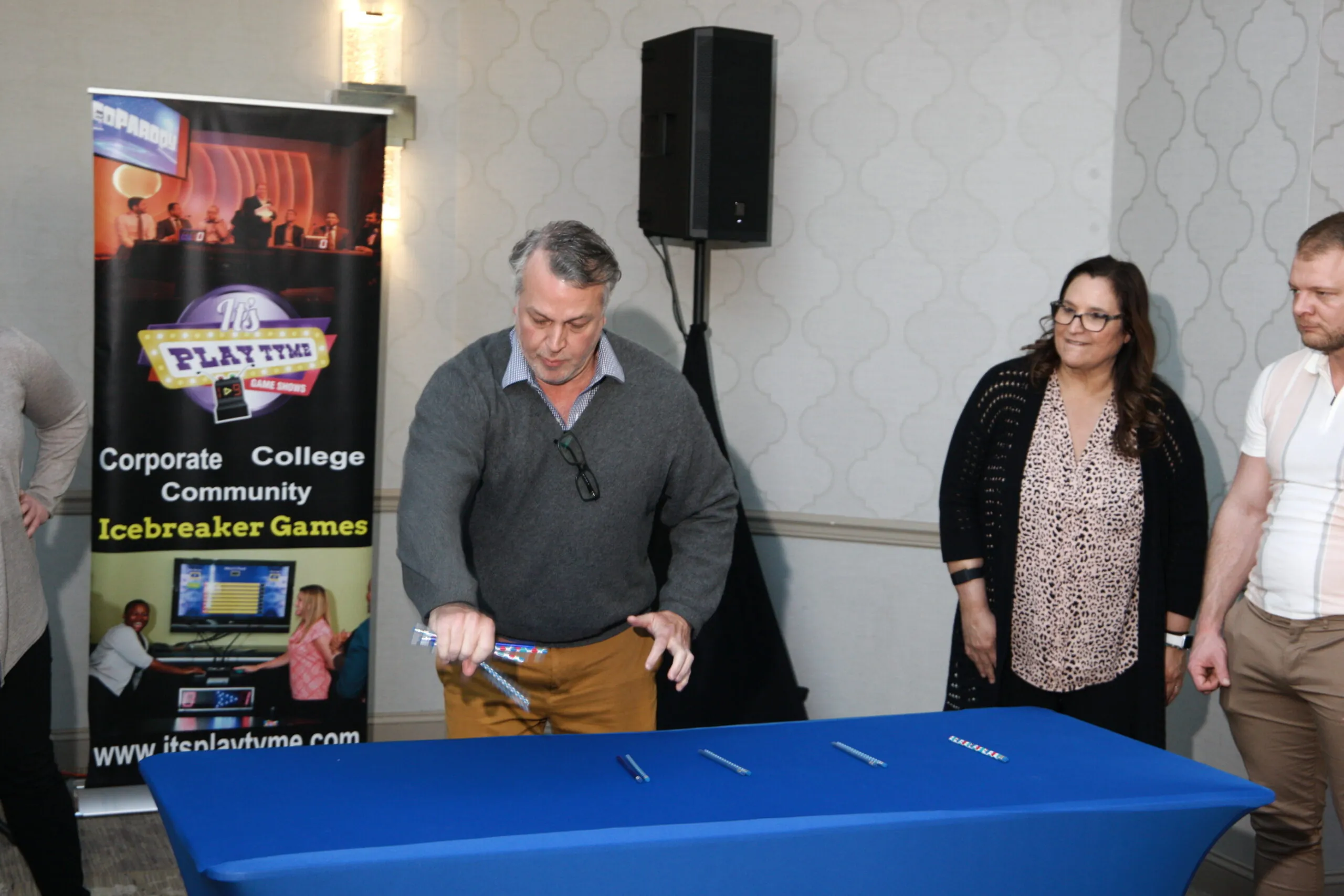
A large office needs more than a quiz printout and a willing volunteer. It needs a production. It’s PlayTyme Game Shows brings a professional emcee, real scoreboards, sound, and formats proven to hold a big crowd. The team runs corporate game shows across New Jersey, New York City, and Connecticut, scaling from a single floor to a full company all-hands. Your staff get to play instead of running the tech, and every department leaves the room talking about it.
The structured format is the advantage. A trained host keeps 200 people moving in sync, pulls in the quiet ones, and lands the jokes that make the event stick. That is something a rotating volunteer cannot reliably deliver week after week.
Make Fun Friday a Structured Event
When your office is ready to upgrade from improvised games to a real event, we make it simple. Tell us your headcount and goal, and we will design rounds that fit your culture and your space. Start on our contact page to check availability, or browse our corporate events formats to see a hosted Fun Friday in action. One great event sets the bar your team will want to hit again.
Which Fun Friday Format Fits Your Office
Decide based on size, frequency, and stakes. For a small team and a weekly habit, run a quick self-led trivia round or minute challenge. For a large office or a milestone Friday, bring in a hosted game show that scales and keeps everyone involved. Factor in your volunteers’ bandwidth honestly, since burnout kills more Fun Friday programs than budget does. Weigh the headcount, how often you want to run it, and how much it matters this week. Match the format to those three answers, and your Friday becomes the highlight of the week.
Frequently Asked Questions (FAQs)
What are good Fun Friday at work games for a large office?
Trivia tournaments, survey face-off shows, and department face-offs scale to hundreds of people at once. Team-based formats keep the whole room active and prevent a few loud voices from dominating. A music bingo round adds variety and a concert-like feel.
Do Fun Friday games really improve productivity?
Yes. Research links positive social moments at work to higher engagement and output, and one Brigham Young University study tied collaborative play to a roughly 20 percent productivity lift. Regular fun also boosts retention. The Friday game is an investment, not a distraction.
Should we run Fun Friday ourselves or hire a host?
Small teams can self-run quick weekly games, but large offices benefit from a professional host. An emcee handles pacing, scoring, and equipment for a crowd that volunteers struggle to manage. The choice comes down to headcount and how much the event matters.
How often should we hold Fun Friday events?
A weekly quick game keeps culture warm, while a hosted production fits monthly or quarterly milestones. Mixing both gives you steady energy plus a few standout events. Consistency matters more than size for building the habit.
How do we keep quiet employees involved on Fun Friday?
Use team-based formats instead of solo spotlights, and keep participation optional. When people play as a group, reserved staff join in without pressure. A skilled host also draws in the room without singling anyone out.