Every principal knows the sound of an assembly dying. Six hundred students file into the gym, the microphone squeals, and within ninety seconds the back rows are on their phones. The money is already spent. The room is already gone. That room matters more than the invoice: Attendance Works reports that at least 14.7 million students were chronically absent in the 2020-21 school year, almost double the pre-pandemic count, and students show up for buildings where they feel like they belong.
The budget math is just as tight. U.S. public schools spend an average of $18,614 per pupil, according to the National Center for Education Statistics, so every activity line competes with instruction. Anything you spend on school climate has to earn its place against that number.
So the question is not what a school assembly program cost looks like on paper. It is what the money buys once the doors close. This guide covers what shapes the cost of a professionally hosted, interactive game show, the budget lines districts actually use (student activity, PTA or PTO, PBIS reward funds, SEL and school climate), and how to size the request for your building.
Key Takeaways
School pricing is custom. Group size, show length, date, and location shape the quote.
Schools, PTAs, PTOs, and districts get pricing built for school budgets, so ask for a quote instead of working from corporate rates.
Participation beats attendance. A hosted game show puts students on the floor instead of in a lecture.
Per-student cost drops fast with scale. The fuller the room, the less each student costs.
Funding typically comes from the student activity account, the PTA or PTO budget, a PBIS reward line, or an SEL and school climate allocation.
Service area: New Jersey, New York City, New York State, and Connecticut.
Challenges That Quietly Drain an Assembly Budget Before the Mic Turns On
Corny openers lose the room before the budget does
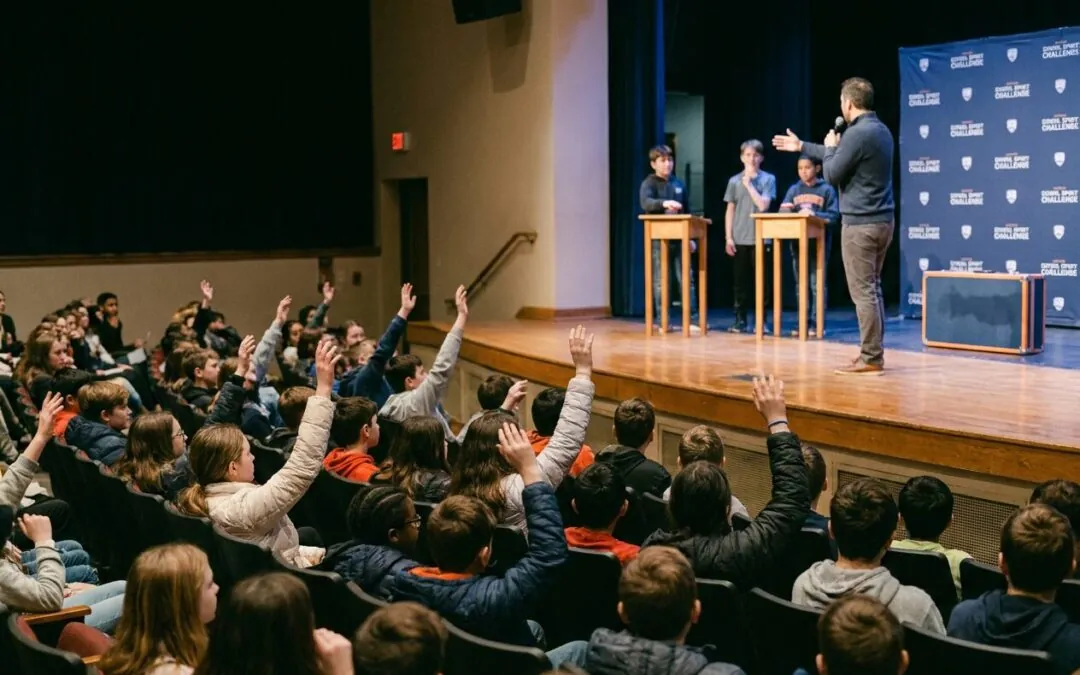
Middle and high school students read a forced opening activity instantly. The moment an adult tries too hard, arms cross and phones come out. A program that lands as childish wastes the entire spend, no matter how good the quote looked. What works is a format students already know from television, run by a host who lets the students be the funny ones.
Passive formats ask 300 teenagers to sit still
Most assembly budgets go to a solo speaker or a single performer. That model only asks the audience to listen. A gym full of teenagers will not hold focus on one voice for an hour, and staff end up walking the bleachers collecting phones instead of watching their students enjoy something. Flip the format so students compete, buzz in, and cheer for their homeroom, and the room polices itself.
One format rarely fits both sixth graders and seniors
A program built for elementary students dies in a high school gym, and the reverse is worse. Districts booking one vendor for several buildings need a vehicle that adjusts to the age of the room. Look for an interactive format that scales from 50 students in a cafeteria to 300 in a full gym without changing the core game.
Justifying an hour of instructional time
Money is only half the ask. The other half is the period you give up, and someone at the district office will want that hour defended. Tie the request to an outcome your school already tracks: attendance on the day of the event, referrals in the week that follows, or the climate survey question your building scored lowest on. An assembly that 600 students actually take part in gives you something to point at. A speaker they slept through gives you nothing.
Finding the budget line that pays for it
The price is rarely the blocker. The funding source is. Districts pay for assemblies from the student activity account, the PTA or PTO budget, a PBIS reward line, or an SEL and school climate allocation. Title I dollars carry their own restrictions, so confirm the source before you promise a date to your staff.
Getting the purchase order through the business office
A signed proposal is not a booking until the PO clears. Most business offices want a W-9 and a certificate of insurance first, and New York districts sometimes route enrichment purchases through a BOCES Co-Ser. Ask your business administrator which path applies in week one, not the week of the event.
What Shapes School Assembly Program Cost
School pricing is custom. It’s PlayTyme Game Shows builds quotes for schools, PTAs, PTOs, and districts around school budgets, not corporate rates. Every booking is a live game show run by a professional host, with the staging and sound brought in. Four things shape the number:
What Shapes the Quote
What It Means for Your School
Group size
A student council or club, one grade level in a cafeteria, or a full gym rally or Project Graduation night
Show length
A 60-minute show, or a 90-minute show for a longer assembly block
Date
June and December book out first
Location
New Jersey, New York City, New York State, and Connecticut; travel outside that area may add a fee
Your building provides the room, the students, and a standard power source. Ask for a school quote with your head count and date, and we will come back with a clear number.
Why a Live Game Show Moves a Gym That a Speaker Cannot
You want an engaged room and zero planning stress. A professionally hosted student engagement package for schools moves the entertaining off your plate. The formats are ones every student already understands: Face-2-Face Feud, Jeopardy-style trivia, and Name That Hit Song. No explanation needed, no warm-up required.
Everyone plays. Students who never raise a hand in class end up screaming for their homeroom. Teachers get pulled onstage and lose a little dignity, which students love. That shared hour is the whole point, and the game show is simply the vehicle that gets a gym there.
Founder Lisa Lawrence built the company on one idea: put real people in a room, give them a reason to compete, and they connect on their own. That has run across New Jersey, New York City, New York State, and Connecticut since 2012, across more than 3,000 live events. The students are the show. The host just keeps score.
What Corporate Budgets Teach Districts About Per-Student Cost
Administrators who look at how much corporate team building costs often assume schools pay the same premium. Corporate budgets carry offsite venues, catering, and travel. A school booking drops the same hosted experience into a gym you already own.
Run the team building cost per person math and the school case gets strong fast. Spread one hosted show across a full gym and the per-student cost drops well below what a corporate team pays per head. Same host, same formats, a much larger room.
How to Size the Right School Assembly for Your District
Start with the head count that will physically be in the room, not the enrollment number on the roster. A senior class kickoff or a single grade level is a very different room from a full middle school rally, a Project Graduation night, or an all-school celebration, and the quote reflects that.
Share that number when you ask for a quote. Confirm the funding line next, because a PBIS or SEL account clears the business office on a different timeline than a PTA check. Then check the calendar. June and December book out first, and the date decides more of these events than the budget does.
Ready to give your students an hour they still talk about on Monday? Get a quote and lock in your date. Every event is backed by a 100% satisfaction guarantee.
Frequently Asked Questions (FAQs)
How much does a school assembly program cost?
School pricing is custom. Schools, PTAs, PTOs, and districts get pricing built for school budgets, based on group size, show length (60 or 90 minutes), date, and location. Contact It’s PlayTyme with your head count and date for a clear quote.
Does the price change for a full gym versus one grade level?
Yes. Group size is the biggest factor in a school quote. A bigger room costs more in total, but the per-student cost drops as the room fills. Every booking covers the host, the staging, and the sound a full gym needs.
Can PBIS or SEL funds pay for a school assembly?
Those are two of the lines districts use most. Assemblies also get funded from the student activity account or the PTA or PTO budget, while Title I dollars carry their own restrictions. Ask your business administrator which line applies and whether a W-9 and certificate of insurance are needed before the purchase order clears. New York districts sometimes route enrichment purchases through a BOCES Co-Ser.
Booking the venue and picking the catering menu is the easy part. Add alcohol and the stakes change: Connecticut’s dram shop statute exposes a seller to $250,000 in damages per injured person and starts a 120-day written notice clock, while New Jersey and New York run on rules that look nothing alike. You want a room full of people laughing and connecting. Getting there means managing employer social host liability on purpose.
Quick answer: A company can be held liable if an employee drives drunk or gets hurt after drinking too much at the holiday party, especially under dram shop or social host laws like Connecticut’s. Hire a licensed bartender, kill the self-serve bar, offer strong non-alcoholic options, and build the night around an activity instead of the bar.
The National Highway Traffic Safety Administration describes responsible beverage service as server training combined with management policies that discourage excess drinking and impaired driving. NHTSA files those programs under countermeasures that still need further evaluation. Treat them as prudent practice, not a guarantee, and build the rest of your plan around the law in your state.
This guide is general information, not legal or tax advice. Confirm every detail with your own legal counsel or tax adviser before you finalize event logistics.
Approach or Jurisdiction
Who Can Be Liable
Key Statute
It’s PlayTyme Game Shows (activity-led party plan)
Licensed venue or caterer holds the primary service duty
Best practice, not a statute
New Jersey
Licensed server; adult social host in narrow cases
N.J.S.A. 2A:22A and 2A:15-5.5
New York
Anyone who unlawfully sells alcohol or assists in procuring it
GOL 11-101 (Dram Shop Act)
Connecticut
Seller who serves a person who is already intoxicated
C.G.S. 30-102
Cut Employer Social Host Liability by Hiring a Licensed Bartender
The fastest way to cut liability at a company party is to hand alcohol service to a licensed professional. A licensed caterer or an established venue carries the primary duty of responsible service, and they are staffed for it.
New Jersey’s Licensed Alcoholic Beverage Server Fair Liability Act (N.J.S.A. 2A:22A) governs licensed servers, including caterers, bars, and venues. Under that law, a licensed server is negligent only when it serves a visibly intoxicated patron or a minor it knew or should have known was underage.
Trained bartenders check IDs, measure pours, and stop serving guests who have had enough. That puts a professional between your company and the fallout from overservice. It also takes your HR team out of the role of bar monitor.
The 13-Point Company Holiday Party Liability Checklist
Work through this list before you send a single invitation.
Hire a licensed bartender. Employees should never mix their own drinks. Trained staff pour standard measures and cut off anyone who is visibly intoxicated.
Kill the self-serve bar. Coolers of beer and open wine bottles invite overconsumption, and nobody can track who drank what.
Use drink tickets or a short bar window. Two tickets per person sets a clear boundary. Closing the bar after the first hour moves the night toward dinner and the activity.
Serve real food. Heavy appetizers and a full dinner slow alcohol absorption. Put the food out the minute guests walk in.
Make the non-alcoholic options good. Stock real mocktails, craft sodas, and sparkling water. Designated drivers and non-drinkers get the same quality experience as everyone else.
Stop service early. Close the bar a full hour before the party ends, then bring out coffee and dessert.
Check IDs on every guest under 21. If interns or young hires are on the list, ID checks are mandatory. New York GOL 11-100 and Connecticut C.G.S. 30-89a both penalize furnishing alcohol to minors or letting them possess it on property you control.
Run a safe ride voucher program. Pre-purchase Uber or Lyft credits and hand the codes out at check-in. A paid ride home removes the reason to drive.
Put voluntary attendance in writing. State on the invitation that attendance is voluntary, and keep the holiday party off the work-requirement list. That one line changes your workers’ compensation picture.
Secure host liquor liability insurance 30 days out. Confirm in writing that your general liability and workers’ compensation coverage reaches off-site social events where alcohol is served, and ask your broker specifically about host liquor liability, the coverage that answers a claim from a guest who drank at your event.
Collect a certificate of insurance from every vendor. Ask the venue, the caterer, and the entertainment vendor for a COI naming your company as an additional insured, and read the indemnification clause before you sign. A contract with no indemnification language leaves your company holding the claim.
Name a sober host. Assign one manager or HR leader to stay completely sober. That person watches the room, handles the venue, and arranges a ride when a guest needs one.
Give the night a focus other than the bar. Idle crowds drink more. A structured, interactive activity holds attention and gets people competing instead of refilling.
State Laws: New Jersey, New York, and Connecticut
Liability depends on where you host. All three states treat a licensed seller differently from a private social host.
Under the New Jersey Social Host Liability Act (N.J.S.A. 2A:15-5.5 to 2A:15-5.8), the civil remedy against an adult social host is narrow and exclusive. The host faces liability only for willfully and knowingly serving a visibly intoxicated adult in their presence, or serving in reckless disregard of the consequences, when that person then causes a car accident.
New York draws no bright line for a private host who serves an adult, so those claims turn on ordinary negligence. The New York Dram Shop Act (General Obligations Law 11-101) gives anyone injured by an intoxicated person a claim against whoever unlawfully sold the alcohol or unlawfully assisted in procuring it. Dram shop act employer liability therefore follows the pour, not the invoice, which is why who serves matters more than who pays. Alcoholic Beverage Control Law 65 separately bars selling, delivering, or giving alcohol to anyone under 21 or to any visibly intoxicated person.
In Connecticut, C.G.S. 30-102 makes a seller liable for injuries caused by a person it served while intoxicated, subject to the $250,000 per-person cap above. The statute requires written notice within 120 days and suit within one year. Connecticut also treats recklessly permitting minors to possess alcohol on property you control as a misdemeanor.
Workers’ Compensation and Voluntary Attendance
The wording on your invitation drives your workers’ compensation exposure. If an employee goes down on the dance floor, the question becomes whether the party was part of the job.
New Jersey statute (N.J.S.A. 34:15-7) excludes injuries from recreational or social activities unless the activity is a regular incident of employment and produces a benefit to the employer beyond improved health and morale. A mandatory party stacked with business announcements and corporate awards reads very differently from a voluntary celebration.
New York Workers’ Compensation Law 10 excludes voluntary off-duty athletic activities unless the employer requires, sponsors, or pays for them. New York has no parallel rule written specifically for holiday parties, so ask your carrier how it handles employer-sponsored events.
The tax side is friendlier. Under IRC 274(e)(4), a holiday party held primarily for employees is an exception to the 50 percent limit on meal deductions. Your tax adviser can confirm how that exception applies to your event.
Make the Party About Something Other Than the Bar
At It’s PlayTyme Game Shows, we have used live game shows as the vehicle for connection since 2012. Attendance is not the measure of a good event. Participation is.
Give the room a real centerpiece and the bar stops being the main event. Our company holiday party entertainment takes the planning off your desk. Shows run 60 or 90 minutes for groups of 20 to 300+, and whether you pick Face 2 Face Feud or a custom trivia format, a professional host gets everyone playing and the whole room laughing together. For format inspiration, start with these office holiday party ideas.
We work with corporate and education clients across New Jersey, New York City, New York State, and Connecticut, with packages starting at $2,995. No deposit is required, and your date is reserved once the signed performance agreement is returned. No activity satisfies a legal requirement, but an engaged room makes responsible event management far simpler.
What Usually Goes Wrong at Company Holiday Parties
The same problems tend to surface every December. Plan for them now and you avoid the Monday cleanup.
Morale pulls against risk management. You want employees to feel celebrated, and an unchecked open bar turns that into behavioral issues HR has to sort out the next week.
Alcohol loosens behavior and HR inherits the conduct complaints. A party where drinking is the main activity raises the odds of inappropriate comments and unwanted advances, and those investigations land on your desk days later.
One room, four generations. A company party mixes 22-year-old new hires with executives in their sixties. Finding entertainment that lands with every age group is hard.
Remote and hybrid staff feel the room least. Employees who rarely come into the office walk into established cliques, and a mingling format built around the bar leaves them standing at the edge of it.
The post-dinner lull. Energy drops the moment dessert clears. With nothing structured to follow, guests either leave early or drift back to the bar out of boredom.
The committee ends up policing the room. When your planners double as security, they never get to enjoy the event they spent months building.
Lock Your Holiday Party Risk Management Policy Before Invitations Go Out
Review the venue contract, the catering plan, and the entertainment schedule together, not one at a time. Ask your committee one blunt question: is alcohol the entertainment?
Then decide three things and write them down. Who holds the license and the liability for overservice. What your coverage limits actually reach, confirmed by your broker rather than assumed. Which structured activity carries the room after dessert. Set the activity first, because the timeline follows the activity, not the other way around.
Ready to build a holiday event your team remembers for the right reasons? Contact It’s PlayTyme Game Shows to talk through your date and get a custom quote.
Can a company be held liable if an employee drinks too much at a holiday party?
It can. Depending on the state and the facts, an employer may face liability for furnishing alcohol to a visibly intoxicated person or a minor who then injures someone or damages property. Shifting service to a licensed venue or caterer moves the primary duty to a trained professional.
Do we need host liquor liability insurance for a company holiday party?
Ask your broker before you sign the venue contract. Host liquor liability is the coverage that responds when a guest claims harm from alcohol served at an event your company hosted without holding a liquor license. Pair it with a certificate of insurance from the venue and caterer naming your company as an additional insured.
Does hosting a party at a restaurant remove all employer liability?
No. A licensed restaurant takes on the primary dram shop duty through its trained bartenders. You still owe your staff a duty of care, so arrange safe transportation and step in when an employee is visibly impaired.
Should we make our office holiday party mandatory?
Mandatory attendance can change how the event is treated. In New Jersey, a social event that is a regular incident of employment and benefits the employer beyond morale can bring injuries under workers’ compensation, and other states differ. Stating in writing that attendance is voluntary, and checking with your carrier, keeps the picture clear.
How do we engage employees at a holiday party without relying on an open bar?
Build the timeline around an interactive group activity instead of passive drinking. A live, professionally hosted game show gets people out of their seats, sparks friendly competition, and gives the room a focal point that needs no alcohol to work.
Do you require a deposit to book holiday party entertainment?
No deposit is required. Your date is reserved once the signed performance agreement is returned, and the host running your event is named in that agreement.
An HR lead with offices in Newark, Manhattan, and Stamford runs three training calendars at once. New York Labor Law Section 201-g requires interactive sexual harassment prevention training for every employee, every year, at every employer with one or more workers. Connecticut General Statutes Section 46a-54(15) sets a different bar: two hours of training for employers with three or more employees, delivered within six months of hire. New Jersey legislates neither.
Handing out a printed policy does not satisfy New York. Neither does playing a video that nobody monitors.
The New York State model policy and training guidance defines interactive in plain terms. The session asks employees questions, answers their questions promptly, or collects written feedback at the end. The current state model materials are dated August 2024, so check you are using the latest version.
This article is general information, not legal or tax advice. Confirm your obligations with licensed employment counsel before you set a training calendar.
Mandatory Sexual Harassment Prevention Training: NY vs. NJ vs. CT Compliance Comparison
The obligation changes the moment you cross a state line. New York sets an annual bar for every private employer. Its neighbors run on different triggers and different clocks.
Jurisdiction
Covered Employers
Required Frequency
Interactive Component Required?
Governing Statute or Authority
New York State
All employers with 1 or more employees
Annually, for every employee
Yes (questions asked, prompt Q&A, or required feedback)
NY Labor Law Section 201-g
New York City
Employers with 15 or more workers, or one or more domestic worker, in the prior calendar year
Annually, for every employee
Yes (participatory; need not be live or in person)
NYC Administrative Code Section 8-107(30)
Connecticut
Employers with 3 or more employees
Within 6 months of hire; supplemental at least every 10 years
Two hours of training required
C.G.S. Section 46a-54(15)
New Jersey
No general private-sector statutory mandate
Voluntary (free state trainings available)
Encouraged for risk reduction, not legislated
NJ Division on Civil Rights guidance
What Counts as Interactive Training in New York State
New York measures interactivity by participation. The session has to move in two directions, not one. Build in at least one of these elements:
Embedded knowledge checks: The program asks questions during the session and requires an answer before the employee moves on.
Prompt answers: Online and recorded formats give employees a clear way to ask questions and get a timely reply from a qualified trainer or HR lead.
Required feedback: Attendees submit a written evaluation of the training and the materials when they finish.
Live scenario discussion: A facilitator walks the room through real workplace dilemmas and takes the questions that follow.
New York City adds a layer. The NYC Commission on Human Rights requires annual participatory training for employers with 15 or more workers, or one or more domestic worker, in the prior calendar year. The session does not have to be live or in person.
How Connecticut and New Jersey Regulate Workplace Training
Connecticut wrote its requirements into Section 46a-54(15) of the General Statutes. Any business with three or more employees must deliver two hours of training to every worker.
New hires get trained within six months of their start date. Supplemental training follows at least once every ten years. Connecticut skips the annual refresher, and that is the single biggest difference from New York.
New Jersey runs on a different model. No general statute requires private employers to train staff on harassment prevention.
5 Interactive Harassment Training Formats That Satisfy NY State & NYC Standards
Meeting the interactive standard does not require a lecture. These five formats raise comprehension and keep the room awake.
Scenario-based problem solving: Give teams an ambiguous situation. Let them argue over whether the conduct crosses the line and what the right next step is.
Real-time polling: Collect anonymous answers on policy definitions, reporting steps, and bystander duties while the session runs.
Small-group discussion: Break large departments into pods of six to eight for ten minutes. Everyone talks instead of three people dominating.
Knowledge checks: Run a short multiple-choice review after each topic to confirm people understand reporting and non-retaliation rules.
Dedicated Q&A: Answer submitted questions in full and keep a channel open for follow-ups after the session ends.
Gamified Compliance Reinforcement With Hosted Team Review Sessions
Annual modules cover the legal definitions and the reporting path. What people still remember six weeks later is a different question. Reinforcement keeps the core rules in working memory.
Across more than 3,000 live events since 2012, It’s PlayTyme Game Shows has solved one problem: getting a group of people to connect. A great event is not measured by how many people attend. It is measured by how many play.
We serve New Jersey, New York City, New York State, and Connecticut, with programs built for groups of 20 to 300+.
For training teams, a custom trivia or feud-style round works as a post-training review. You send the policy points, company values, and compliance topics. We turn them into fast rounds and host them live, in person or on Zoom. See how our training and compliance game shows work.
A hosted review never replaces the mandated curriculum. It gives people a reason to use what they just learned, out loud, in front of their team.
Organizations that invest in corporate team-building get a format where every person in the room plays. Shows run 60 or 90 minutes, starting at $2,995, with full facilitation and your questions built into the game. No deposit is required, and your date is reserved once the signed performance agreement is returned. It is corporate event entertainment that also sharpens how your people talk to each other.
Where Tri-State Compliance Training Programs Break Down
Six obstacles show up again and again in tri-state corporate compliance training. Each one compounds the next.
Click-through completion: unmonitored slide decks invite employees to click without reading, which kills comprehension and fails the participation standard outright.
Compliance fatigue: the same check-the-box video every year breeds resentment, and people start treating a serious legal duty as an annoyance to clear before lunch.
Retention drop-off: employees pass the quiz in March, then go quiet in October when a real incident calls for a report or for someone to step in as a bystander.
Gray-area conduct in chat: managers hesitate over borderline comments in Slack threads, Teams channels, and Zoom chats, where tone is thin and the record is permanent.
Silence on sensitive topics: people hold back questions about harassment, retaliation, and reporting in a large formal session, because nobody wants to be the one who asked.
Recordkeeping across cycles: New York’s annual clock and Connecticut’s ten-year clock run side by side, so an annual workplace harassment audit of completion records is what keeps an administrative gap from turning into legal exposure.
Digital Modules or Live Reinforcement: Where Your Next Training Dollar Belongs
The split is tracking versus culture. Self-paced e-learning gives you clean completion records across a distributed tri-state workforce, and it rarely starts a real conversation. Live group review does the opposite: it surfaces the questions nobody types into a quiz box.
Fund both, and give each one its job. The individual modules satisfy the statute and your audit trail. A hosted session is what makes the content stick past the next payroll cycle.
Ready to turn your next policy review into something your team talks about afterward? Contact our event production team to build a custom hosted game-show session for your organization.
What makes sexual harassment training interactive under New York State law?
The training has to require participation. Ask employees questions they must answer, give them a way to ask questions and get a prompt reply, or require a feedback form at the end. Any one of those clears the bar, and the state encourages employers to include as many as they can.
How do New York City training requirements differ from New York State rules?
State law covers every employer with at least one employee and requires annual interactive training. City law applies to employers with 15 or more workers, or one or more domestic worker, in the prior calendar year, where State law reaches every employer.
Is anti-harassment training legally mandatory for private employers in New Jersey?
No general statute requires it. The New Jersey Division on Civil Rights offers free trainings on preventing workplace discrimination.
How often must Connecticut employers train their employees?
Under Connecticut General Statutes Section 46a-54, employers with three or more employees provide two hours of training to every worker, train new hires within six months of their start date, and deliver supplemental training at least once every ten years.
Can a corporate team game show replace our statutory compliance training?
No. A hosted game show reinforces the material and never substitutes for the state-mandated curriculum. Run it after employees finish their required training to test what stuck and build the culture around it.
Connecticut schools started the 2025-26 school year under a new school climate law. Public Act 23-167 changed who is responsible for school climate, how bullying is defined, how schools survey their community and when each school’s improvement plan is due. This guide walks through what changed and how schools can bring the plan to life for students.
Connecticut’s updated policy moves from a narrow bullying framework to a broader, relationship-first model, with restorative practices at the center of how schools respond to student behavior. It is general information, not legal advice, so confirm details with the Connecticut State Department of Education or your district counsel.
Quick Answer
Public Act 23-167 moved Connecticut school climate policy from a punitive bullying framework to a restorative, relationship-building model.
Districts had the option to adopt the changes in 2024-25. Every district has to comply in 2025-26.
Schools appoint a designated climate specialist, seat a representative committee, and survey students, families, and staff every two years.
The school climate specialist submits an annual improvement plan to the district coordinator on or before December 31.
What Public Act 23-167 Changed in Connecticut Schools
Public Act 23-167 rewrote school climate law across the state. Districts had the option to run the new framework in 2024-25. Full compliance became mandatory for every district in 2025-26.
The law defines school climate as the quality and character of school life, with specific weight on the quality of relationships. Success is no longer measured only by fewer write-ups. It is measured by how students, teachers, and families treat each other every day. The exact statutory definitions sit in the CSDE Connecticut School Climate Guidance, April 2025.
Reporting changed too. The state repealed the annual bullying report to the Connecticut State Department of Education under C.G.S. 10-222d(b)(11), effective July 1, 2025 (P.A. 23-167, Sec. 87). That gives administrators hours back, and those hours go into climate work on campus instead of retrospective state paperwork.
New School Climate Roles and Responsibilities
The revised law creates three roles so no principal or superintendent carries climate work alone. Each role has a defined job and a statutory home.
Role
Legal Reference
Key Responsibilities
District School Climate Coordinator
C.G.S. 10-222dd
The superintendent or an administrator they appoint. Works with each school’s specialist and meets with them at least twice a year to align district goals.
School Climate Specialist
C.G.S. 10-222ee
The principal or a certified staff member the principal designates. Trained in climate improvement or restorative practices. Leads prevention, identification, and response to challenging behavior.
School Climate Committee
C.G.S. 10-222ff
Required in every school. Diverse and representative membership that includes the specialist, a teacher selected by the union, students, and families. Membership is reviewed annually.
Bullying Versus Challenging Behavior
The terminology shift matters more than it looks. The state added the category of challenging behavior (C.G.S. 10-222aa): any behavior that negatively impacts school climate or interferes, or risks interfering, with a student’s learning or safety or a school employee’s safety.
Bullying is now a specific subset of challenging behavior. The law defines it as unwanted, aggressive behavior among students in grades K-12 that involves a real or perceived power imbalance.
The old definition required acts to be severe, persistent, or pervasive. Those qualifiers are gone, so schools step in earlier. Administrators no longer wait for a pattern of serious incidents before they trigger bullying prevention and restorative justice protocols. One aggressive act with a power imbalance clears the bar.
The Biennial Survey and the December 31 Plan
Data collection sits at the center of the 2025-26 rollout. Under C.G.S. 10-222gg, schools run a school climate survey every two years with students, families, and school employees. Schools give parents prior written notice, and parents keep the right to opt their child out.
Survey results drive the building’s strategy. Under C.G.S. 10-222hh, the school climate specialist writes a school climate improvement plan that aligns with the Connecticut School Climate Standards.
The specialist submits that plan to the district coordinator on or before December 31 each year. The mid-year deadline means schools read their environment in the fall and walk into the second semester with a strategy already in hand.
A 2026-27 Calendar Checklist for School Leaders
Getting Connecticut school climate policy off the page and into the hallways comes down to calendar discipline. Build the academic year around these milestones.
Late Summer to Early Fall
Designate the climate specialist before the first bell rings. By September, the specialist convenes the school climate committee. Invite union representatives, families, and students so the membership meets the diversity requirement.
Mid-Fall Survey Window
If the building is due for its biennial assessment, send prior written notices to parents in early October. Run the student, staff, and family surveys in November so the committee has time to read the results before winter break.
The December 31 Deadline
The committee and specialist finalize the improvement plan by mid-December. The specialist submits the final document to the district coordinator on or before December 31. Once the plan is approved, it must be made available to the school community.
Spring Review and Training
Spend the spring semester putting the restorative practices in the plan into daily use. Coordinators meet with each school’s climate specialist at least twice per year, and a spring meeting is a natural time to review what worked and what changes next year.
Where Implementation Gets Hard
These requirements create real friction in a busy district. The committee legally includes teachers, parents, and students, and one meeting time rarely works for all three. Daytime meetings pull teachers out of class, and evening meetings cut family turnout.
The bigger lift is mindset. Veteran staff moving from automatic suspensions to restorative conversations need practice, not a memo. Tight budgets turn paid trainers into an annual fight.
Thin data is the third hurdle. Family response rates on the biennial survey can run low, and administrators may chase responses for weeks. A weak sample sends the December 31 plan after the wrong priorities.
Attendance is the measure that exposes all of it. Chronic absenteeism is a metric many superintendents answer for, and a student who is not in the building cannot be reached by a restorative conversation. Write the climate plan and the attendance strategy as one effort, or the two will compete for the same staff hours.
Staff turnover compounds the problem. Teachers who spend their prep periods managing challenging behavior are the ones most likely to leave, and every departure resets the restorative practices training the school just paid for. Treat educator retention as a named outcome of the climate plan, not a side effect of it.
Then there is the stack of frameworks already running. Most Connecticut schools operate an MTSS framework or a PBIS tier system, and a climate plan written next to those instead of inside them hands teachers a third set of forms. Map the committee’s goals onto existing MTSS tiers and PBIS data so staff see one system.
How Schools Put the Climate Plan in Front of Students
A written plan works only when students feel the difference in the building. That takes programming that gives students a voice and rewards positive behavior.
Under C.G.S. 10-222ii, districts provide employees with resources and training in social and emotional learning, school climate and culture, and evidence-based interventions, including restorative practices. Trained staff run restorative circles that build trust among peers, and the SEL vocabulary students hear in those circles should match the language already posted on PBIS expectation charts.
Schools also adopt a restorative practices response policy (C.G.S. 10-222jj). The policy directs how staff handle nonviolent incidents that are not crimes. Instead of an automatic suspension, students repair the harm they caused.
Large-Group Options That Get Students Participating
The law does not name assemblies as a requirement, and this article is general information. Confirm exact compliance details with the CSDE or your legal counsel. A positive climate still comes down to one practical question: how do you get a whole grade level interacting in the same room?
Option
What It Looks Like
Who Participates
Tie to the Climate Plan
It’s PlayTyme Game Shows
Professional host, live game-show format, teams on stage, custom questions written around your campus goals
A single grade level, the whole school or the full staff
Reinforces belonging and respect themes directly inside the activity
Guest speaker assembly
One presenter, students seated and listening
Passive audience
Delivers information with little interaction
In-house spirit rally
Staff-run games, chants, and class competitions
Mostly athletes and student leaders
Builds school pride, uneven participation
Student climate club
Small recurring meetings during or after school
A small group of students
Strong student voice, narrow reach
A hosted game show gets students out of their seats and competing together. Across more than 3,000 live events since 2012, the shift is visible in the first few minutes: the room moves from passive listening to shared laughter and camaraderie. Coordinators comparing formats can work through school assembly programs before they commit the calendar date, and see how we run school assemblies in Connecticut. For prevention topics, our Red Ribbon Week and drug prevention assemblies are built with your health staff.
Your school climate committee works with the host to write campus goals into the game itself. Belonging, respect, or any theme from your Connecticut school climate policy lands harder inside a question students are shouting answers to. Everyone plays, not just a vocal few, and students and staff leave knowing each other’s names.
Judge Every Climate Initiative on Real Participation
Hold each activity to one test before it goes on the calendar: does it produce real participation? A plan that reads perfectly fails when students and teachers feel disconnected from it. Choose activities that get large groups interacting, competing, and talking to each other, and cut the ones that fill seats without filling the room.
Strong climate work is not measured by attendance at a mandatory meeting. It is measured by how many people take part and connect. Put human connection ahead of compliance and you get a campus where students and staff want to be.
If you want a proven way to get an entire grade level or an entire staff participating, talk to It’s PlayTyme Game Shows. We host live game-show experiences for a single grade level or a whole school across New Jersey, New York City, New York State, and Connecticut. No deposit is required, and your date is reserved once the signed performance agreement is returned. Book your next interactive event with us.
What is the definition of challenging behavior in Connecticut?
Under C.G.S. 10-222aa, challenging behavior means any behavior that negatively impacts school climate. It also covers behavior that interferes, or risks interfering, with the learning or safety of a student or the safety of a school employee. Bullying is a specific subset of challenging behavior.
What is the new definition of bullying in CT under Public Act 23-167?
Bullying is unwanted, aggressive behavior among students in grades K-12 that involves a real or perceived power imbalance. The old requirement that acts be severe, persistent, or pervasive was removed, so schools respond to a single qualifying incident.
What are the requirements to be a CT school climate specialist?
Under C.G.S. 10-222ee, the school climate specialist is the principal or a certified school employee the principal designates. The designee is trained in school climate improvement or restorative practices, and districts supply that training under C.G.S. 10-222ii. The role owns prevention, identification, and response to challenging behavior, plus the annual improvement plan.
When is the annual school climate improvement plan due?
The designated school climate specialist submits the plan to the district school climate coordinator on or before December 31 each year. The plan aligns with the Connecticut School Climate Standards and uses data from the biennial surveys.
Who is required to sit on the school climate committee?
Every school needs a diverse and representative committee. Membership includes the climate specialist, a teacher selected by the local union, students, and families. The principal or specialist reviews the membership annually.
Do parents have to participate in the school climate survey?
Districts administer the survey every two years to students, families and staff. Parents receive prior written notice of the survey and a reasonable opportunity to opt their child out.
You got handed the assignment: plan something for Halloween. Not a bowl of candy in the breakroom. A truly engaging event that connects your entire team. For a large corporate group across NYC, New Jersey, and Connecticut, that is harder than it sounds. With only three weeks on the clock, the pressure is on to make it count. You need something that gets people participating, laughing, and connecting without feeling forced. The goal is engagement, and at scale that takes a professional touch.
The payoff is real. Highly engaged teams are 18% more productive than disengaged ones, according to Gallup’s workplace research, so the event you plan is worth far more than an afternoon of fun. Companies know it, which is why the corporate team building activities market reached USD 11.8 billion in 2024. A well-planned Halloween activity builds a team that works better together long after the decorations come down.
Planning on a three-week timeline brings real pressure. You have to find an activity that lands with a diverse group, sort out venue and setup, and defend the budget. Skeptical employees and forgettable vendors make it harder. You need an event that returns real value in morale and camaraderie.
Activity
Group Size
Run Time
Who Hosts It
Works in a Conference Room?
It’s PlayTyme Game Shows
20-300+
60-90 min
Professional Host
Yes
The Game Show Experience
Varies
Varies
Professional Host
Yes
Great Big Game Show
Varies
Varies
Venue Host
No
CoCo Events (Friendly Feud)
15-500+
Varies
Professional Host
Yes
The Go Game (Halloween)
Varies
Varies
Various
Yes
CourseHorse Experiences
15+
60-90 min
Professional Host
Yes
Pumpkin Carving Contest
10-100
60-120 min
Your Team
Yes
Murder Mystery Dinner
20-200
2-3 hours
Professional Host
Yes
Zombie Escape Room
4-12 per room
60 min
Venue Staff
No
Key Takeaways
Large-group Halloween events require a professional touch to drive real engagement, not just attendance.
Highly engaged teams are 18% more productive than disengaged ones, according to Gallup research.
The corporate team building market reached USD 11.8 billion in 2024.
Forgettable activities split the room into cliques while strong ones pull the entire group together.
The goal at scale is one central event that gets people participating, not just watching.
What Stalls a Halloween Event Before It Starts
A great Halloween event takes more than picking an activity. Organizers in busy NYC, NJ, and CT face a specific set of hurdles that can turn a good idea into a logistical nightmare when nobody plans for them.
Mixed Enthusiasm & Costume Pressure: Not everyone loves Halloween, and even fewer want to wear a costume at work. Your event has to land with the die-hard fans and the people who would rather not dress up. Make the activity engaging on its own, so participation never depends on a silly hat.
The Hybrid Team Dilemma: With teams split between the office and home, an inclusive activity is harder to find. A purely in-person event leaves remote workers on the outside, while a virtual-only option can feel flat for the people who made the trip in.
Logistical Hurdles & Unsuitable Spaces: Your conference room was built for meetings, not for a pumpkin-gutting competition or a spooky scavenger hunt. Booking a suitable venue on short notice in October is difficult and expensive. The best activity adapts to the space you already have and saves you time, money, and stress.
Ensuring Genuine Participation: The biggest fear for any planner is a quiet room. You want an activity that breaks down barriers and pulls everyone in, not just the extroverts. Move past awkward small talk and give colleagues a real reason to connect.
Justifying the Spend to Leadership: Someone upstairs will ask what the event returned. Come prepared to connect the activity to concrete outcomes like stronger morale, better cross-team communication, and retention, so the budget reads as an investment rather than a party line item.
Overcoming ‘Forced Fun’ Skepticism: Plenty of employees have suffered through a cringey team exercise and now roll their eyes at the next one. The fix is an activity people genuinely enjoy, where competition and laughter do the work instead of a facilitator telling everyone to have fun.
Vetting an Outside Vendor: Your reputation rides on the vendor you hire, and an unproven one is a real risk on event day. Look for a track record, real reviews, and a guarantee. It’s PlayTyme Game Shows backs every booking with a 100% satisfaction guarantee.
1. It’s PlayTyme Game Shows
Since 2012, It’s PlayTyme Game Shows has solved the large-group engagement challenge for corporate and educational organizations across New Jersey, NYC, and Connecticut. We use professionally hosted, live game shows to get everyone in the room participating. For Halloween, that means a fully themed experience that brings the energy of a TV game show right to your office or event space. It is a turnkey experience that creates connection and camaraderie. You supply the people and the place. For year-round options, see our NYC team building activities and New Jersey team building pages.
Best For: Companies that want a high-energy, fully managed team engagement experience.
Group Size: 20 to 300+ participants.
Run Time: 60 to 90 minutes of gameplay.
Organizer Supplies: A room with your team and access to power. We bring everything else.
Inclusions: A professional host to guide the action, a complete game show set with vibrant backdrops and podiums, professional A/V equipment, and a dedicated sound engineer who keeps the show running clean.
Benefits
Fully turnkey. Our team handles setup, execution, and breakdown.
Engages the whole room at once, so everyone plays, not just a few volunteers.
Content customizes to Halloween themes or company-specific trivia.
Works in standard conference rooms, ballrooms, and cafeterias. No special venue needed.
Backed by our 100% satisfaction guarantee, which keeps the focus on results.
2. The Game Show Experience
The Game Show Experience runs high-end, mobile game show productions for corporate events nationwide, with a strong presence in New York. They build a premium, TV-style atmosphere with professional equipment and charismatic hosts, bringing formats like “Survey Showdown” (their Family Feud style game) straight to a client’s venue.
Location: New York, NY (serves nationwide)
Best for: Corporate events and fundraisers that want a high-production-value game show feel.
Format: In-person at your chosen venue.
Standout features: Full-room dynamic lighting, professional sound, digital leaderboards, and customizable branding and questions.
Organizer Supplies: Venue, participants, and any custom content.
Benefits
Brings a polished, authentic TV game show look and feel to an event.
Highly interactive formats built for diverse corporate audiences.
Deep customization to match event themes or company branding.
Drawbacks
Pricing is not published and requires a custom quote.
The high production value can be more than a casual team event needs.
3. Great Big Game Show
Great Big Game Show runs an immersive, in-person game show at their dedicated venues in NYC’s Times Square and the American Dream Mall in NJ. Instead of coming to you, your team travels to their location to compete on a physical game show set with a live host, music, and lights. It is an outing built for fast-paced, head-to-head team competition.
Location: New York, NY & East Rutherford, NJ
Best for: Teams that want an off-site activity at a dedicated, fully equipped game show studio.
Format: In-person at their specific venues.
Standout features: Physical game show sets, live hosts, and a structured series of mini-game challenges.
Organizer Supplies: Just your team. They provide the entire experience at their location.
Benefits
Deeply immersive experience in a purpose-built game show environment.
Convenient for teams near Times Square or the American Dream Mall.
Removes the need to find and prepare a venue.
Drawbacks
Your team must travel to their locations, which adds logistics.
Less flexible than a mobile provider. They do not come to your office.
Pricing is not publicly listed.
4. CoCo Events (Friendly Feud)
CoCo Events is an event production company in the NYC area that offers a popular game show called “Friendly Feud.” They specialize in deep customization, building games around company-specific trivia, inside jokes, and personnel. This full-service option brings their production to your office or another venue.
Location: Serves the New York City area.
Best for: Companies that want a highly personalized game show built around their team and culture.
Format: In-person at your chosen venue.
Standout features: Custom-written questions, a live host with buzzers and a scoring system, and the flexibility to run in any setting.
Organizer Supplies: Venue, participants, and material for custom questions.
Benefits
Deep customization makes the content relevant and engaging for employees.
Handles a wide range of group sizes, from 15 to over 500.
Full-service production covers all the technical details.
Drawbacks
The customization process requires more input and lead time from the organizer.
Pricing is available by inquiry only.
5. The Go Game (Halloween Game Show)
The Go Game offers a wide range of team-building games, including a dedicated “Halloween Game Show” product. That makes them a strong fit for a seasonal event. Their offering runs virtual, hybrid, or in-person on their proprietary software platform. The game includes themed challenges like costume contests, spooky trivia, and creative tasks.
Location: Serves New York and New Jersey with in-person hosts.
Best for: Teams that want a specifically Halloween-themed game with flexible delivery for hybrid groups.
Format: Virtual, in-person, and hybrid options.
Standout features: Explicit Halloween theme, optional costume contests, and multiple hosting formats from a live host to a self-hosted kit.
Organizer Supplies: Depends on the format. In-person needs a room and participants.
Benefits
The Halloween theme is built in, which saves you creative effort.
Strong flexibility for remote employees.
Unique challenges that go beyond simple trivia.
Drawbacks
Leans on their tech platform, which won’t suit every group.
CourseHorse Experiences is a marketplace and facilitator for corporate events in NYC, including themed trivia nights. Their “Spooky Spectacular Halloween Trivia” and “Feud Frenzy” are bookable directly on their site with transparent pricing. A professional host comes to your office or venue to run the game, which makes it a straightforward option.
Best for: NYC-based teams that want a simple, fun trivia or feud-style game with clear, upfront pricing.
Format: In-person at your chosen venue.
Standout features: Spooky Spectacular Halloween-themed trivia, professional live hosts, and instant booking.
Pricing: Starts around $549 for up to 15 people, with a per-person fee after that.
Benefits
Transparent, public pricing makes budgeting easy.
Offers a Halloween-themed product directly.
Instant booking helps planners on a tight schedule.
Drawbacks
The production is lighter than dedicated game show companies.
Focused on NYC, so it may not cover all NJ locations.
7. Corporate Pumpkin Carving Contest
A pumpkin carving or painting contest is a hands-on activity that leans right into the Halloween spirit. This is usually a DIY event, where the company provides the pumpkins, tools, and space. Structure it as a team competition and let departments face off to create the most impressive jack-o’-lantern. It is a lower-cost, creative option that gets people working together with their hands.
Location: Your office conference room, cafeteria, or an outdoor space.
Best for: Creative teams on a budget who enjoy hands-on activities.
Format: In-person, self-hosted.
Standout features: Highly visual results, small-group collaboration, and great photo opportunities.
Organizer Supplies: Everything. Pumpkins, carving and painting kits, table coverings, and a cleanup plan.
Benefits
Low cost and easy to organize internally.
Room for individual creativity within a team framework.
Adapts to skill levels, with painting for the less carve-inclined.
Drawbacks
The mess. Cleanup is a significant undertaking.
Heavy planning and purchasing fall on the organizer.
It leaves out team members who are not artistically inclined.
8. Halloween Murder Mystery Dinner
A murder mystery dinner turns your team members into characters in a story. A host, either a professional or a brave internal volunteer, sets the scene, and participants work together to solve a “murder” over a meal or reception. Many companies in the NYC and NJ area provide a host and all the materials for a spooky, interactive evening.
Location: Your office, a restaurant private room, or another event venue.
Best for: Groups that enjoy role-playing and collaborative problem-solving in a structured social setting.
Format: In-person, professionally or self-hosted.
Standout features: Story-driven engagement, cross-team interaction, and an easy Halloween theme.
Organizer Supplies: A venue with space for mingling and dining, catering, and participants.
Benefits
Excellent for building communication and deduction skills.
The narrative framework gets people talking.
Memorable and genuinely unique.
Drawbacks
Needs a high level of buy-in from participants to work.
Logistically complex, especially when coordinating with catering.
Some employees are uncomfortable with role-playing.
9. Zombie or Horror-Themed Escape Room
Escape rooms are a popular team-building activity, and many venues across New Jersey and New York run horror or zombie-themed rooms built for Halloween. Small groups get “locked” in a room and work together to find clues, solve puzzles, and escape within a set time limit. It is a high-stakes, collaborative challenge that forces communication and teamwork under pressure.
Location: Dedicated escape room venues throughout NYC and NJ.
Best for: Smaller teams, or a larger group split into competitive units for a high-intensity challenge.
Format: In-person at a third-party venue.
Standout features: Immersive environments, time-based pressure, and a clear shared goal.
Organizer Supplies: Your team and transportation to the venue.
Benefits
Drives intense teamwork and problem-solving.
No setup or cleanup for the organizer.
The shared thrill creates strong connections.
Drawbacks
Strict group sizes per room, usually 4 to 12.
Large groups cannot experience it all at once.
The horror theme or enclosed space is too intense for some employees.
How to Decide Between Your Halloween Team Options
With this many options, how do you pick the right one? The best choice depends on your goals, group dynamics, and logistics. Answer these four questions to narrow the field.
What is our primary goal? Do you want a simple, fun break from work like pumpkin carving, or a structured experience that improves communication and engagement like a hosted game show? Get clear on the outcome first.
Who is our audience? Weigh the personalities on your team. Are they competitive, creative, or analytical? Will they embrace role-playing, or do they prefer a straightforward competition? Pick an activity that stays fun even for people who do not love Halloween.
What are our logistical constraints? Be honest about budget, timeline, and space. An off-site escape room means coordinating travel. A DIY event puts purchasing and cleanup on you. A turnkey, mobile option like a game show adapts to your space and removes the logistical headaches.
How much work can I take on? Your time is valuable. A fully hosted event lets you play alongside your team. A self-hosted or DIY activity makes you the facilitator, which means you work while everyone else plays.
Great events are not measured by how many people attend. They are measured by how many people participate. Choose the activity that removes the most barriers and guarantees a good time for the whole team.
Ready to plan a Halloween event people talk about for months? Let’s build a high-energy, fully interactive game show that gets everyone playing and takes the planning stress off your plate. Get in touch with It’s PlayTyme Game Shows today.
Frequently Asked Questions (FAQs)
How can we include remote or hybrid employees in our Halloween event?
Many game show providers run hybrid formats that put remote and in-office employees on the same live scoreboard. Remote team members join by video and compete in real time alongside colleagues in the room, so no one watches from the sidelines. Ask any provider about a hybrid setup before you book to be sure it fits your split team.
Can you customize a game show for our company?
Absolutely. Professional game show providers build in custom questions about your company, industry, or inside jokes. That personalizes the experience and makes it more engaging and memorable for your team.
What’s the difference between a hosted event and a DIY kit?
A DIY kit provides the materials, but you or someone on your team does all the work: setup, hosting, troubleshooting, and cleanup. A fully hosted event brings a professional host and staff who run the whole experience start to finish. You get a smooth, well-run event and the freedom to relax and play with your team.