A Gallup report found that only 20% of employees worldwide are engaged at work, a figure that dropped two percentage points in 2024 alone. Separately, SHRM research reveals that just 56% of workers rate their organization’s culture as good or excellent, with individual contributors scoring it far lower than executives at 47%. These numbers tell a clear story: most teams are disconnected, and the gap between leadership perception and employee reality is wide.
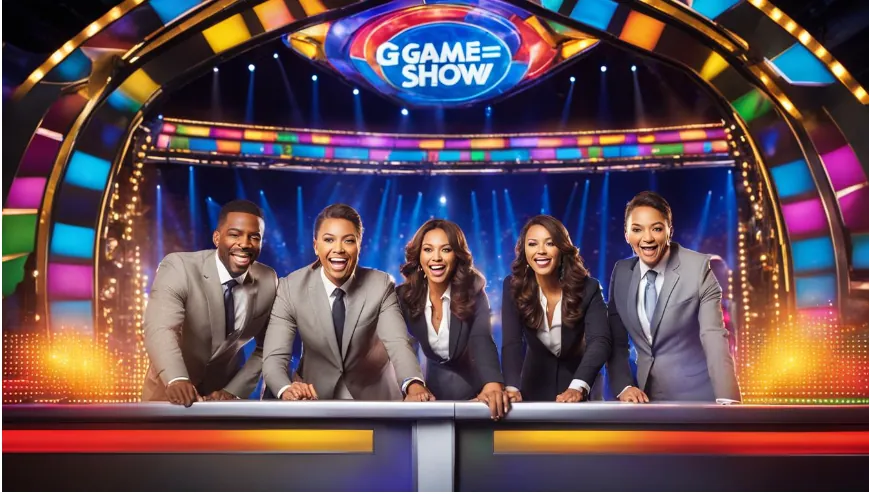
Corporate event game show entertainment addresses both problems at once. It replaces passive sit-and-listen programming with something interactive, competitive, and genuinely fun. When 50 people from different departments are shouting answers, laughing at wrong guesses, and high-fiving teammates they barely knew an hour ago, engagement stops being an abstract metric. It becomes visible.
But choosing the right entertainment is harder than it sounds. Event planners juggle tight budgets, mixed audiences (executives alongside interns), remote attendees who feel disconnected, large headcounts that make individual participation impossible, and the ever-present risk of an activity so awkward that people hide in the hallway. The wrong choice wastes money and goodwill. The right one transforms a mandatory gathering into the event people actually talk about for months.
Planning corporate event entertainment? We host game shows for 20 to 300+ guests, on site anywhere in NJ, NYC and CT.
What Corporate Event Game Show Entertainment Actually Looks Like
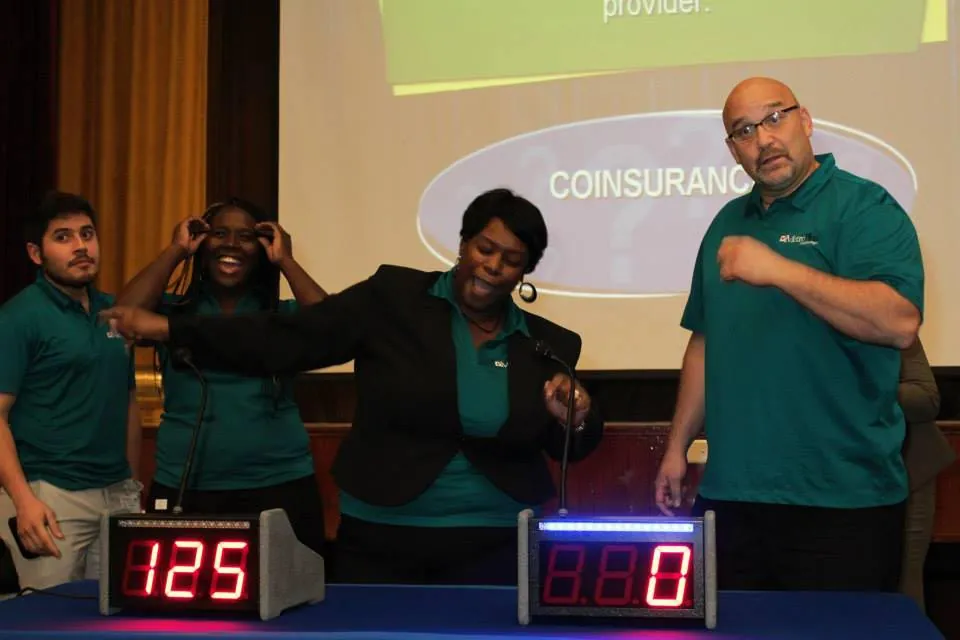
Corporate game show entertainment brings the energy and structure of television game shows into a live event setting. A professional host runs the show, manages teams, keeps the pace fast, and makes sure every person in the room has a reason to participate. The experience typically includes professional sound and lighting, branded visuals on large screens, wireless buzzers or mobile-device response systems, and a curated question set tailored to the company or industry.
This is not trivia night at a bar. Professional game show providers design the flow to match your event goals, whether that is team bonding, department competition, milestone celebrations, or giving people a reason to laugh together. The format scales from a 20-person leadership retreat to a 500-person sales kickoff without losing energy or engagement.
What Makes Corporate Entertainment Hard to Land
Every event planner faces a familiar set of obstacles when choosing entertainment for a corporate audience.
Mixed comfort levels. Some employees love the spotlight. Others would rather disappear. Entertainment that forces individuals onstage alienates half the room. Game show formats solve this by making participation team-based, so quieter people contribute without standing alone under a microphone.
Budget constraints. Booking a keynote speaker runs $5,000 to $20,000 or more. Comedians and bands carry similar price tags. Professionally hosted game shows start at $3,595 for a 90-minute show (see our pricing estimator), delivering structured engagement at a fraction of the cost.
Large group logistics. Activities that work for 15 people fall apart at 100. Traditional icebreakers and breakout exercises lose momentum fast with big groups. Game show formats keep hundreds of people involved simultaneously through team rounds and mobile-device participation.
Remote and hybrid audiences. Many corporate events now include virtual attendees who get sidelined by in-person programming. The best game show providers offer hybrid-ready formats with real-time mobile device integration.
The “forced fun” problem. Nothing kills morale faster than mandatory participation in something embarrassing. Game show entertainment works because the format is familiar, the stakes are low, and the competitive structure creates voluntary buy-in without putting anyone on the spot.
Five Game Show Formats That Deliver Results for Corporate Groups
It’s PlayTyme Game Shows has produced over 3,000 corporate events across New Jersey, New York City, and Connecticut over the past 14+ years. Their format library covers every group size, energy level, and event type. Here are five formats that consistently win over Fortune 500 teams and mid-market organizations alike.
Face-2-Face Feud
Modeled after Family Feud, this format puts two teams head-to-head with survey-based questions. It encourages fast thinking, generates big reactions from the audience, and gives even reserved employees a reason to shout out answers. Companies frequently customize the survey questions around internal culture, industry knowledge, or company milestones. Face-2-Face Feud is the single most requested format for holiday parties and department celebrations.
The Challenge (Jeopardy-Style Trivia)
Teams choose categories and point values in a classic Jeopardy format. This works especially well for knowledge-driven organizations, sales kickoffs, and training reinforcement events. The host controls pacing to keep energy high and prevent any single round from dragging. Custom categories let you weave in product knowledge, company history, or industry facts.
60 Seconds of Fame
Inspired by Minute to Win It, this format features rapid physical and mental challenges that get people out of their seats. Tasks are simple enough for anyone but competitive enough to generate real excitement. It breaks up the typical sit-down event format and adds movement to the room, making it a strong complement to longer programs.
PlayPad Mania
This interactive format uses live polling technology and mobile devices so every person in the room plays simultaneously. It scales from 20 to 300+ participants without losing engagement. PlayPad Mania is ideal for conferences, town halls, and all-hands meetings where passive attendance is the default. Scores update on-screen in real time, creating a shared competitive energy across the entire room.
Name That Hit Song
Music trivia spans decades and genres, giving every age group and background a chance to shine. Teams compete to identify songs from short clips. This is one of the most universally accessible formats because music knowledge cuts across departments, titles, and seniority levels. It consistently produces the loudest crowd reactions of any format.
Setup, Space, and Logistics: What You Need to Know
One of the first questions event planners ask is how much space and preparation game show entertainment requires. Here is what to expect when you book a professional provider.
Space: Most formats need a 15-by-20-foot area at the front of the room for the host station, screens, and team podiums. Your existing audience seating stays as-is (banquet rounds, theater style, or classroom setup all work).
Setup time: Professional providers arrive 60 to 90 minutes before showtime to set up sound, screens, and lighting. Teardown takes about 30 minutes.
Power: Two to three standard wall outlets within 25 feet of the setup area.
AV equipment: Full-service providers bring their own sound system, screens, and microphones. No need to coordinate with the venue’s AV team unless you are projecting onto a house screen.
Wi-Fi: Required for mobile-device formats like PlayPad Mania. A stable connection supporting 50+ simultaneous devices is sufficient for most groups.
It’s PlayTyme handles all equipment, setup, and breakdown as part of every booking. The event coordinator’s only job is confirming the room layout and power access in advance.
Ready to see what your event could look like? Tell us your date, venue and group size, and we will send options.
What Full-Service Game Show Entertainment Includes vs. a Basic DJ
A basic DJ fills the room with music and keeps the energy up during transitions. That works for cocktail hours and dance floors. But for structured engagement, team bonding, and memorable shared experiences, a full-service corporate game show provider delivers a fundamentally different outcome.
Feature
Full-Service Game Show
Basic DJ
Professional emcee/host
Yes (trained game show host)
No
Custom content for your company
Yes
No
Team-based group participation
Yes (entire audience)
No
Sound, lighting, and screens
All included
Sound only
Structured 2 to 3 hour program
Yes
Background music only
Mobile device audience interaction
Yes
No
Post-event engagement impact
High (shared memories, inside jokes)
Low
Group Size Options and How They Shape the Experience
Game show entertainment scales across a wide range of group sizes, but the format choice matters.
20 to 50 people: Intimate enough for every person to participate directly. Face-2-Face Feud and The Challenge work best here because each team member gets multiple turns at the podium.
50 to 150 people: The sweet spot for most corporate events. All five formats perform well. Teams of six to ten compete while the rest of the room watches, cheers, and rotates in for subsequent rounds.
150 to 300+ people: PlayPad Mania and Name That Hit Song shine at this scale because they use mobile devices to include everyone simultaneously. Face-2-Face Feud still works with representative teams and audience involvement rounds.
It’s PlayTyme regularly runs events for groups of 200 to 400 at hotel ballrooms, conference centers, and corporate campuses across the tri-state area. Their hosts are trained to read the room and adjust pacing, difficulty, and tone for the specific audience in front of them.
Pricing for Corporate Game Show Entertainment
Game show entertainment pricing depends on group size, number of formats, event duration, and travel distance. For the NJ, NYC, and CT market, here is what corporate buyers typically see.
Single format (1 to 2 hours): $1,500 to $3,500 for groups under 100.
Multi-format package (2 to 3 hours): custom pricing, often combining two or three game show styles for variety.
Large-scale events (200+ attendees): $4,000 to $7,000 depending on AV requirements and customization depth.
Per-person cost: Typically works out to $25 to $35 per attendee, with lower per-person rates for larger groups.
Compare that to a motivational speaker ($5,000 to $15,000 for 45 minutes of passive listening) or a live band ($3,000 to $10,000 with zero audience interaction). Game show entertainment delivers more engagement per dollar and includes the full production, equipment, and host in one package. It’s PlayTyme requires no deposit at booking, which simplifies the budgeting process for event committees.
What to Ask Before You Sign a Contract
Not every game show company delivers the same experience. Ask these questions before signing a contract.
How many corporate events have they produced? A provider with thousands of events has seen every room layout, audience type, and technical curveball. It’s PlayTyme has done over 3,000, and that depth of experience translates directly to a smoother, more polished show.
Do they customize content? Generic trivia feels generic. The best providers build custom question sets around your company, industry, or event theme at no extra charge.
What is included in the price? Full-service means the host, all AV equipment, setup, teardown, and coordination. If you are paying separately for sound, screens, and a host, the total will exceed a bundled package.
How many formats do they offer? A single format limits your options. Providers with five or more formats (trivia, feud, music, physical challenges, audience-wide polling) give you the flexibility to match entertainment to your event goals.
Do they have references from Fortune 500 clients? Ask for specific client names, not just anonymous testimonials. A provider trusted by Fortune 500 organizations and major NJ/NYC corporations has earned that trust through consistent, repeatable execution over years.
Ready to bring game show entertainment to your next corporate event? Get in touch with It’s PlayTyme Game Shows to discuss formats, availability, and pricing for your group. Browse their full lineup of team building activities to find the right match for your audience and goals.
How much does corporate event game show entertainment cost?
Corporate game show entertainment from It’s PlayTyme starts at $3,595 for a 90-minute show for groups of 20 or more, depending on the number of formats, event duration, and customization. Use our pricing estimator to see the range for your group size. It is one of the most cost-effective structured engagement options for corporate events in the NJ, NYC, and CT market.
How much space is needed for a game show at a corporate event?
Most game show setups require a 15-by-20-foot area at the front of the room for the host station, screens, and team podiums. Standard banquet, theater, or classroom seating works without rearrangement. Full-service providers like It’s PlayTyme bring all sound, lighting, and display equipment, so no venue AV coordination is needed.
What group sizes work for corporate game show entertainment?
Game show entertainment works for groups of 20 to 300+. Smaller groups (20 to 50) benefit from direct participation formats like Face-2-Face Feud. Larger groups (150+) use mobile-device formats like PlayPad Mania so every attendee plays simultaneously without anyone sitting idle.
Is game show entertainment appropriate for executive-level corporate events?
Yes. Game show formats are structured, professional, and fully customizable in content and tone. It’s PlayTyme has produced events for Fortune 500 leadership teams, sales kickoffs, and board retreats. The pacing and question difficulty adjust to match the seniority and personality of the audience.
How far in advance should you book corporate game show entertainment?
Book at least four to six weeks before your event date, especially during peak seasons (Q4 holiday parties and Q1 sales kickoffs). Popular providers fill prime dates quickly. It’s PlayTyme does not require a deposit at booking, which makes it easier to lock in a date while finalizing other event details.
Sales teams that participate in interactive group activities consistently outperform those stuck in lecture-style meetings. Gallup’s Q12 meta-analysis found that highly engaged business units achieve 23% greater profitability than disengaged ones. Separately, research highlighted by Entrepreneur confirms that experiential, hands-on activities produce stronger performance outcomes than passive instruction alone.
For New Jersey field sales teams, the gap between a forgettable quarterly meeting and one that actually builds skills comes down to format. Interactive game shows transform routine agenda items into competitive, memorable experiences that reinforce the habits reps need on every client call and every in-person visit across the territory.
Yet most NJ sales managers still default to the same slide decks and role-play scripts quarter after quarter. Reps tune out within ten minutes. Energy fades by lunch. The product knowledge and closing techniques you planned to reinforce never transfer back to the field. When your team covers ground from Bergen County to the Jersey Shore, getting everyone truly engaged during a single in-person gathering is the real obstacle. That’s exactly where It’s PlayTyme Game Shows steps in, delivering full-production game show experiences built for corporate groups across New Jersey, New York City, and Connecticut.
Planning a sales meeting in New Jersey? Add a hosted game show that gets your whole team competing.
Interactive game shows consistently outperform lecture-style sales meetings for NJ field teams.
Gallup links highly engaged business units to 23% greater profitability than disengaged ones.
Experiential, hands-on formats produce stronger performance outcomes than passive instruction alone.
Most NJ sales managers still default to slide decks that lose rep attention within ten minutes.
Game show formats turn routine agenda items into competitive experiences that reinforce selling habits across the territory.
What Drains Energy From Traditional Sales Meetings
Before choosing the right game format, it helps to name the specific problems that drain energy from traditional sales meetings.
Passive delivery kills retention. A 45-minute product update delivered via slideshow leaves reps remembering almost nothing by the following week.
Role-plays feel forced. Scripted practice scenarios rarely mirror the unpredictable flow of a real client conversation, and most reps dread them.
Energy drops fast. After two hours in a conference room, attention spans vanish. Afternoon sessions suffer the worst.
No measurable engagement. Managers have no reliable way to gauge who absorbed the material and who mentally checked out.
Scattered NJ territories. Pulling field reps from North Jersey, Central Jersey, and the Shore into one room is expensive. A flat, uninspired meeting wastes that entire investment.
Interactive game show formats address these problems by creating competitive stakes, physical movement, and real-time scoring that keeps every person in the room locked in from the first round to the last.
Game Format
Sales Skill Sharpened
Best Group Size
Energy Level
Face-2-Face Feud
Listening & reading the room
20 to 300+
High
The Challenge
Rapid product recall
20 to 150
Medium-High
60 Seconds of Fame
Performing under pressure
20 to 100
Very High
Game Show Mania
Collaborative problem-solving
30 to 200+
High
Word Play
Strategic thinking
20 to 150
Medium
Name That Hit Song
Quick pattern recognition
20 to 300+
High
PlayPad Mania
Competitive drive & fast decisions
20 to 300+
Very High
Face-2-Face Feud: Sharpen Listening Skills and Read the Room
Face-2-Face Feud is It’s PlayTyme’s signature take on the classic Family Feud format. Two teams step up to a buzzer podium while the rest of the room cheers, coaches, and strategizes from their seats. Custom survey questions replace generic trivia, so every round connects directly to your company’s products, customers, or industry.
The sales skill it trains: active listening and reading the room. In a real Feud round, the person at the podium processes the question instantly, filters out crowd noise, and commits to an answer under pressure. That mirrors what happens when a rep sits across from a prospect and needs to hear the real objection behind the polite pushback. Reps who practice this fast-twitch listening in a competitive game setting carry that sharpness into their next client meeting.
Why It Works for NJ Field Sales
Field reps who spend their days driving between accounts across New Jersey rarely get face-to-face practice with teammates. Face-2-Face Feud puts them in a high-visibility, high-energy setting where communication speed matters. The format also builds camaraderie between reps who normally work their territories alone.
The Challenge (Jeopardy-Style Trivia): Build Rapid Product Recall
The Challenge puts your team’s product knowledge on full display. Structured like Jeopardy, it uses a game board with categories and point values. Teams select a category, hear the clue, and race to buzz in with the correct response. It’s PlayTyme customizes every board with categories pulled from your product catalog, competitor landscape, pricing tiers, and sales process.
The sales skill it trains: rapid recall under competitive pressure. Field reps need instant access to product specs, pricing details, and differentiators during live prospect conversations. There is no time to look it up on a phone. The Challenge forces reps to retrieve that knowledge quickly and accurately, with teammates depending on them and opponents racing to beat them to the buzzer.
Custom Categories That Mirror Real Sales Scenarios
Categories like “Objection Busters,” “Know Your Competitor,” and “Price It Right” turn the game into a disguised product training session. Reps absorb and retain information because they are competing for points, not sitting through another PowerPoint.
Want a sales meeting your team looks forward to? We build rounds around your products and goals.
60 Seconds of Fame is It’s PlayTyme’s take on Minute to Win It. Individuals or small teams tackle fast physical and mental challenges (stacking cups, flipping objects, solving puzzles) with just 60 seconds on the clock. The room watches a countdown timer on a large screen while crowd energy builds to a peak.
The sales skill it trains: executing under a deadline. Every sales rep knows the feeling of a quarter closing in, a prospect going dark, or a decision-maker giving you exactly two minutes to make your case. 60 Seconds of Fame replicates that time pressure in a fun, low-stakes setting. Reps learn to stay composed, prioritize actions, and deliver results when the clock is ticking.
This format also doubles as a physical energy reset for meetings that run a full day. After two hours of presentations, 60 Seconds of Fame gets people on their feet, laughing, and fully re-engaged for the afternoon session.
Game Show Mania: Strengthen Collaborative Selling
Game Show Mania is a multi-round trivia format that cycles through different question styles: multiple choice, fill-in-the-blank, picture rounds, and audio clues. Teams work together to answer, pooling different areas of expertise within each round. It’s PlayTyme’s professional host keeps the pace high with commentary, humor, and real-time leaderboard updates displayed on screen.
The sales skill it trains: collaborative problem-solving. Complex deals rarely happen solo. They involve sales engineers, account managers, and customer success partners. Game Show Mania forces team members to communicate quickly, divide tasks by strength, and trust each other’s expertise under time constraints. The reps who dominate this format are the same ones who run smooth, coordinated sales calls with cross-functional support.
Word Play: Train Strategic Thinking and Objection Handling
Word Play follows the Wheel of Fortune model. Teams spin a wheel, guess letters, and try to solve word puzzles before their opponents. It’s PlayTyme builds puzzles around sales terminology, company slogans, industry phrases, and product names, so every solve reinforces brand vocabulary your reps use in the field.
The sales skill it trains: strategic deduction and pattern recognition. Successful objection handling requires reading partial information and filling in the gaps. A prospect says, “We’re happy with our current vendor,” and the rep needs to decode what’s really behind that statement. Word Play drills the same mental muscle: see incomplete information, test hypotheses, and commit to the right answer before the competition does.
Name That Hit Song: Develop Quick Response Instincts
Name That Hit Song plays short clips of music across decades and genres. Teams buzz in to identify the song and artist as fast as possible. Speed matters: the quicker you name the track, the more points your team earns. The format keeps the entire room energized with familiar tunes, spontaneous singalongs, and friendly trash talk between tables.
The sales skill it trains: quick recognition and fast response. Top-performing reps identify buying signals the moment they appear in a conversation. They hear a shift in tone, a specific phrase, or a question that signals genuine interest, and they act on it immediately. Name That Hit Song trains the same instinct: recognize the pattern fast and move before the competition does. It is a low-pressure way to sharpen a high-value selling reflex.
PlayPad Mania: Fuel Competitive Drive Across the Entire Room
PlayPad Mania is It’s PlayTyme’s large-group interactive format designed for full-room participation. Every person plays simultaneously using their smartphone or a provided device. Questions appear on the main screen, and individual scores update in real time on a live leaderboard visible to everyone. The format scales from 20 to 300+ participants without losing a single person’s attention.
The sales skill it trains: individual competitive drive and real-time decision-making. Unlike team-based formats, PlayPad Mania puts every rep on their own. The public leaderboard creates visible, friendly competition that mirrors a sales ranking board. Reps who thrive under that accountability in a game setting bring the same fire to hitting quota on the actual board. For NJ sales managers with large distributed teams, this format guarantees nobody hides in the back row.
Perfect for Large NJ Regional Kickoffs
When you pull 150 or more field reps from across New Jersey into a ballroom for a quarterly kickoff, keeping every single person engaged is the biggest challenge. PlayPad Mania solves it because participation is individual, scoring is instant, and the leaderboard keeps everyone invested from the first question to the last.
Matching Game Format to Your Team’s Skill Gap
Start by identifying the specific skill gap your team needs to close. If reps struggle with product knowledge retention after training sessions, The Challenge puts that knowledge to a competitive test they will not forget. If your team needs sharper performance under end-of-quarter pressure, 60 Seconds of Fame replicates that intensity. For large NJ regional meetings where engagement across 100+ people is the priority, PlayPad Mania guarantees full participation from every seat in the room.
What sets It’s PlayTyme apart from DIY icebreakers and generic team-building exercises is the full game show production. Professional hosts, branded buzzers, custom question content, large-format screens, sound systems, and real-time scoring create an atmosphere that feels like a television set, not a hotel conference room. That production quality is the reason reps stay engaged for the full session instead of checking their phones after the first activity.
It’s PlayTyme delivers all seven formats on-site anywhere in New Jersey, from hotel ballrooms in Newark and Jersey City to corporate campuses in Princeton and Morristown. Their team handles setup, equipment, content customization, hosting, and breakdown, so your sales leadership focuses entirely on strategy and results.
Ready to turn your next NJ sales meeting into the event your team actually talks about for months? Contact It’s PlayTyme to discuss which game show format fits your team size, skill-building goals, and venue. For more ideas on structuring an engaging agenda, explore their full guide to interactive sales meeting games.
Frequently Asked Questions (FAQs)
How long does a typical game show session last at a sales meeting?
Most It’s PlayTyme game show sessions run between 60 and 90 minutes. Formats are fully adjustable to fit half-day or full-day agendas. The team works with your event planner to slot the game into your schedule without cutting into essential business presentations.
Are the game show questions customized for our company and products?
Yes. It’s PlayTyme builds every game board, survey, and trivia category around your specific products, sales process, industry, and company culture. This turns each game into an active training tool rather than generic entertainment that has no connection to your business goals.
What group sizes work best for fun games at sales meetings in New Jersey?
Formats like Face-2-Face Feud and The Challenge work well with 20 to 150 people. PlayPad Mania scales to 300 or more. It’s PlayTyme recommends the best format based on your headcount and venue layout during the planning call.
Does It’s PlayTyme bring all the equipment, or does our venue need to provide it?
It’s PlayTyme brings everything: buzzers, large screens, sound systems, scoring technology, and a professional host. Your team shows up and participates. Setup and breakdown happen before and after your scheduled meeting block with no disruption to your agenda.
Where in New Jersey does It’s PlayTyme deliver these game show experiences?
It’s PlayTyme covers all of New Jersey, including North Jersey (Bergen, Essex, and Hudson counties), Central Jersey, and the Shore region. They also serve New York City and Connecticut for companies with teams spread across the tri-state area.
Only 31% of U.S. employees qualify as engaged at work, according to Gallup’s ongoing workplace research. That disengagement carries a measurable cost: organizations with low employee engagement experience 18% lower productivity and 16% lower profitability, per Harvard Business Review. For event planners tasked with building culture and connection, the stakes of choosing the right corporate entertainment are higher than most realize.
Yet the typical corporate event still defaults to the same tired formula: a buffet line, a DJ playing background music, and clusters of employees checking their phones. Attendees leave without having spoken to anyone outside their usual circle. The event technically happened, but it produced zero measurable impact on morale, collaboration, or retention.
The core problem is passivity. Most corporate entertainment asks nothing of the audience. There is no reason to interact, no structure that pulls people out of their comfort zones, and no shared experience worth talking about on Monday morning. Event planners know this formula fails, but finding entertainment that genuinely activates a room of 20 to 300+ professionals (without forcing awkward icebreakers) feels like an impossible search. Budget constraints, logistics questions, and the fear of booking something that falls flat make the decision even harder.
Looking for live game show entertainment for your corporate event? We host it for 20 to 300+ guests across NJ, NYC and CT.
What Live Game Show Entertainment Actually Looks Like at a Corporate Event
Live game show entertainment transforms a standard corporate gathering into an interactive, high-energy competition. Picture this: a professional host takes the stage backed by large LED screens, wireless buzzer systems, countdown timers, and a live leaderboard tracking every team’s score in real time. The format pulls directly from the game shows people already love (think trivia rounds, survey-style face-offs, and head-to-head challenges) but adapts them for a professional audience.
Teams of 6 to 10 compete through multiple rounds, answering questions that mix general knowledge with company-specific content. Customized rounds featuring inside jokes, company history, or industry trivia give the experience a personal edge that generic entertainment never delivers. The host reads the room, adjusts pacing, and keeps energy levels high from the first question to the final scores.
This is not a passive show. Every person in the room holds a buzzer or participates in a team huddle. The competitive structure does what no cocktail hour ever will: it gives strangers a reason to talk, strategize, and celebrate together.
What Event Planners Get Wrong With Corporate Bookings
Booking entertainment for a corporate audience presents a specific set of obstacles that differ sharply from planning a private party or wedding.
Audience diversity: A single event often includes executives, new hires, remote workers meeting in person for the first time, and employees from multiple departments. Entertainment that skews too young, too physical, or too niche alienates part of the room.
Logistics and venue constraints: Corporate venues range from hotel ballrooms to office cafeterias to outdoor pavilions. Planners need entertainment that adapts to the space, not the other way around. Setup time, power requirements, and AV compatibility all factor into the decision.
Proving ROI to leadership: Unlike social events, corporate entertainment carries an implicit expectation of return. Leadership wants evidence that the investment produced stronger connections, higher morale, or improved cross-department communication.
The “cringe factor”: Forced fun backfires. Planners fear booking an activity that makes employees groan rather than engage. The entertainment has to feel organic, not mandatory.
Scalability: What works for 30 people in a conference room often collapses at 200. Finding a format that scales without losing energy is a persistent struggle.
The Before and After: Passive Reception vs. Buzzer-Driven Competition
Consider two versions of the same annual company meeting for a 150-person sales team.
The passive version
After the keynote, attendees filter into a reception hall. A bar is open, appetizers circulate, and a playlist runs through wireless speakers. Small groups form along existing team lines. The VP of Sales makes a toast. By 8:30 PM, half the room has left. Post-event surveys come back lukewarm: “It was fine.”
The live game show version
After the keynote, the same attendees walk into a room transformed with stage lighting, large screens displaying a custom-branded game board, and buzzer stations set at every table. A professional host opens with energy, explains the rules in 90 seconds, and launches the first round. Within five minutes, tables of strangers are debating answers, cheering correct responses, and trash-talking rival teams. The leaderboard updates after every round, and the final showdown between the top two teams brings the entire room to its feet. Post-event surveys come back glowing: “Best company event we’ve ever had.”
The difference is not budget. It is structure. Live game show entertainment gives every person in the room a role, a stake, and a reason to participate.
Production Timeline: From Booking to Showtime
Understanding the production timeline removes the guesswork from planning. Here is what a typical engagement looks like when working with a full-service provider like It’s PlayTyme Game Shows.
4 to 6 weeks before the event
Initial consultation covers group size, venue details, event goals, and any custom content requests. The production team confirms the format (trivia, survey-style, hybrid) and begins building custom question rounds if requested.
2 to 3 weeks before the event
Final details are locked: floor plan, AV requirements, schedule integration with other event programming, and any branded visuals for the screens. The client reviews and approves custom content.
Day of the event
The production crew arrives 60 to 90 minutes before showtime. Setup includes LED screens, sound system, wireless buzzer stations at every table, and a host podium. A quick tech check ensures everything runs without a hitch. The show itself runs 60 to 90 minutes, with flexibility to extend or shorten based on the event flow.
After the event
Teardown takes 30 to 45 minutes. Many providers supply post-event photos or a score recap that companies use in internal newsletters or social media.
Ready to book? Tell us your date, venue and group size, and we will send a clear quote.
One of the biggest advantages of live game show entertainment is its scalability. The format works across a wide range of group sizes, with adjustments to keep every configuration engaging.
Group Size
Format
Team Structure
Best For
20 to 50
Intimate trivia or survey game
Teams of 4 to 6
Department outings, leadership retreats
50 to 150
Multi-round competition with leaderboard
Teams of 8 to 10
Annual meetings, holiday parties
150 to 300
Large-scale game show with stage production
Teams of 10 to 15
Company-wide events, sales kickoffs
300+
Tournament-style with elimination rounds
Table-based teams
Conferences, multi-day retreats
The format adapts to the venue as well. A hotel ballroom, a corporate campus lawn, a conference center breakout room: the equipment is portable and self-contained, requiring only standard power access.
Why Full Production Equipment Changes the Experience
The difference between a professional game show and a DIY trivia night is production value. When attendees walk into a room with LED screens, professional lighting, a wireless buzzer at every seat, and a live leaderboard tracking scores in real time, the energy shifts immediately. The setup signals that this event is worth paying attention to.
Professional-grade equipment includes:
Large LED screens or projectors displaying questions, timers, scores, and branded graphics
Wireless buzzer systems that give every participant a physical connection to the game
Professional sound systems with wireless microphones for the host
Live digital leaderboards that update after every round, fueling competition
Custom-branded visuals incorporating company logos, colors, and messaging
This level of production is what separates a forgettable team activity from a corporate event that employees reference for months afterward. It also removes the burden from the event planner: a full-service provider handles all equipment, setup, operation, and teardown.
What Sets It’s PlayTyme Game Shows Apart
Not all game show entertainment providers are equal. It’s PlayTyme Game Shows has spent 14+ years producing live game show experiences for Fortune 500 companies, mid-size firms, nonprofits, and school assemblies across New Jersey, New York City, and Connecticut. That track record matters for several concrete reasons.
Full production, every time: It’s PlayTyme brings its own screens, buzzers, sound, lighting, and scoring technology to every event. There is no reliance on venue AV or improvised setups.
Experienced live hosts: The hosts are trained performers who read audiences, manage pacing, and keep energy high across groups of 20 to 300+. This is not a side hustle for a comedian or a DJ adding trivia to their set.
Custom content: Every show includes the option for company-specific rounds: questions about the organization’s history, inside references, or industry-specific trivia that makes the experience feel personal.
NJ/NYC/CT proximity: Based in the tri-state area, It’s PlayTyme serves the densest corporate market in the country. No travel surcharges, no logistical headaches, and a team that knows every major venue in the region.
Proven client roster: A 12-year history with Fortune 500 clients, repeat bookings, and consistent five-star reviews provides the kind of social proof that generic entertainment directories simply do not offer.
How to Select the Right Live Entertainment Format
Selecting the right entertainment starts with three questions.
First, what is the goal of the event? If the objective is team building, choose a format that requires collaboration (team-based trivia or survey games). If the goal is pure celebration, a high-energy competition with prizes works best. If leadership wants to reinforce company values or knowledge, custom content rounds accomplish that naturally.
Second, what is the group size and venue? A provider that brings its own production equipment eliminates most venue limitations. Confirm that the provider has experience with groups your size and that the format scales appropriately.
Third, what is the provider’s track record? Ask for references from companies of similar size. Look for providers with years of documented corporate experience, not general entertainers who added “corporate events” to their website last year. A provider with a long client list of recognizable companies has already solved every logistical problem your event is likely to present.
Live game show entertainment for corporate events works because it solves the fundamental problem of passive attendance. It gives every person in the room something to do, someone to compete with, and a shared experience that carries over into the workplace.
How long does a live game show last at a corporate event?
Most live game shows run 60 to 90 minutes, though the format is flexible. A skilled host adjusts pacing based on the event schedule, and shorter 30-minute versions work well as energizers between conference sessions.
What group sizes work best for live game show entertainment?
Groups of 20 to 300+ all work with the right format adjustments. Smaller groups (20 to 50) play intimate trivia rounds, while larger groups (150+) use tournament-style brackets with table-based teams and elimination rounds.
Does the game show provider bring all the equipment?
A full-service provider like It’s PlayTyme Game Shows brings everything: screens, buzzers, sound system, lighting, and scoring technology. The only requirement from the venue is standard electrical power access and enough space for the setup.
How far in advance should I book live game show entertainment?
Booking 4 to 6 weeks ahead gives enough time for custom content creation and logistics planning. Popular dates (holiday season, end-of-quarter celebrations) fill quickly, so earlier booking is better for peak periods.
Is live game show entertainment appropriate for executive-level events?
Absolutely. The competitive, fast-paced format appeals to executives because it mirrors decision-making under pressure. Custom content rounds featuring industry knowledge or strategic trivia keep the experience intellectually engaging for senior leaders.
The good news is that raising morale does not require a massive budget or a week-long retreat. A well-chosen mix of daily habits, monthly traditions, and structured events turns disengaged teams into ones that actually look forward to showing up. This guide covers that full spectrum, from five-minute energizers to professionally hosted experiences that reset a team’s energy in a single afternoon.
But most companies struggle to get morale initiatives right. HR teams spend hours planning activities that fall flat because they feel forced, exclude remote staff, or repeat the same tired format quarter after quarter. Managers default to pizza parties when the real issue is that employees feel invisible. And leadership often treats morale as a checkbox instead of an ongoing practice. The result: wasted effort, cynical employees, and a revolving door of talent that costs far more than any team event ever would.
Looking to boost employee morale? A hosted game show brings your team together, on site anywhere in NJ, NYC and CT.
Before choosing activities, it helps to understand why morale stays low even when companies try to fix it. These are the most common roadblocks.
One-Size-Fits-All Programming
A trivia night works for some teams. Others find it tedious. When every quarter delivers the same format, participation drops and resentment builds. Effective morale boosting activities for employees rotate formats and match the group’s actual preferences.
No Follow-Through After the Event
A single team outing does not fix months of disengagement. Companies that treat morale as an event rather than a practice see short-lived bumps followed by the same problems. Sustained morale requires layered touchpoints: daily, weekly, and quarterly.
Excluding Remote and Hybrid Workers
If the activity only works for the people in the office, remote employees feel like afterthoughts. That divide actively damages the morale you are trying to build.
Budget Without Strategy
Throwing money at catered lunches or swag bags without connecting the spend to what employees actually want produces expensive indifference. Strategy first, budget second.
Quick Daily Morale Boosters (Under 15 Minutes)
Small, consistent actions compound over time. These take minutes and cost nothing.
Morning shout-outs: Start the day or the team standup with one specific recognition. Name the person, name what they did, and keep it to 30 seconds.
Two-question check-ins: “What’s going well?” and “What’s blocking you?” give managers real data and employees a voice.
Desk drop notes: A handwritten thank-you note left at someone’s workspace carries more weight than a mass email ever will.
Music breaks: A shared playlist running during the last 15 minutes of the day shifts the office tone without requiring anyone to “participate” in anything.
Walking meetings: Moving a one-on-one outside reduces stress and often produces better conversation than a conference room.
None of these require approval, a budget line, or a planning committee. They work because they signal that the company notices its people every day, not just at the annual holiday party.
Weekly and Monthly Activities That Build Momentum
Daily habits set the tone. Weekly and monthly rituals sustain it.
Weekly Options
Lunch roulette: Randomly pair employees from different departments for a 30-minute lunch. Cross-team relationships reduce silos and give people allies outside their immediate group.
Skill swap sessions: One employee teaches something for 20 minutes (a spreadsheet trick, a design principle, a cooking technique). The subject does not need to be work-related. The format signals that individual knowledge matters.
Friday wins board: A physical or digital board where anyone posts a win from the week. Reviewing it together takes five minutes and closes the week on a high note.
Monthly Options
Team challenges: Step-count competitions, departmental cook-offs, or volunteer days give employees a shared goal outside of their KPIs.
Manager office hours: A standing 30-minute block where anyone on the team drops in with questions, ideas, or concerns. Open-door policies only work when the door is visibly, predictably open.
Themed appreciation weeks: Rotate themes (wellness week, learning week, gratitude week) and attach small, tangible actions to each day. Structure prevents these from becoming empty gestures.
Structured Events That Transform Workplace Energy
Daily and weekly habits keep morale steady. But a well-run event creates a shared memory that bonds a team in ways incremental activities cannot replicate. The difference between a forgettable team outing and one that employees talk about for months comes down to three factors: professional hosting, full-group participation, and genuine fun.
It’s PlayTyme Game Shows specializes in exactly this format. Their professionally hosted live game shows bring the energy of a TV-style competition directly to your workplace, hotel ballroom, or event venue across New Jersey, New York City, and Connecticut. A dedicated host runs the entire experience, so managers participate instead of managing logistics. Groups of 20 to 300+ play together, which means no one sits on the sidelines. And the company’s 100% satisfaction guarantee takes the worry out of booking a large-scale event.
This kind of structured, high-energy experience is the most effective morale boosting activity for employees who have grown tired of passive outings like dinners or lectures. Everyone participates. Everyone competes. Everyone leaves with a story.
Want a morale boost people remember? Our hosts bring the energy, the rounds and the prizes.
How a Live Game Show Raises Morale for Groups of Every Size
Most team activities break down past 20 people. Escape rooms cap at 10. Cooking classes max out at 15. Ropes courses require athletic ability and exclude team members with physical limitations. A live game show scales without losing energy.
Small teams (10 to 30): Intimate rounds with head-to-head matchups. Every person gets spotlight time.
Mid-size groups (30 to 100): Team-based competition with table rounds, audience participation, and real-time scoring.
Large groups (100 to 300+): Full production with sound, lighting, and a professional host driving the room. The format that works for a department meeting works identically for a company-wide summit.
The hosted format also removes the biggest barrier to event-based morale building: the planning burden on HR. It’s PlayTyme handles setup, execution, and teardown. The internal team shows up and plays.
Activity Type
Group Size
Time Required
Hosted
Participation Level
Live Game Show (It’s PlayTyme)
20 to 300+
60 to 120 min
Yes, fully hosted
100% active
Escape Room
4 to 10
60 min
Venue staff
Active (small group only)
Cooking Class
8 to 15
90 to 120 min
Instructor-led
Active
Happy Hour / Dinner
Any
90+ min
No
Passive / social
Volunteer Day
10 to 50
Half day
Org-dependent
Active
Trivia (DIY)
10 to 40
45 to 60 min
Self-run
Mixed
Remote and Hybrid Morale Boosting Activities
Teams with remote members need activities that do not treat virtual participants as spectators watching a screen. Effective remote morale boosters share one trait: equal participation regardless of location.
Virtual game shows: A hosted game show runs simultaneously for in-room and remote attendees through a single live host. This is one of the few formats where hybrid groups compete on equal footing.
Online recognition platforms: Tools like Bonusly or Kudos let employees recognize each other asynchronously. The visibility of public praise matters more than the reward attached to it.
Remote coffee chats: Scheduled 15-minute video calls between randomly paired employees replicate the hallway conversations that remote workers miss.
Digital wellness challenges: Meditation streaks, hydration tracking, or reading goals with a shared leaderboard create connection without requiring simultaneous availability.
The key is consistency. A quarterly virtual happy hour does not move the needle. A weekly touchpoint does.
Measuring the Impact of Morale Activities
If you invest time and budget in morale boosting activities for employees, measure whether they work. Gut feeling is not a metric.
Leading Indicators
Participation rates: Track how many employees attend optional events over time. Declining attendance signals format fatigue.
Pulse survey scores: A three-question monthly pulse survey (“I feel valued,” “I enjoy working with my team,” “I would recommend this workplace”) gives you trend data without survey fatigue.
Manager check-in sentiment: Note whether one-on-ones shift from complaint-heavy to forward-looking over a quarter.
Lagging Indicators
Voluntary turnover rate: The most expensive symptom of low morale. Track it monthly, not annually.
Absenteeism patterns: Rising unplanned absences often precede resignations.
Internal mobility: High morale teams see more lateral moves and promotions. Low morale teams see exits.
Connect these numbers to your activity calendar. If pulse scores rise in months with structured events and dip in months without them, you have your answer.
A Short Checklist Before You Pick an Activity
Not every team needs the same approach. The right mix depends on four factors.
Team size: Groups under 15 benefit from intimate formats (cooking classes, skill swaps). Groups over 30 need structured, hosted experiences that keep the entire room engaged. For groups over 100, a professionally hosted live game show is one of the few formats that delivers full participation without logistical chaos.
Frequency: Layer your approach. Daily micro-recognition plus a weekly ritual plus one quarterly event creates a morale baseline that survives busy seasons and leadership transitions.
Budget: Start with free daily habits. Invest your event budget in one or two high-impact experiences per year rather than spreading it across a dozen forgettable outings. A single live game show that 200 employees remember beats four pizza lunches that no one recalls.
Team composition: Hybrid and remote teams need activities built for equal participation across locations. In-person teams have more options but still need variety to prevent format fatigue.
What are the best morale boosting activities for employees on a tight budget?
Daily recognition habits, walking meetings, skill swap sessions, and Friday wins boards cost nothing and consistently improve morale when practiced weekly. Free activities work best as a baseline layer, with occasional invested events for bigger impact.
Do morale activities work for remote and hybrid teams?
Yes, when the format treats remote participants as equal players rather than spectators. Virtual game shows, asynchronous recognition platforms, and scheduled remote coffee chats all maintain morale across locations. The key is choosing activities designed for hybrid participation from the start.
How do you measure whether morale activities are working?
Track participation rates for optional events, run a monthly three-question pulse survey, and monitor voluntary turnover and absenteeism trends quarterly. Connect these metrics to your activity calendar to identify which formats deliver the strongest results for your specific team.
What morale boosting activities work for large groups over 100 employees?
Professionally hosted live game shows are one of the few formats that scale past 100 without losing participation or energy. A dedicated host runs the room, teams compete in real time, and every employee plays rather than watches. This format works for company-wide summits, annual meetings, and large department gatherings.
A strong Employee Resource Group does more than mark a date on the calendar. It builds belonging, sparks pride, and gives members a reason to show up for one another. That work matters because connection at work is rare. Gallup reports that only 20% of employees feel engaged at work, and members of underrepresented groups often feel that gap most. A well-planned Black ERG event closes it with celebration and fun.
The best events balance two goals: honoring culture and creating real interaction. A lecture honors heritage but rarely sparks conversation. An interactive program does both at once. Pew Research found that most workers value the social side of their jobs, which is why active, shared experiences outperform passive ones. The ideas below mix cultural celebration with formats that get everyone talking.
ERG leaders face a familiar set of obstacles when planning these events. You want programming that celebrates Black heritage with depth and respect, not a token gesture. You need an activity that includes allies and members of every comfort level. You want strong turnout from a busy workforce, and you have to deliver it on a real budget. The sections below offer ideas that meet each of those goals.
Planning a Black ERG event? We host interactive game shows with custom cultural trivia, on site anywhere in NJ, NYC and CT.
Passive programming, like a single keynote or a video, informs people but leaves them sitting in silence. Interactive programming turns attendees into participants. They answer questions, work in teams, and share stories. That participation is what builds the connection an ERG exists to create.
Interactive formats also draw bigger crowds. People show up for events they expect to enjoy, not just attend. When the word spreads that an ERG event was genuinely fun, the next one fills faster. Celebration and engagement reinforce each other.
Cultural Trivia and Game Shows
A hosted game show built around Black history and culture is one of the strongest formats available. Teams compete through rounds on music, film, literature, sports, science, and historical milestones. The competition keeps energy high while the content celebrates heritage and teaches at the same time.
Sample Categories
Music legends: From jazz and Motown to hip-hop and modern stars.
Trailblazers: Leaders, inventors, and pioneers across every field.
Film and television: Iconic films, directors, and breakout performances.
Literature and art: Authors, poets, and artists who shaped culture.
Sports history: Record-breakers and barrier-breakers.
The format works for Black History Month, Juneteenth, or any celebration throughout the year. Teams learn something new while cheering for their group, and allies join in as active participants rather than spectators.
Heritage Scavenger Hunts
A scavenger hunt gets people moving and working together. Teams solve clues tied to cultural figures, landmarks, and milestones. In an office, the hunt runs through meeting rooms and common areas. In a city like New York, it can move through historic neighborhoods rich with Black history.
Scavenger hunts suit ERGs because they force cross-team collaboration. Strangers become teammates within minutes, and the shared mission creates fast bonds. The format also fits a wide range of group sizes and energy levels.
More Black ERG Event Ideas
A full calendar mixes formats so events stay fresh. Combine the interactive centerpieces above with these complements.
Storytelling circles: Members share personal heritage and career journeys.
Soul food gatherings: Catered meals that celebrate cultural cuisine and spark conversation.
Author and speaker panels: Pair a short talk with an interactive Q&A, not a lecture.
Film screenings: Add a moderated discussion so the room talks afterward.
Mentorship mixers: Structured networking that connects members across levels.
Pairing a celebration meal with a hosted game show or scavenger hunt gives you both nourishment and energy in one event. The food brings people in, and the activity gets them talking.
Want an event that celebrates and connects? We can build your game show rounds around the history and culture you want to honor.
Even committed leaders run into predictable obstacles. Naming them early makes them easier to solve.
Surface-level programming: A token gesture rings hollow. Content built with real depth and respect honors the moment.
Low turnout: Busy employees skip events they expect to be dull. A fun, interactive format drives attendance.
Including allies: Some events leave non-members unsure of their place. Team-based games welcome everyone as a participant.
Limited budget: Stacking vendors adds up. One hosted centerpiece often delivers more impact than several separate pieces.
Facilitation load: ERG leaders already volunteer their time. A professional host removes the burden of running the event.
Why It’s PlayTyme Game Shows Stands Out
It’s PlayTyme Game Shows brings professional, broadcast-style game shows and scavenger hunts to ERG events across New Jersey, New York City, and Connecticut. A skilled host runs the entire program with buzzers, big screens, and content tailored to your celebration. The team builds rounds around Black history and culture so the event honors heritage while keeping the energy high.
The in-person, tri-state advantage matters for ERGs that want a real gathering, not another video call. Team play includes members and allies alike, and the host reads the room to keep every group involved. Your ERG leaders join as participants instead of facilitators. The result is a celebration that feels both meaningful and genuinely fun.
Start with your goal for the gathering. If you want to honor heritage and teach, a cultural trivia game show delivers both. If you want movement and fast bonding, a scavenger hunt fits better. Match the format to your group size and venue, since larger crowds need a host and real sound. Decide how much your volunteer leaders can manage, because a hosted program removes that load entirely. ERGs that want depth, strong turnout, and zero facilitation work consistently choose an interactive, professionally hosted celebration.
Frequently Asked Questions (FAQs)
What are good event ideas for a Black ERG?
Strong options include cultural trivia game shows, heritage scavenger hunts, storytelling circles, and catered soul food gatherings. The most memorable events pair celebration with interaction, so members talk and bond rather than just watch. A hosted game show built around Black history works well for Black History Month or Juneteenth.
How do I make a Black ERG event meaningful and not a token gesture?
Build content with real depth and respect, and center the voices of your members. Pair celebration with participation so people engage with the culture, not just observe it. Tailored programming that highlights specific figures, milestones, and contributions signals genuine investment.
How do I include allies in a Black ERG event?
Use team-based activities that welcome everyone as an active participant. A hosted game show or scavenger hunt mixes members and allies into shared teams, so no one feels like a bystander. Collaboration toward a common goal builds understanding naturally.
What is the best way to boost turnout for ERG events?
Choose formats people expect to enjoy, then promote the fun alongside the purpose. Interactive events like game shows and scavenger hunts draw bigger crowds than lectures. Word spreads fast when an event is genuinely entertaining, which fills the next one.
Does It’s PlayTyme run events for ERGs in the tri-state area?
Yes. It’s PlayTyme Game Shows produces in-person game shows and scavenger hunts for ERG events across New Jersey, New York City, and Connecticut. A professional host handles the full program, including custom rounds built around Black history and culture. Your team simply shows up and takes part.