Here is the concrete challenge for principals and PTA leaders. You want a full week that feels fresh, not the same daily theme recycled from last year. The budget is modest, the volunteer pool is small, and the staff is too large for individual gifts to feel personal. You need ideas that reach every teacher, involve the whole school, and create a memory that outlasts the week. The solution is a mix of daily touches and one big celebration event that anchors the week.
Planning Teacher Appreciation Week? Our hosted game shows give your staff a fun celebration, anywhere in NJ, NYC and CT.
A day-by-day structure gives the week rhythm and makes planning easier. Assign each day a simple, low-cost focus, then layer one signature event on top.
Monday, Welcome: decorated doors, a coffee and snack cart, and a kickoff note from the principal.
Tuesday, Student Voices: handwritten notes from students naming a lesson that mattered.
Wednesday, Treat Day: a catered lunch or a favorite-snack bar in the lounge.
Thursday, Recognition: a short ceremony or a hosted celebration event.
Friday, Send-off: a school-wide assembly that cheers the staff.
This frame keeps every day intentional without demanding a huge budget. The daily touches build warmth, and the big events build memory.
The Signature Event: A Staff Celebration Game Show
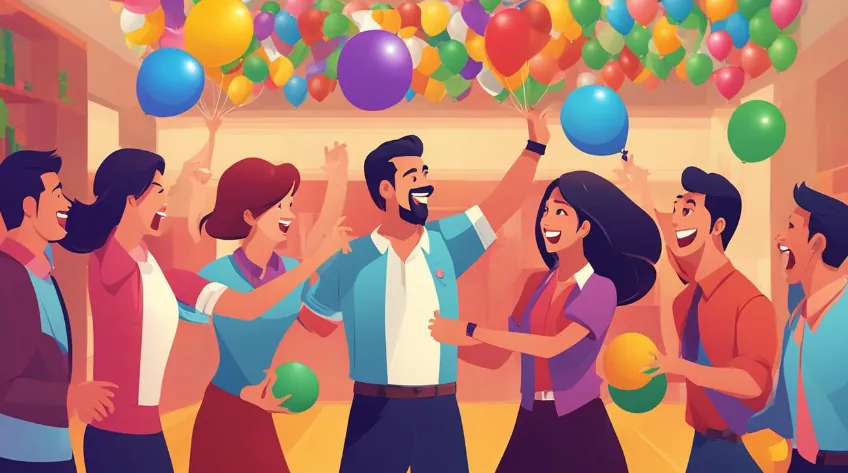
The centerpiece of a memorable week is one shared event where the whole staff plays together. A hosted game show turns the faculty lounge into a buzzer-ready stage, with the science team facing the history team in a Family Feud-style showdown. Because the questions are fun trivia, no department holds an edge, and the energy fills the room.
It’s PlayTyme Game Shows produces this kind of celebration for schools across New Jersey, New York City, and Connecticut. A professional host runs the entire event during a staff luncheon or a half-day, so no overworked teacher has to plan it. Every staff member plays, which makes the appreciation equal and inclusive. The laughter and inside jokes carry well past the final bell.
Inclusive: every teacher and aide joins, so recognition reaches the whole staff.
Effortless: a host handles setup, scoring, and pacing from start to finish.
Lasting: the shared memory becomes a story the staff retells next year.
Whole-School Assemblies That Honor Teachers
An assembly turns appreciation into a community event. When students cheer for their teachers during a high-energy program, recognition lands deeper than any private gift. A Friday assembly is the perfect send-off for the week, pairing student tributes with a hosted activity that keeps the whole building engaged.
These assemblies also model gratitude for students. Kids who publicly thank a teacher learn that hard work deserves applause. The result is a memory shared by staff and students together, which is exactly what a strong appreciation week should create.
Want a signature event for the week? We bring the host, the games and the prizes for your teachers.
A short ceremony adds meaning when leadership names specific wins. Call out the teacher who started a new club, the one who mentored a struggling student, or the one who stayed late for weeks. Public, specific praise tells the whole staff what good work looks like.
Small gestures that add warmth
Covered duty periods or a surprise free prep block.
Reserved parking spots for the week.
Shout-outs on the morning announcements.
A photo wall of staff with their favorite teaching moments.
Combine these touches with the big events, and the week feels both personal and celebratory.
What Stalls Appreciation Week Before It Starts
Most appreciation weeks hit the same snags. Plan around them and the week runs smoothly.
Volunteer overload: a few parents carry the whole load. A hosted event removes the planning for the biggest day.
Repeat themes: last year’s plan feels stale. One fresh signature event resets the whole week.
Tight budget: individual gifts for a large staff add up. A shared event lowers the per-person cost.
Uneven attention: popular teachers get more. A group celebration makes appreciation equal by design.
May chaos: calendars fill fast. Book outside programs early to lock a date.
Building Your Appreciation Week Budget
Split the budget into daily touches and one anchor event. Put the larger share toward the signature celebration that every teacher attends, and reserve the rest for snacks, notes, and small perks across the week. This split delivers both the group memory and the personal warmth that make teachers feel known.
Measure the impact with one question at week’s end: did you feel appreciated. A strong yes confirms the plan worked and shapes next year’s approach.
Which Appreciation Week Plan Fits Your Staff and Budget
Start with your staff’s biggest need. If teachers feel drained and divided, a hosted game show resets the mood and unites them. If you want the whole community involved, a Friday assembly puts students in the cheering section. If the budget is small, anchor the week with one shared event and surround it with low-cost daily touches.
Then weigh your volunteer capacity. If your planners are stretched thin, an outside program that arrives, sets up, and runs the show protects everyone’s time. Match the format to your staff size and pick a date early.
Ready to make Teacher Appreciation Week 2026 the one your staff remembers? Explore our school assembly programs, then contact our team to plan a celebration across New Jersey, New York City, or Connecticut. Give your teachers a week that feels as big as their effort.
Frequently Asked Questions (FAQs)
What are the best teacher appreciation week ideas for 2026?
Combine daily touches with one big anchor event the whole staff attends. A hosted game show or a celebratory assembly creates equal, lasting recognition. Surround it with notes, treats, and public shout-outs through the week.
How do I plan teacher appreciation week on a small budget?
Put the larger share of your budget toward one shared event that every teacher attends. The per-person cost is lower than stacks of individual gifts. Fill the other days with low-cost gestures like notes, snacks, and covered duty periods.
What day should the big appreciation event happen?
Mid-week or Friday works best, as an energy peak or a celebratory send-off. A staff luncheon, a half-day, or a Friday assembly all make strong slots. Book any outside program early, since May calendars fill quickly.
How do I avoid repeating last year’s appreciation week?
Add one fresh signature event that the staff has not seen before, such as a hosted game show. A new centerpiece reframes the whole week even if the daily touches stay familiar. The novelty becomes a story your staff retells.
How can students be part of teacher appreciation week?
Have students write specific thank-you notes and lead a Friday assembly that cheers the staff. Public student gratitude lands deeper than a private gift. It also teaches kids that hard work deserves applause.
Organizations that invest in structured team development programs see measurable returns. According to Gallup’s Q12 meta-analysis, business units with highly engaged teams are 23% more profitable than those with disengaged workforces. Research from the McKinsey Global Institute confirms that improved collaboration raises the productivity of knowledge workers by 20 to 25 percent.
Yet most companies treat team building as a one-off event rather than a planned, repeatable process. The gap between a forgettable afternoon activity and a program that transforms how your team operates comes down to one thing: a deliberate plan.
If your team building efforts have felt disjointed, poorly attended, or disconnected from actual business goals, you are not alone. Many HR leaders and managers face the same frustrations: activities that feel forced, budgets spent without visible outcomes, and employees who view the entire exercise as wasted time. The solution is a set of team building plan strategies that tie every activity to a specific need and a measurable result.
Building a team building plan? Add a hosted game show for 20 to 300+ people, on site anywhere in NJ, NYC and CT.
Why Structured Team Building Plan Strategies Matter
Throwing a group of employees into an escape room once a year and hoping for better collaboration is not a strategy. It is a gamble. Structured team building plan strategies replace guesswork with intention. They connect assessment, goal-setting, and execution into a repeatable cycle that improves your team’s performance quarter after quarter.
A structured plan provides three distinct advantages:
Alignment with business objectives. Every activity serves a purpose, whether that is improving cross-department communication, onboarding new hires, or reducing conflict.
Budget accountability. When goals are defined upfront, you measure return on investment instead of hoping for the best.
Employee buy-in. Teams participate more willingly when they understand why an activity matters and see results afterward.
What Goes Wrong Without a Formal Team Building Plan
Without a formal plan, team building programs fall into predictable traps. Recognizing these patterns is the first step toward building something better.
Random activity selection. Managers pick activities based on what sounds fun or what a colleague recommended, not on what the team actually needs.
No follow-through. A single event generates short-term energy that fades within days because nothing reinforces the lessons learned.
Budget waste. Without goals, there is no way to evaluate whether the money spent produced any meaningful change.
Low participation and cynicism. Employees who have experienced poorly planned events become resistant to future ones, making each successive attempt harder.
Leadership disconnect. When executives do not see measurable outcomes, they cut funding for future programs entirely.
These problems are not caused by bad intentions. They are caused by the absence of a structured planning process.
Step 1: Assess Your Team’s Current Needs
Every effective team building plan starts with a needs assessment. Before selecting activities or setting budgets, identify what your team actually struggles with. This is where data matters more than assumptions.
Methods for gathering insights
Anonymous surveys. Ask employees about communication quality, trust levels, workload distribution, and morale. Keep surveys short (10 questions or fewer) to increase completion rates.
Manager interviews. Talk to team leads about recurring friction points, missed deadlines tied to collaboration breakdowns, and departments that rarely interact.
Performance data. Review project completion rates, employee turnover figures, and engagement scores from recent reviews.
The goal is to move from “our team needs better communication” to “the sales and product teams miscommunicate on feature timelines, causing an average two-week delay per quarter.” Specificity drives better planning.
Step 2: Set Measurable Goals for Your Program
Once you understand the gaps, translate them into goals that are specific, time-bound, and observable. Vague goals like “improve teamwork” give you nothing to measure against.
Examples of strong team building goals
Increase cross-department project satisfaction scores by 15% within two quarters.
Reduce new hire ramp-up time by one week through structured onboarding team activities.
Achieve 80% voluntary participation in team events (up from the current 55%).
Each goal should connect directly to a finding from your needs assessment. If the assessment revealed low trust between remote and in-office staff, your goal addresses that specific gap. Write your goals down. Share them with stakeholders. Revisit them after each event to track progress.
Need an anchor event for your plan? Tell us your goals and we will build a game show around them.
Step 3: Select Activities That Match Your Objectives
With goals defined, choose activities that directly address those objectives. The format of an activity matters as much as the activity itself. A competitive game show format, for example, builds energy and breaks down formality barriers faster than a passive workshop. This is where working with an experienced provider like It’s PlayTyme Game Shows makes a measurable difference. Their interactive game show programs are designed to target specific team dynamics: communication under pressure, collaborative problem-solving, and inclusive participation across every personality type.
Team Goal
Best Activity Format
Why It Works
Improve communication
Interactive game shows
Fast-paced rounds force clear, quick communication between teammates
Build trust across departments
Collaborative challenges
Mixed-department teams depend on each other to solve problems
Onboard new hires
Trivia-style competitions
Low-pressure format encourages introductions and natural conversation
Boost morale after a tough quarter
High-energy entertainment events
Fun-first format gives teams a mental reset and a shared positive memory
Strengthen leadership skills
Strategy-based team games
Participants practice delegation, decision-making, and accountability
Avoid the trap of selecting activities that only appeal to extroverts or physically active employees. The best programs include everyone. Game show formats excel here because participation is mental and social, not physical.
Step 4: Build a Timeline, Budget, and Logistics Plan
A strategy without a timeline is a wish list. Map your team building plan across the calendar year, spacing events so they reinforce each other rather than clustering into a single “team building week” that overwhelms participants.
Planning checklist
Frequency. Quarterly events work well for most organizations. Monthly touchpoints suit larger teams with rapid turnover.
Budget allocation. Divide your annual team building budget across events rather than spending 80% on one offsite. Include costs for facilitation, venue, food, and post-event surveys.
Logistics. Book venues and vendors at least six to eight weeks in advance. Confirm headcounts two weeks before each event. Assign an internal coordinator who owns communication and follow-up.
Contingency. Build backup plans for weather (outdoor events), last-minute cancellations, and hybrid or remote participants who need to join virtually.
Document everything in a shared project plan. When team building receives the same operational rigor as any other business initiative, it earns the same respect from leadership.
Step 5: Execute, Measure, and Refine
Execution is where most plans stall, not because the event goes poorly, but because no one measures what happened afterward. Build measurement into the plan from the start.
Post-event surveys. Ask three questions: What did you enjoy? What would you change? Did this event address a real need on your team? Keep it brief.
Goal progress. Compare pre-event and post-event metrics for the goals you set in Step 2. If your goal was improving cross-department satisfaction, resurvey those teams 30 days later.
Manager observations. Ask team leads whether they notice behavioral changes in meetings, project collaboration, or team morale in the weeks following an event.
Use these findings to refine the next round. If trivia-style games produced high engagement but strategy challenges fell flat, adjust your activity mix. Continuous improvement is what separates a plan from a one-time experiment.
How to Select a Team Building Partner Worth Trusting
The provider you select determines whether your plan produces real outcomes or just fills a calendar slot. Look for a partner with experience designing programs around your specific goals, not a vendor that offers a fixed menu with zero customization.
It’s PlayTyme Game Shows brings more than a decade of experience running corporate team building events across New Jersey, New York City, and Connecticut. Their programs follow the exact planning framework outlined above: they start by understanding your team’s goals, then design a game show experience that targets those objectives with measurable engagement. Every event includes professional hosting, all necessary equipment, and formats that adapt to groups of 20 to 300+.
If you are ready to move from scattered activities to a structured team building plan that produces real results, get in touch with It’s PlayTyme to start building a program tailored to your organization’s needs.
Team building plan strategies are structured approaches to designing, scheduling, and executing team development programs. They combine needs assessment, goal-setting, activity selection, and post-event measurement into a repeatable process that improves team performance over time.
How often should organizations schedule team building events?
Most organizations benefit from quarterly team building events, with smaller monthly touchpoints for teams experiencing rapid growth or high turnover. Spacing events throughout the year reinforces lessons and prevents “team building fatigue” from back-to-back activities.
How do you measure the success of a team building plan?
Track participation rates, post-event survey responses, and progress toward the specific goals you set before the program began. Compare pre-event and post-event metrics (engagement scores, project satisfaction, turnover rates) at 30 and 90-day intervals to identify lasting changes.
What types of activities work best for corporate team building?
Interactive formats like game shows, collaborative challenges, and strategy-based competitions consistently produce the highest engagement. These formats include all personality types, require teamwork under time pressure, and create shared positive experiences that carry back into daily work.
How do you get employees to actually participate in team building?
Involve employees in the planning process through surveys and feedback from the start. Choose activities that address real needs they have identified themselves. When people see that events are designed around their actual challenges rather than a top-down agenda, voluntary participation increases significantly.
What is the business case for treating team building as an ongoing plan rather than a one-time event?
Gallup’s Q12 meta-analysis found that highly engaged business units are 23% more profitable than disengaged ones, and McKinsey research shows improved collaboration raises knowledge worker productivity by 20 to 25 percent — returns that require sustained investment in team development, not a single afternoon activity.
The United States is home to roughly 3.5 million secretaries and administrative assistants who keep offices running every single day. Yet recognition for these professionals often amounts to a last-minute card or a generic gift basket. According to Gallup research, employees who receive quality recognition are 45% less likely to leave within two years. That statistic alone makes Administrative Professionals Week (April 19—25, 2026) worth planning well.
Administrative Professionals Day falls on Wednesday, April 22, but limiting recognition to a single afternoon sends a clear message: your contributions only warrant a few hours of attention. The full week offers five business days to celebrate the people who coordinate schedules, manage communications, onboard new hires, and solve problems before anyone else notices them.
The real difficulty is choosing activities that feel genuine rather than obligatory. Many teams default to flowers or lunch, which are appreciated but forgettable. Others skip the week entirely because planning feels like one more task on an already packed calendar. Hybrid and remote teams face an added obstacle: coordinating recognition across locations without leaving anyone out. And budget constraints push organizers toward the cheapest option rather than the most meaningful one.
Planning Administrative Professionals Week? A hosted game show celebrates your team in style, anywhere in NJ, NYC and CT.
Why Celebrating the Full Week Matters More Than a Single Day
Administrative Professionals Day has existed since 1952, but the week-long format gives organizations room to build momentum. A single-day celebration often feels rushed. Spreading activities across five days lets you mix group events, personal gestures, and professional development without overwhelming any single afternoon.
A week-long approach also ensures that every admin professional gets recognized, not just the ones who happen to be in the office on Wednesday. For teams split across locations or working hybrid schedules, this flexibility is essential. Monday through Friday gives enough time to include remote staff in virtual events and still hold an in-person highlight.
Where Administrative Professionals Week Recognition Falls Flat
Recognition that falls flat does more damage than no recognition at all. Here are the obstacles most organizers face:
Generic gestures feel hollow. A mass email or identical gift card for every admin signals minimal effort, regardless of budget.
Participation gaps in hybrid teams. Remote staff frequently get left out of in-person celebrations, creating resentment rather than gratitude.
Budget pressure leads to shortcuts. When the budget is tight, recognition defaults to the cheapest option (a card, a bagel spread) instead of something memorable.
Time constraints on organizers. The people responsible for planning are often the same admin professionals being celebrated, creating an awkward loop.
One-size-fits-all programming. Not every admin professional wants a spa day or a long lunch. Varied preferences make a single activity risky.
Interactive Game Shows: The Group Celebration That Actually Works
It’s PlayTyme Game Shows runs live, TV-style game show events built specifically for corporate groups across New Jersey, New York City, and Connecticut. For Administrative Professionals Week, this format solves multiple problems at once: it brings the whole group together (including remote participants through hybrid setups), requires zero planning from the honorees themselves, and creates a shared experience that people talk about long after the week ends.
The format works because game shows are inherently inclusive. Trivia rounds, music identification challenges, and team-based competitions give every personality type a chance to participate without forcing anyone into the spotlight. Introverts contribute answers within their team. Extroverts take on the buzzer. Everyone laughs.
Why Game Shows Beat Traditional Appreciation Events
Active participation over passive attendance. A catered lunch ends when the food runs out. A game show keeps energy high for 60 to 90 minutes.
Team bonding across departments. Admin professionals from different teams interact in ways that regular work never allows.
Customizable content. Questions and rounds get tailored to your company culture, inside jokes, and industry knowledge.
No planning burden on honorees. The entire event is hosted and produced by a professional team, so admin staff show up and enjoy.
Day-by-Day Ideas for the Full Week
Spreading recognition across five days keeps the momentum alive without exhausting your budget on a single event. Here is a sample framework:
Monday: Kick Off with Personal Notes
Have each department head write a specific, handwritten note to every admin professional on their team. Specificity matters: “Thank you for keeping our Q1 board presentation on track” lands harder than “Thanks for all you do.”
Tuesday: Professional Development Hour
Give admin staff a paid hour to attend a webinar, online course, or certification module of their choice. This signals that the company values their growth, not just their output.
Wednesday: The Main Event
This is Administrative Professionals Day itself. Book a live game show experience through It’s PlayTyme’s corporate events program. A Face-2-Face Feud or trivia competition gives the day a centerpiece that everyone remembers.
Thursday: Flex Time or Early Release
Let admin professionals leave two hours early or shift their schedule to accommodate personal errands. Time is the one gift that costs the company very little but carries enormous personal value.
Friday: Team Breakfast and Shoutouts
Close the week with a team breakfast where colleagues share specific examples of how admin professionals helped them. Public, specific praise reinforces the week’s message.
Budget-Friendly Ideas That Still Feel Meaningful
Not every organization has the budget for a full production. These lower-cost ideas still deliver genuine recognition:
Desk makeover kits. A small bundle of premium office supplies (a quality pen, a leather notebook, a desk plant) shows thought without a large price tag.
Choice-based gifts. Let each admin professional pick from three or four options (a book, a gift card to their favorite restaurant, a subscription box) rather than receiving something generic.
Spotlight features. Post a short profile of each admin professional on the company intranet or Slack channel, highlighting a specific accomplishment from the past year.
Lunch with leadership. A small-group lunch with a senior leader (not a formal meeting) gives admin staff face time they rarely get and signals that leadership notices their work.
Skill swap sessions. Pair admin professionals with colleagues from other departments for a 30-minute skill exchange. Both sides learn something new, and it builds cross-functional relationships.
Want a celebration your admin team will remember? We bring the host, the games and the prizes.
Remote admin professionals often feel invisible during company-wide celebrations. These ideas close that gap:
Virtual game show events. It’s PlayTyme offers formats that work for distributed teams, so remote participants compete alongside in-office colleagues on equal footing.
Delivered experience kits. Ship a curated box (snacks, a small gift, event instructions) to remote staff before a virtual celebration so they feel included from the start.
Video shoutout compilation. Record 15-second video messages from team members thanking specific admin professionals, then compile and share the reel on Wednesday.
Digital gift cards with a personal note. A gift card alone feels impersonal. Pair it with a two-sentence message referencing a specific project or moment, and it transforms into genuine recognition.
What to Avoid During Administrative Professionals Week
Good intentions go sideways when execution misses the mark. Steer clear of these common mistakes:
Assigning admin staff to plan their own celebration. This happens more often than anyone admits, and it completely undermines the purpose of the week.
Generic mass emails from leadership. A company-wide “Happy Admin Day!” email with no personal detail reads as a compliance checkbox, not appreciation.
Gifts that reinforce the role rather than the person. A new stapler or desk organizer says “we see you as your job title.” Choose gifts that acknowledge the individual.
Skipping the week entirely. Silence sends its own message. Even a small, genuine gesture outperforms nothing.
Over-promising and under-delivering. Announcing a big celebration and then scaling it back to a sheet cake erodes trust. Set realistic expectations and meet them.
Activity Type
Group Size
Budget Level
Best For
Live Game Show Event
20 to 300+
Mid to High
Full-team celebrations, mixed departments
Handwritten Notes
Any
Low
Personal recognition, small teams
Professional Development Hour
Any
Low
Career-focused admin staff
Delivered Experience Kits
Any (remote)
Mid
Distributed and hybrid teams
Lunch with Leadership
4 to 8
Low to Mid
Senior visibility, small groups
Virtual Game Show
10 to 100+
Mid
Remote-first teams, multi-location offices
Getting Administrative Professionals Week Right the First Time
Start with three questions: How many admin professionals are you recognizing? Are they in one location or spread across offices? And what is your realistic budget? These three factors narrow the options quickly.
For teams of 10 or more in the NJ, NYC, or CT area, a live game show event delivers the highest impact per dollar. The shared experience creates stories and inside jokes that last months. For smaller teams or tighter budgets, combine two or three low-cost ideas (handwritten notes plus flex time plus a team breakfast) across the week for cumulative effect.
The one non-negotiable: whatever you choose, make it specific and intentional. Admin professionals recognize performative gestures instantly. They coordinate events for a living. The recognition that resonates is the kind that clearly required thought, not just a budget line.
Ready to book a game show experience for Administrative Professionals Week 2026? Contact It’s PlayTyme to reserve your date. Explore team building activities designed for groups of every size across the Tri-State area.
Frequently Asked Questions (FAQs)
When is Administrative Professionals Week in 2026?
Administrative Professionals Week runs from April 19 through April 25, 2026. Administrative Professionals Day falls on Wednesday, April 22. The week always occupies the last full week of April, with the day on Wednesday.
What is the difference between Administrative Professionals Day and Administrative Professionals Week?
Administrative Professionals Day is the single day of recognition on the Wednesday of the last full week in April. Administrative Professionals Week spans the entire Monday-through-Friday window around that day. Celebrating the full week gives organizations more time and flexibility to plan meaningful activities.
How do you celebrate administrative professionals on a small budget?
Handwritten notes referencing specific accomplishments, flex time or early release, and public shoutouts during team meetings cost almost nothing and consistently rank among the most appreciated gestures. Pair two or three of these across the week for cumulative impact without a large expense.
Are game shows a good fit for Administrative Professionals Week?
Live game shows work exceptionally well because they require zero planning from the honorees, include every personality type through team-based formats, and create a shared experience that builds lasting memories. They work for groups ranging from 20 to 300+ participants.
How do you include remote employees in Administrative Professionals Week?
Ship experience kits ahead of a virtual event, run a virtual game show that puts remote participants on equal footing with in-office staff, and pair any digital gift card with a personal, specific message. The key is making remote staff feel like participants, not afterthoughts.
How many administrative professionals work in the United States?
Roughly 3.5 million secretaries and administrative assistants work in the United States, keeping offices running every single day.
What does quality recognition do for employee retention?
According to Gallup research, employees who receive quality recognition are 45% less likely to leave their organization within two years.
Team retreats are supposed to recharge your workforce — but most fall flat. According to Gallup’s 2026 State of the Global Workplace report, global employee engagement dropped to just 20% in 2024, the first decline since 2020. That disengagement costs organizations roughly $438 billion in lost productivity each year. Meanwhile, Gallup’s Q12 meta-analysis found that business units with highly engaged teams see 23% greater profitability. The takeaway is clear: how you structure a retreat directly shapes whether your team leaves energized or indifferent.
Game shows for team retreats solve the engagement problem by replacing passive icebreakers with fast-paced, competitive formats that get every person in the room involved. It’s PlayTyme Game Shows brings six distinct, professionally hosted game show experiences to corporate retreats across New Jersey, New York City, and Connecticut. Each format is designed for groups of 20 to 300+ participants, runs 60 to 90 minutes, and arrives with full AV production so your team focuses on competing, not troubleshooting speakers.
But picking the right retreat activity is harder than it sounds. HR managers and event planners face real obstacles: budgets that demand measurable ROI, remote and hybrid employees who barely know each other, time blocks too short for elaborate outdoor activities, and venues with limited space or tech infrastructure. A game show format eliminates those friction points because it works indoors, scales to any headcount, and produces visible results (laughter, collaboration, friendly rivalry) within the first ten minutes.
Game Show Format
Style
Best For
Energy Level
Group Size
Face-2-Face Feud
Family Feud
Cross-department bonding
High
20-300+
The Challenge
Jeopardy
Knowledge-based teams
Medium-High
20-300+
Game Show Mania
Trivia Elimination
Large groups, high stakes
High
20-300+
Word Play
Wheel of Fortune
Communication skills
Medium
20-300+
60 Seconds of Fame
Minute to Win It
Physical energy, laughs
Very High
20-300+
Name That Hit Song
Music Trivia
Multigenerational teams
High
20-300+
Planning a team retreat? Choose from our game show formats and we will host it for 20 to 300+ guests in NJ, NYC and CT.
The Problems Any Retreat Entertainment Format Has to Solve
Retreat planners juggle competing demands. The activity needs to include introverts and extroverts, new hires and tenured staff, remote workers meeting colleagues for the first time, and executives who think they’re too busy for “games.” Add limited venue space, tight schedules, and shrinking budgets, and most planners default to a generic trust fall or a speaker nobody remembers by Monday.
Game shows for team retreats remove these barriers. They require no athletic ability, no prep from participants, and no outdoor space. A professional host keeps the energy high so even the most reluctant team member gets pulled in. The competitive format gives every person a role, whether they are answering trivia, solving puzzles, or cheering from the audience. That structure turns a forgettable afternoon into a shared story your team references for months.
1. Face-2-Face Feud: The Crowd Favorite
Face-2-Face Feud follows the Family Feud format that audiences already know and love. Two teams face off at a buzzer podium, racing to guess the top survey answers. The familiarity of the format means zero learning curve: people walk up, slap the buzzer, and start competing immediately.
This format works especially well for cross-department retreats where employees from different offices or divisions need a reason to interact. The audience stays involved because they shout suggestions, groan at wrong answers, and erupt when someone steals. For retreats in the NJ, NYC, or CT area, It’s PlayTyme customizes the survey questions around your company, industry, or inside jokes to make every round feel personal.
2. The Challenge: Strategic Trivia Under Pressure
The Challenge is a Jeopardy-style trivia competition that rewards teams for pooling knowledge under a countdown clock. Categories span pop culture, science, history, sports, and company-specific topics, so no single person dominates. Teams huddle, debate, and commit to an answer together.
This format reveals hidden strengths. The quiet analyst who knows every world capital suddenly becomes the team’s MVP. That kind of recognition builds respect across roles and seniority levels. For leadership retreats, The Challenge doubles as a low-pressure way to observe how teams communicate, delegate, and handle disagreement.
3. Game Show Mania: High-Stakes Elimination Trivia
Game Show Mania raises the intensity with an elimination structure. Teams answer rapid-fire trivia questions, and incorrect answers knock them out round by round until one team stands. The shrinking field creates natural suspense that keeps the entire room locked in.
This format is ideal for large retreats (100+ attendees) where you need the whole room engaged simultaneously. The elimination rounds move fast, so even teams that exit early stay to watch the final showdown. It’s PlayTyme’s professional host keeps the pace tight and the commentary entertaining, turning a trivia game into a spectator event.
4. Word Play: Puzzle-Solving That Builds Communication
Word Play brings the Wheel of Fortune experience to your retreat. Teams take turns guessing letters and solving word puzzles projected on a large screen. Every guess is a group decision: teammates whisper strategies, weigh vowel purchases, and race to solve before the other side.
Word Play is the strongest format for teams that need to improve communication. The puzzle-solving structure forces teammates to listen, build on each other’s ideas, and think quickly. It also runs at a slightly lower physical intensity, making it a smart choice for retreats that include senior leadership or teams returning from a long day of meetings. It’s PlayTyme brings all the AV equipment (screen, sound system, buzzer stations) and handles setup, so venue constraints in New Jersey, NYC, or Connecticut are never an issue.
Not sure which format fits your retreat? Tell us your group and goals, and we will recommend the right show.
5. 60 Seconds of Fame: Physical Challenges That Break the Ice
60 Seconds of Fame follows the Minute to Win It format. Participants tackle absurd, hilarious physical challenges (stacking cups, bouncing balls into targets, balancing objects) with just 60 seconds on the clock. The room erupts every time someone fumbles under pressure or pulls off an unlikely win.
This is the go-to format when your retreat goal is pure fun and energy. The physical challenges get people out of their chairs, moving, laughing, and cheering. It works especially well as an opening act to loosen up a group before a more strategic session. For hybrid or newly formed teams, 60 Seconds of Fame breaks down social barriers faster than any icebreaker questionnaire.
6. Name That Hit Song: Music Trivia for Every Generation
Name That Hit Song tests teams on their music knowledge across decades and genres. The host plays short clips, and teams race to identify the song and artist. Rounds cover everything from classic rock and Motown to current pop hits, so every generation on your team has a moment to shine.
Music is a universal connector. This format gets people singing along, debating whether that was Fleetwood Mac or Heart, and celebrating when someone nails an obscure deep cut. For retreats with multigenerational teams (a growing reality as Gen Z joins the workforce alongside Gen X and Boomers), Name That Hit Song levels the playing field because musical knowledge does not correlate with job title or tenure.
What a Game Show Retreat Looks Like in Action
A typical It’s PlayTyme engagement runs like this: the team arrives and sets up all AV equipment (professional sound, HD screens, wireless buzzers, and stage lighting) about 45 minutes before the event. Participants split into teams of 4 to 8. A trained host takes the stage, explains the rules in under two minutes, and launches the first round. Over the next 60 to 90 minutes, teams rotate through rounds that build in intensity. Scores display on screen in real time. The final round brings the top teams head to head in front of the full audience. Winners get bragging rights (and often a trophy). The entire experience requires zero preparation from your team and no cleanup from your venue.
One corporate retreat in northern New Jersey featured 120 employees from five regional offices who had never worked together in person. The event planner booked a Face-2-Face Feud and Game Show Mania double header. Within 15 minutes, strangers were high-fiving over correct answers. Post-event surveys showed a 94% satisfaction rate, and three departments requested follow-up sessions at their next quarterly meeting.
How to Narrow Your Retreat Format Down to One
Start with your retreat goal. If you want to strengthen communication across departments, Word Play or Face-2-Face Feud forces collaboration. If energy and laughter are the priority, 60 Seconds of Fame fills the room with noise from the first round. For large groups where you need everyone competing at once, Game Show Mania’s elimination format keeps 100+ people engaged. Multigenerational teams bond fastest over Name That Hit Song. And if your leadership team wants to observe group dynamics, The Challenge reveals how teams strategize under pressure.
Consider your logistics too. All six formats work indoors, require no participant prep, and fit within a 60 to 90 minute window. It’s PlayTyme handles all AV production and arrives with everything needed, so you do not need to rent extra equipment or stress about technical setup. For retreats across NJ, NYC, and CT, the team travels to your venue (hotel ballroom, conference center, office common area, or offsite retreat space) and transforms it into a game show stage.
Ready to book game shows for your next team retreat? Request a quote from It’s PlayTyme Game Shows and lock in your preferred date. Browse the full lineup of game show formats or explore corporate event options to find the right fit for your group.
How many people participate in a game show for a team retreat?
It’s PlayTyme Game Shows accommodates groups from 20 to 300+ participants. Teams typically split into groups of 4 to 8 players, and the audience stays involved through cheering, side challenges, and live scoring. The format scales to fit department meetings, leadership offsites, and company-wide retreats.
How long does a game show team retreat event last?
Most events run 60 to 90 minutes, though double-header formats (two game shows back to back) extend to roughly two hours. Setup takes about 45 minutes before the event starts, and breakdown happens after your team leaves, so you lose zero retreat time to logistics.
What AV equipment do we need to provide?
Nothing. It’s PlayTyme arrives with a complete production setup: professional sound system, HD display screens, wireless buzzer stations, stage lighting, and a trained host. All you need is a room with power outlets and enough space for your group.
How much do game shows for team retreats cost?
Pricing depends on the format, group size, and event location within the NJ, NYC, and CT service area. Most corporate retreat bookings fall within a range that compares favorably to hiring a DJ, renting escape room slots, or booking outdoor adventure activities for the same headcount. Contact It’s PlayTyme directly for a custom quote based on your specific event.
Do game shows work for remote or hybrid teams meeting in person?
Game shows are one of the strongest formats for teams meeting face to face for the first time. The competitive structure gives people an instant shared experience and a reason to interact beyond small talk. Formats like Face-2-Face Feud and 60 Seconds of Fame break social barriers within the first ten minutes, making them ideal for hybrid team retreats and annual company gatherings.
What did the 2026 Gallup report find about global employee engagement?
Gallup’s 2026 State of the Global Workplace report found that global employee engagement dropped to just 20% in 2024, the first decline since 2020.
How much does employee disengagement cost organizations each year?
According to Gallup research, disengagement costs organizations roughly $438 billion in lost productivity each year.
Tech companies invest heavily in talent, but keeping distributed, high-output teams connected requires more than a Slack channel and quarterly all-hands. According to Gallup, business units with high employee engagement see 21% greater profitability. Research published in the Harvard Business Review found that face-to-face communication patterns predict up to 40% of a team’s productivity variation, outweighing every other factor combined.
Those numbers make a clear case: the way your team interacts off-task directly shapes how they perform on-task. For tech companies scattered across the NJ, NYC, and CT corridor — structured team building is not a perk. It is a performance strategy.
Yet most tech managers run into the same wall. Engineers dismiss trust falls and icebreakers as a waste of time. Remote and hybrid schedules make logistics difficult. Activities that feel fun for sales teams fall flat with analytical, results-oriented developers. The real challenge is finding formats that respect how tech professionals think: data-driven, competitive, and allergic to anything that feels forced.
Planning team building for a tech company? Our hosted game shows get engineers and teams playing together, anywhere in NJ, NYC and CT.
Why Tech Teams Need a Different Approach to Team Building
Software engineers, data scientists, and product managers solve structured problems for a living. They rank options, optimize processes, and track metrics. Generic team building activities ignore these instincts. A pottery class or cooking workshop gives no scoreboard, no measurable outcome, and no competitive structure.
Tech teams respond to formats where performance is visible, scoring is transparent, and quick thinking matters. That is exactly why game show formats work so well for this audience. It’s PlayTyme Game Shows builds corporate events around this principle: fast-paced rounds, real-time leaderboards, and publicly ranked outcomes that tap into the competitive energy tech professionals already bring to their work.
The format also solves a participation problem. Introverted team members who avoid open-ended social activities will engage with a structured quiz or puzzle challenge because the rules are clear. Everyone knows what “winning” looks like.
Biggest Obstacles to Team Building in Hybrid Tech Offices
Before choosing an activity, it helps to name the specific obstacles that make team building harder for tech organizations than for most industries.
Hybrid and remote logistics. A team split between a Hoboken office, a Manhattan co-working space, and three home offices in New Jersey needs a format that works across locations, not just in one conference room.
Engineer skepticism. Developers are protective of their time. Activities perceived as “corporate fluff” generate resentment, not cohesion. The format has to earn buy-in by being genuinely engaging.
Cross-functional silos. Product, engineering, QA, and design teams often work in parallel sprints with limited interaction. Team building needs to mix these groups deliberately, not just bring the same pod together again.
Scaling across team sizes. A 12-person startup and a 200-person engineering org need very different event structures. One-size formats rarely serve both.
Game Show Formats That Match How Tech Teams Think
Game shows are naturally aligned with tech culture. Rounds have time limits (think sprint reviews). Scoring is public (think dashboards). Questions test knowledge breadth (think cross-functional awareness). Here are formats that consistently land well with technical audiences.
Trivia-Based Competition
Teams of four to six answer questions across categories: general knowledge, tech history, pop culture, and company-specific rounds. Custom questions about the organization’s own products, inside jokes, or company milestones drive engagement further. A live host keeps energy high and pacing tight.
Buzzer-Round Challenges
Speed-based buzzer rounds reward quick recall and fast decision-making. For engineers used to debugging under pressure, this format feels familiar and satisfying. Teams rotate members through the hot seat, so everyone participates.
Survey Says (Family Feud Style)
Teams guess the most popular survey answers. This format reveals how well team members understand each other’s thinking, a direct parallel to estimating user behavior or predicting sprint outcomes.
Wheel and Board Games (Large Format)
Physical game boards and prize wheels add a tactile element that breaks the screen fatigue tech workers deal with daily. Standing up, spinning a wheel, and strategizing with teammates in real time shifts the energy away from keyboards and monitors.
In-Person Team Building Ideas for the NJ/NYC Tech Corridor
The stretch from Princeton to Parsippany to Hoboken to Midtown Manhattan is one of the densest tech corridors on the East Coast. Companies in this region have a geographic advantage: teams are close enough for in-person events, even when day-to-day work is remote.
For in-person events, a professional host brings full production (sound system, buzzers, scoreboards, branded game boards) directly to your office, event venue, or offsite location. This eliminates the need to coordinate transportation to an external activity center. The event comes to you.
Popular setups for NJ/NYC tech companies include:
Half-day game show tournaments at the office during a sprint retrospective or planning day
Full-day team events at offsite venues in Parsippany, Princeton, or Hoboken with multiple game rounds and meal breaks
Post-conference or post-hackathon competitions in Manhattan hotel event spaces
Onboarding events for new engineering cohorts, using trivia rounds about company culture, product lines, and team history
Want an event your tech team will not roll their eyes at? Our game shows are fast, smart and competitive.
Hybrid and Remote-Friendly Team Building for Distributed Tech Teams
Not every team sits in the same ZIP code. Distributed engineering teams need formats that give remote participants the same experience as those in the room. A well-run hybrid game show solves this with a live host managing both in-person and virtual players simultaneously.
Remote participants join through a video link, answer questions through a shared platform, and see the same leaderboard updates in real time. The host acknowledges remote teams by name, keeps them involved in every round, and adjusts pacing so nobody feels like an afterthought.
This matters for tech companies specifically because many have adopted permanent hybrid models. A team building format that only works in one room excludes a significant portion of the workforce. Hybrid game shows treat both groups as equal participants.
How Competitive Scoring Drives Engagement in Analytical Teams
Gamification works in tech workplaces because it mirrors the metrics-driven environment employees already operate in. Public leaderboards, round-by-round score updates, and final rankings tap into the same instincts that make engineers track code coverage percentages and deployment frequency.
The scoring structure also creates natural conversation starters. Teams discuss strategy between rounds, debate answers, and replay close calls afterward. These interactions build the informal relationships that strengthen collaboration during actual work. A shared memory of a close trivia victory does more for team cohesion than a two-hour presentation on “communication styles.”
Score-based formats also provide organizers with measurable outcomes. You know which teams participated, how engagement tracked across rounds, and where energy peaked. For a data-oriented organization, that feedback loop matters.
Format
Best For
Group Size
Remote Compatible
Engagement Style
Trivia Competition
Cross-functional mixing
20-300+
Yes
Knowledge & speed
Buzzer Rounds
High-energy teams
10-80
Yes
Fast recall
Survey Says
Understanding team dynamics
20-150
Yes
Collaborative guessing
Wheel & Board Games
Screen-fatigued teams
15-100
In-person only
Tactile & strategic
Custom Hybrid Show
Distributed tech orgs
30-300+
Yes
Full production
How to Decide Which Team Building Format Fits Your Tech Team
Start with three questions. First, what percentage of your team is remote versus in-office? If more than a third works remotely, hybrid-capable formats are a requirement, not a preference. Second, what is the group size? Trivia tournaments scale to hundreds; buzzer rounds work best under 80. Third, what is the goal: onboarding new hires, breaking down silos between departments, or rewarding a team after a major release? The answer shapes the format, the question categories, and the tone.
Tech companies in New Jersey, New York City, and Connecticut have a strong local option. It’s PlayTyme Game Shows runs corporate game show events designed for exactly this audience: competitive, score-based, and built to engage analytical teams. Every event is hosted live, customized to your company, and scaled to your group size.
If your team is ready for a team building event that engineers actually look forward to, get in touch to discuss formats, scheduling, and pricing for your next event.
What team building activities work best for software engineers?
Score-based, competitive formats consistently outperform open-ended social activities with engineering teams. Game show competitions, trivia tournaments, and buzzer-round challenges give engineers the structure, measurable outcomes, and fast pacing they respond to. Activities with clear rules and visible rankings earn higher participation and engagement than unstructured socializing.
How do you run team building for a hybrid tech team?
A professional host manages both in-person and remote participants through a shared platform. Remote team members join via video, answer questions in real time, and see the same leaderboard as those in the room. The host keeps pacing balanced so remote players are fully included in every round.
How large of a group works for a corporate game show?
Corporate game shows scale from groups of 20 to 300+ participants. Smaller teams work well with buzzer-round formats. Larger groups (100+) run best as trivia tournaments with teams of four to six competing across multiple rounds. The format and scoring adjust to fit the group size.
How long does a corporate team building game show take?
Most events run between 60 and 90 minutes, fitting easily into a half-day offsite or an afternoon team event. Longer formats (two to three hours) work well for full-day retreats or post-conference activities. The host adjusts round count and pacing to match your schedule.
Do game show events work for tech team onboarding?
Yes. Custom trivia rounds about company history, product lines, internal tools, and team culture turn onboarding into an interactive experience. New hires learn company knowledge while building relationships with existing team members. Several tech companies in the NJ/NYC area use this format for quarterly onboarding cohorts.
What does research say about face-to-face communication and team productivity?
Research published in the Harvard Business Review found that face-to-face communication patterns predict up to 40% of a team’s productivity variation, outweighing every other factor combined.