The history of team building stretches back more than a century, yet most corporate programs still recycle ideas from decades past. Gallup’s 2026 State of the Global Workplace report found that only 20% of employees worldwide are actively engaged at work, a figure that has barely moved in twenty years. Research published in Harvard Business Review by MIT’s Human Dynamics Laboratory showed that communication patterns alone account for roughly 40% of the variation in a team’s productivity. The way people interact matters more than individual talent, and every generation of team building theory has tried to crack that code.
Understanding how we got here is more than an academic exercise. Each era introduced a principle that still shapes what companies buy today: social belonging, group dynamics, experiential learning, and shared competition. The question is whether your next team event draws from the strongest of those principles or repeats the weakest ones.
HR directors and event planners face a familiar set of problems when booking a team activity. Half the group disengages within minutes. Introverts retreat while extroverts dominate. The activity feels disconnected from actual workplace dynamics. Budgets tighten while expectations rise. And the Monday after the event, nothing changes. These problems are not new. They have followed team building through every decade, and each era tried a different answer.
Ready to try the modern way to build teams? Our hosted game shows bring 20 to 300+ people together, anywhere in NJ, NYC and CT.
The Hawthorne Studies: Where It All Started (1920s—1930s)
The formal history of team building begins at Western Electric’s Hawthorne Works plant near Chicago. Between 1924 and 1932, researchers led by Elton Mayo and Fritz Roethlisberger conducted a series of experiments originally designed to test whether lighting levels affected worker productivity. The results surprised everyone. Output increased not because of brighter lights but because workers felt observed, valued, and part of a group that mattered.
Mayo’s research introduced the concept of the informal work group: the idea that social bonds between colleagues drive output more reliably than pay incentives or physical conditions. This was a direct challenge to Frederick Taylor’s Scientific Management model, which treated workers as interchangeable parts in a machine. The Hawthorne findings argued that belonging and recognition were performance variables, not soft extras.
The practical impact was slow but lasting. Companies began assigning workers to small teams rather than isolated stations. Supervisors received training on group morale. The seed of every team building program that followed was planted in a 1930s factory: people work harder when they feel connected to the people beside them.
Kurt Lewin and Group Dynamics (1940s 1950s)
Social psychologist Kurt Lewin took the Hawthorne insight and gave it a scientific framework. Working at MIT in the 1940s, Lewin developed field theory, which treated a group as a dynamic system where every member’s behavior influenced every other member. He coined the term “group dynamics” and founded the Research Center for Group Dynamics in 1945.
Lewin’s most influential contribution was the T-group (training group), created in 1946 during a workshop in New Britain, Connecticut. Participants sat in unstructured sessions, observed their own interactions, and received feedback on their behavior in real time. The format was intense, sometimes confrontational, and nothing like what most people picture when they hear “team building.”
T-groups spread rapidly through the 1950s and 1960s, especially at the National Training Laboratories (NTL) in Bethel, Maine. Major corporations sent executives to multi-day sensitivity training programs. The legacy of this era is the principle that self-awareness and honest feedback improve group performance. The limitation was accessibility: T-groups required trained facilitators, days of commitment, and a tolerance for emotional discomfort that not every team possessed.
Outward Bound and Experiential Learning (1960s 1980s)
Outward Bound, founded by Kurt Hahn in 1941 in Wales and brought to the United States in 1962, introduced a radically different model. Instead of sitting in a circle analyzing group behavior, participants climbed mountains, navigated rapids, and solved survival challenges together. The theory was straightforward: shared physical adversity builds trust faster than conversation.
By the 1970s, corporations adopted the Outward Bound framework for executive development and team cohesion. Ropes courses, wilderness retreats, and outdoor challenge programs became standard HR offerings. David Kolb’s experiential learning cycle (concrete experience, reflective observation, abstract conceptualization, active experimentation) gave academic credibility to the approach. Learning happened through doing, not listening.
The outdoor experiential model dominated corporate team building for two decades. Its strengths were real: physical challenges created shared memories and broke down hierarchies. Its weaknesses were equally real. Outdoor programs excluded participants with physical limitations. Weather and logistics created unpredictable variables. The connection between scaling a wall and collaborating on a quarterly report was often unclear. And the format favored extroverts and athletes, leaving quieter team members on the sidelines.
The Problems That Reappear in Every Team Building Era
Despite a century of innovation, the same problems reappear in every generation of team building programming.
Uneven participation. From T-groups to ropes courses to escape rooms, most formats allow a few dominant personalities to carry the activity while others watch. A 2024 SHRM survey found that the number-one complaint about corporate events is that they feel mandatory rather than meaningful.
No transfer to the workplace. An activity that feels good in the moment but produces no behavioral change the following week is entertainment, not development. Many programs lack a structure that connects the shared experience to daily collaboration.
Accessibility gaps. Physical challenges exclude team members with disabilities, chronic conditions, or simple discomfort with heights and water. Age, fitness level, and cultural background all create invisible barriers.
One-size-fits-all formats. A program designed for ten people rarely works for 200. Many providers offer a single format and stretch it across group sizes it was never built for.
Budget pressure without ROI evidence. Finance teams increasingly demand measurable outcomes from discretionary spending. “The team had fun” is not a business case.
The Indoor Shift: From Wilderness to Conference Rooms (1990s 2000s)
The 1990s brought team building indoors. As corporate liability concerns grew and workforces became more diverse, HR departments looked for activities that worked inside a hotel ballroom or office cafeteria. This era produced a wave of familiar formats: trust falls, two-truths-and-a-lie, building spaghetti towers, and personality assessments like Myers-Briggs and DiSC.
The indoor shift solved the accessibility problem but created a new one: boredom. Many indoor activities lacked the emotional intensity that made outdoor challenges effective. Teams went through the motions, checked a box, and returned to their desks unchanged. The formats were safe, predictable, and forgettable.
This period also saw the rise of team building consulting firms that packaged activities into half-day or full-day programs. Companies like FranklinCovey and the Ken Blanchard Companies integrated team exercises into leadership development curricula. The focus shifted from pure bonding to skill development: communication, conflict resolution, and decision-making under pressure.
Want team building that fits today’s teams? Our hosts run game rounds that get every personality involved.
The Game-Show Model: Competition as Connection (2010s, Present)
The latest chapter in the history of team building borrows from the format Americans already trust for high-energy group engagement: the television game show. Live game-show events take the best elements of every preceding era (group dynamics, experiential learning, inclusive indoor formats) and add the one ingredient that reliably holds attention across personality types: structured competition with real-time scoring.
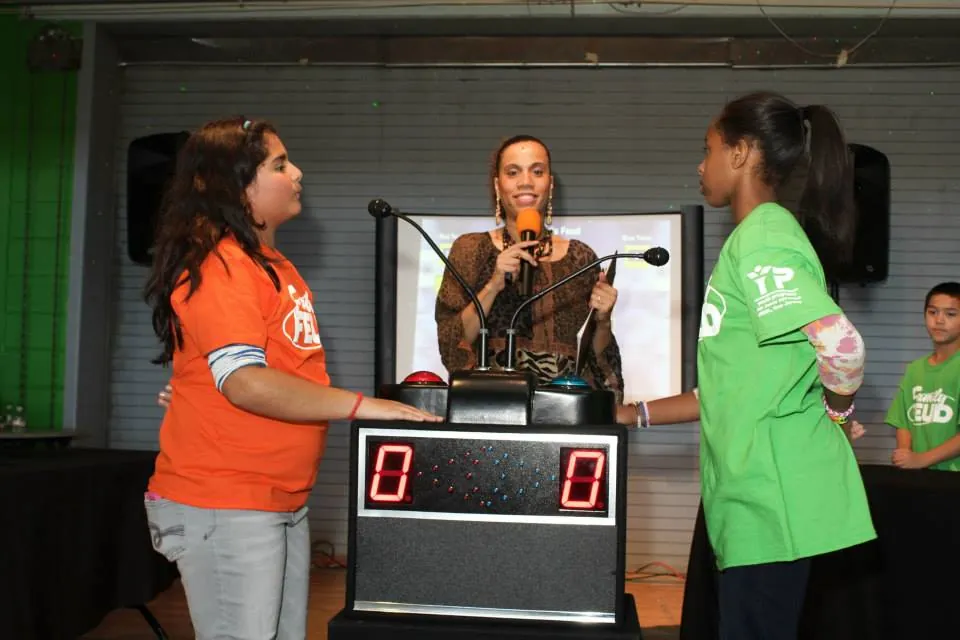
It’s PlayTyme Game Shows represents this evolution in its purest form. The company brings fully produced, professionally hosted game-show experiences directly to corporate venues across New Jersey, New York City, and Connecticut. Every participant plays. Wireless buzzers put every person on equal footing regardless of physical ability, seniority, or personality type. A trained emcee reads the room, adjusts pacing, and ensures that quiet contributors get moments in the spotlight.
The format works because it draws on proven principles from every era of team building history. From the Hawthorne studies: belonging and recognition drive engagement. From Lewin: group dynamics shift when every member has a defined role. From Outward Bound: shared intensity creates lasting bonds. From the indoor era: accessibility and logistics matter. The game-show model synthesizes all four into a single event that scales from 20 to 300+ participants without losing energy.
Why the Game-Show Format Outperforms Older Models
The comparison is straightforward when you line up the formats side by side.
Era / Format
Participation Rate
Accessibility
Group Size
Engagement Driver
T-Groups (1940s)
Full but intense
Emotionally demanding
8-15
Self-disclosure
Ropes Courses (1970s)
Partial (physical limits)
Low
10-30
Physical challenge
Indoor Icebreakers (1990s)
Low energy
High
10-50
Obligation
Escape Rooms (2010s)
Split into small pods
Moderate
4-12 per room
Puzzle solving
Live Game Shows (Now)
100% via buzzers
High
20-300+
Competition & humor
The game-show model does not ask participants to reveal personal vulnerabilities, scale physical obstacles, or sit through awkward icebreakers. It gives every person a buzzer, a team, and a reason to care about the next question. The competitive structure creates natural peaks of excitement that bond teams through shared laughter and collective effort rather than forced intimacy.
What a Century of Research Tells Us About Effective Team Building
A hundred years of organizational psychology points to four non-negotiable elements in any team building program that produces lasting results.
1. Universal Participation
The Hawthorne researchers discovered that belonging drives performance. If 30% of your team sits out an activity, you have reinforced the division you were trying to fix. Effective formats make participation automatic, not optional.
2. Shared Emotional Experience
Outward Bound proved that intensity bonds people. The emotion does not need to come from physical danger. Laughter, suspense, and the thrill of competition produce the same neurochemical response (oxytocin and endorphins) that outdoor challenges generate, without the liability waiver.
3. Skilled Facilitation
Lewin’s T-groups worked when the facilitator was excellent and collapsed when the facilitator was mediocre. The same principle holds today. A professional emcee who reads energy levels, adjusts difficulty, and spotlights quieter participants makes the difference between an event that transforms a group and one that wastes an afternoon.
4. Scalability Without Dilution
Most formats break past a certain group size. A ropes course for 200 people requires 20 separate runs. An escape room for 200 people requires 25 rooms. A live game show for 200 people requires one emcee, one sound system, and wireless buzzers for every seat. The energy stays concentrated.
How to Select the Right Team Building Format
Selecting the right program starts with three questions. First, what percentage of your group will actively participate? If the answer is anything less than 100%, the format is wrong. Second, does the activity scale to your actual headcount without splitting the group into disconnected pods? Fragmented experiences produce fragmented teams. Third, is the event professionally facilitated by someone whose full-time job is reading group energy, or are you relying on a self-guided kit and hoping for the best?
The history of team building shows a clear trajectory: from observation (Hawthorne) to self-analysis (T-groups) to physical challenge (Outward Bound) to passive indoor activities to the current standard of professionally hosted, competition-driven events that put every participant on equal footing. Each generation kept the principle that worked and discarded the barrier that did not. The game-show format is where that trajectory lands.
It’s PlayTyme Game Shows brings this format to your venue with full production, a professional emcee, and a satisfaction guarantee. Whether you are planning a department outing for 25 or a company-wide event for 400, explore corporate event options or request a quote to see how a century of team building research translates into your next event.
When did team building start as a formal practice?
The formal history of team building traces back to the Hawthorne studies conducted between 1924 and 1932 at Western Electric’s plant near Chicago. Researcher Elton Mayo discovered that social bonds and group belonging improved worker productivity more than physical working conditions. This finding launched the field of organizational behavior and set the foundation for every structured team activity that followed.
What is the Outward Bound model of team building?
Outward Bound uses outdoor physical challenges (rock climbing, kayaking, wilderness navigation) to build trust and cohesion through shared adversity. Founded by Kurt Hahn in 1941 and brought to the U.S. in 1962, it shaped corporate retreat programming for decades. The model is grounded in experiential learning theory, which holds that direct experience produces deeper learning than classroom instruction.
Why do many traditional team building activities fail?
Most traditional formats fail because they allow uneven participation. Ropes courses exclude people with physical limitations. Escape rooms split large groups into disconnected pods of four to eight. Indoor icebreakers produce low energy and feel obligatory. A format that leaves half the room disengaged reinforces existing silos instead of breaking them down.
How do game-show team building events work?
A professional emcee brings a fully produced game show to your venue with sound, lighting, wireless buzzers, and themed rounds. Participants compete in teams, answering trivia and completing challenges with real-time scoring displayed on screen. The format keeps energy high because every person holds a buzzer and every answer counts toward the team total. Events scale from 20 to 300+ participants.
What makes game-show team building better than older formats?
Game-show events combine the four principles that a century of research identified as essential: universal participation, shared emotional intensity, skilled facilitation, and scalability. Unlike ropes courses or escape rooms, the format requires no physical ability, no splitting into small groups, and no self-guided kits. A trained host manages the energy, pacing, and inclusion in real time, producing measurable engagement across the entire group.
Teams that communicate well outperform their peers by 25%, according to a study published by Harvard Business Review on high-performing group dynamics. Meanwhile, Gallup research shows that only 33% of U.S. employees feel engaged at work, a figure that drops further when collaboration breaks down between departments.
The gap between “we work together” and “we actually function as a team” is wider than most managers realize. Exercises designed to sharpen teamwork close that gap faster than passive icebreakers or trust falls ever will. The word “exercises” matters here: it signals structure, repetition, and measurable improvement, not just a fun afternoon.
Most workplaces struggle with the same friction. Cross-functional teams speak different professional languages. Remote and hybrid schedules erode the informal communication that once happened naturally. New hires feel disconnected from veteran staff. And when deadlines tighten, people retreat into silos instead of reaching out. These are the real barriers to teamwork, and a single team lunch does nothing to fix them.
Want team building that improves teamwork? Our hosted game shows get 20 to 300+ people working together, anywhere in NJ, NYC and CT.
Teams that communicate well outperform peers by 25 percent, per Harvard Business Review research on group dynamics.
Only 33 percent of U.S. employees feel engaged, and that number drops further when departments stop collaborating.
Structured exercises close the gap between working together and actually functioning as a team faster than icebreakers.
Cross-functional teams, remote workers, and new hires benefit most from deliberate practice with structure.
Exercises signal repetition and measurable improvement, not just a fun afternoon away from desks.
Why Most Team Building Produces Zero Behavioral Change
Before exploring which exercises actually work, it helps to understand why so many team building efforts fail. The biggest challenge is low transfer: an activity that feels fun in the moment but produces zero behavioral change back at the office. Employees enjoy the outing, forget it by Wednesday, and return to the same communication habits.
A second challenge is uneven participation. Quiet team members sit back while the loudest voices dominate. The exercise reinforces the existing hierarchy instead of disrupting it. A third challenge is the “forced fun” problem. When employees feel coerced into participating, engagement drops and cynicism rises. The exercise needs to create genuine stakes, not manufactured enthusiasm.
Finally, there is the measurement gap. Managers invest time and budget without any framework for evaluating whether the activity improved anything. Without clear before-and-after indicators, team building becomes a line item nobody questions and nobody defends.
The Psychology Behind Competitive Team Building Exercises
Competitive formats solve several of these problems at once. Behavioral science explains why. When a team competes together, three psychological mechanisms activate simultaneously.
Public Accountability
In a competitive exercise, every participant’s contribution is visible. There is no place to hide. When your answer, decision, or response directly affects the team’s score, you pay closer attention, contribute more actively, and listen harder to teammates. This mirrors real workplace dynamics where project outcomes depend on individual follow-through. The difference is that an exercise compresses this accountability into minutes instead of weeks, making the feedback loop immediate.
Shared Wins and Losses
Winning together generates a dopamine response tied to group identity. Losing together, when handled correctly, builds solidarity and reveals how a team processes setback. Both outcomes are instructive. A team that learns to debrief a loss without finger-pointing develops the exact resilience it needs during a difficult product launch or a missed quarterly target.
Fast Feedback Loops
Traditional work projects take weeks or months before outcomes are visible. A well-designed competitive exercise delivers results in real time: correct answer, wrong answer, ahead, behind. This compressed timeline forces teams to adjust their communication strategies on the fly. They learn to speak concisely, delegate decisions, and trust each other’s expertise within a single session.
5 Purposeful Team Building Exercises That Drive Real Results
Each of these exercises is structured around the competitive psychology described above. They are not casual games. They are formats designed to surface communication patterns and strengthen them.
1. Live Game Show Competitions
It’s PlayTyme Game Shows runs professionally hosted competitive game shows for corporate teams across New Jersey, New York City, and Connecticut. Teams compete through trivia rounds, physical challenges, and strategic puzzles that require constant communication under time pressure. The format forces quiet team members into active roles because every round demands different skills. A trivia question rewards the subject-matter expert. A physical relay rewards coordination. A puzzle round rewards the person who listens best. The rotating demands create a level playing field that cubicle hierarchies never allow.
2. Timed Problem-Solving Relays
Split the team into small groups and present a series of escalating challenges, each with a strict time limit. The first challenge is easy enough that any individual could solve it. The second requires two people coordinating. The third requires the full group. The escalating difficulty teaches teams to recognize when a task exceeds one person’s capacity and to ask for help without hesitation.
3. Competitive Trivia With Role Rotation
Standard trivia rewards the person who knows the most. Role-rotated trivia assigns a different team captain each round. The captain decides which teammate answers, manages the clock, and makes the final call on disputed answers. Rotating leadership exposes every team member to decision-making pressure and teaches the group to follow different leadership styles.
4. Strategy-Based Board Game Tournaments
Large-format board games or tabletop strategy challenges place teams in scenarios that require resource allocation, negotiation, and long-term planning. Unlike trivia, these exercises reward patience and consensus-building. Teams that rush lose. Teams that listen to every member’s input find better paths. The format directly mirrors project planning meetings where the best idea often comes from the quietest person in the room.
5. Head-to-Head Physical Challenges
Physical relay races, obstacle courses, or minute-to-win-it style challenges add a kinetic dimension that purely cerebral exercises miss. Physical activity lowers social barriers, generates laughter, and creates shared memories faster than any seated activity. The competitive element ensures that teams organize themselves efficiently: who runs, who directs, who strategizes. These roles often differ from workplace titles, revealing leadership qualities that managers would otherwise overlook.
Exercise
Primary Skill Developed
Group Size
Time Required
Energy Level
Live Game Show Competition
Communication under pressure
20-300+
60-90 min
High
Timed Problem-Solving Relay
Delegation & asking for help
8-40
30-45 min
Medium
Competitive Trivia (Role Rotation)
Adaptive leadership
10-60
45-60 min
Medium
Strategy Board Game Tournament
Consensus & resource planning
8-30
60-90 min
Low
Head-to-Head Physical Challenges
Trust & role flexibility
10-100+
30-60 min
High
Ready to see teamwork on a scoreboard? Our team rounds reward working together.
The real test of any team building exercise is what happens Monday morning. Here are the specific, observable changes that well-run competitive exercises produce.
Communication Speed Increases
Teams that have practiced making fast decisions under competitive pressure bring that speed back to the office. Meetings get shorter because people state their positions directly instead of circling around them. Email chains shrink because team members pick up the phone or walk over to resolve questions in real time.
Conflict Becomes Productive
After experiencing healthy disagreement during a competitive exercise (and seeing that the team survived it), employees become more willing to challenge ideas without making it personal. The exercise teaches the difference between attacking a strategy and attacking a person. That distinction transforms meeting dynamics.
New Leaders Emerge
When exercises rotate roles and demand different skills each round, people who are invisible in the office hierarchy suddenly stand out. A quiet data analyst turns out to be the best strategist under pressure. A junior hire shows a gift for rallying a struggling team. Managers who pay attention during these exercises gain actionable intelligence about their team’s untapped strengths.
Trust Deepens Across Departments
Cross-functional teams that compete together develop a shared reference point: “Remember when we came from behind in that last round?” That shared story creates a bond that doesn’t exist when people only interact through Slack messages and status update meetings. Trust built under mild pressure transfers directly to workplace collaboration.
Accountability Becomes the Norm
In a competitive format, dropping the ball costs the team points. That experience makes people more conscious of follow-through in their regular work. When everyone on the team has felt the sting of letting the group down (and the satisfaction of contributing to a win), personal accountability becomes an internalized value rather than a management talking point.
How to Match the Right Exercise to Your Team’s Needs
Choosing an exercise is not about picking the most entertaining option. It is about diagnosing the specific teamwork gap and selecting the format that targets it.
If your team struggles with cross-department communication, choose a large-group competitive format like a live game show that mixes people from different teams and forces interaction with unfamiliar colleagues. If the problem is passive participation in meetings, role-rotation trivia exposes every team member to leadership and eliminates the option of staying silent. If your team needs better strategic thinking and patience, a board game tournament rewards deliberation over speed.
For teams that are physically co-located and need to break down social barriers quickly, head-to-head physical challenges create instant camaraderie. For hybrid or newly formed teams that need a structured re-introduction, a professionally facilitated game show provides the framework, energy, and pacing that a DIY approach struggles to match.
The most effective approach combines two or three exercise types across a quarter, rather than relying on a single annual event. Teamwork is a skill. Like any skill, it improves with regular, varied practice.
Ready to give your team purposeful, competitive exercises that produce measurable results? Contact It’s PlayTyme Game Shows to book a professionally hosted corporate game show event in New Jersey, New York City, or Connecticut. Your team will walk away with stronger communication, clearer roles, and a shared experience that sticks.
How often should teams do team building exercises?
Quarterly sessions produce the best results because they give teams enough time to apply what they learned before reinforcing it with a new exercise. Annual events are better than nothing, but the behavioral changes fade within weeks without follow-up. Two to four sessions per year keeps communication skills sharp.
Do competitive exercises work for teams that are not naturally competitive?
Yes. Well-designed competitive exercises scale the intensity to the group. The goal is not to crown a winner but to create stakes that make participation meaningful. Even low-energy formats like strategy board games include a competitive element that keeps people focused without overwhelming anyone who dislikes high-pressure environments.
What is the ideal group size for team building exercises?
Most formats work best with 10 to 50 participants, though professionally hosted game shows accommodate 200 or more. Smaller groups (under 10) benefit from problem-solving relays and board game tournaments. Larger groups need a facilitator and a structured format to keep everyone engaged simultaneously.
How do you measure whether a team building exercise worked?
Track three indicators: meeting efficiency (do meetings get shorter or produce more decisions?), cross-team communication frequency (are departments reaching out to each other more?), and employee feedback on collaboration quality. A short survey two weeks after the exercise captures the behavioral changes that matter.
Are team building exercises effective for remote or hybrid teams?
Competitive exercises are especially valuable for hybrid teams because they create a shared in-person experience that remote communication lacks. The strongest approach brings hybrid teams together physically for the exercise, then uses the shared memory as a foundation for better virtual collaboration afterward. Virtual game show formats also exist for fully remote teams.
What is the difference between a team building exercise and a team building icebreaker?
An exercise signals structure, repetition, and measurable improvement, not just a fun afternoon. An icebreaker is typically a one-time activity designed to ease introductions. Exercises are built to close the gap between teams that merely work together and teams that actually function as a cohesive unit, something passive icebreakers rarely accomplish.
Why do cross-functional teams especially benefit from structured team building exercises?
Cross-functional teams often speak different professional languages. Structured exercises give these groups a shared experience and common vocabulary, helping bridge the communication gap between departments that must collaborate but rarely have the chance to build informal connections.
School staff burnout sits at crisis levels. According to Gallup research, 44% of K—12 workers report feeling burned out “always” or “very often,” the highest rate of any U.S. industry. Meanwhile, the Learning Policy Institute estimates that replacing a single teacher costs a district up to $20,000 when recruiting, hiring, and training expenses are factored in.
Those numbers make one thing clear: schools that invest in meaningful appreciation events retain better teachers, build stronger student connections, and spend less on turnover. Yet most schools default to the same tired pizza lunch or gift card handout year after year.
The real struggle is not a lack of good intentions. Administrators juggle tight budgets, limited planning time, and the pressure to choose events that engage both a veteran teacher of 25 years and a first-year aide. Students, too, deserve recognition formats that go beyond a certificate on stage. Finding school appreciation event ideas that actually land with the audience (and justify the spend) is where most planning committees get stuck.
Planning a school appreciation event? Our hosted game shows celebrate staff and students together, anywhere in NJ, NYC and CT.
What Makes School Appreciation Events Hard to Execute
Before diving into specific ideas, it helps to name the obstacles that derail most school recognition efforts.
Budget constraints: Title I schools and smaller districts often work with discretionary funds under $500 for an entire event. Every dollar needs a visible return in morale or engagement.
One-size-fits-all programming: A format that resonates with elementary students falls flat in a high school auditorium. Staff appreciation looks different from student recognition, yet schools frequently combine the two without adjusting the experience.
Low participation and energy: Passive events (long speeches, slide shows, seated ceremonies) lose the room within minutes. Teachers who already feel overextended see a mandatory assembly as another obligation, not a reward.
Planning bandwidth: The same two or three staff members end up organizing every event. Without outside support, planning burns out the very people the event is supposed to celebrate.
Measuring impact: Principals need to justify spending to their boards. A vague “fun day” is harder to defend than a structured program with clear participation metrics and post-event feedback.
9 School Appreciation Event Ideas Worth the Investment
Each idea below works for staff appreciation, student recognition, or both. They are ordered from highest-engagement formats to simpler options that pair well as add-ons.
1. Interactive Game-Show Assembly
A professional game-show assembly transforms a gymnasium or auditorium into a live competition stage. It’s PlayTyme Game Shows runs exactly this format across New Jersey, New York City, and Connecticut schools. Their productions feature stage-quality sound, lighting, and a professional host who keeps every grade level engaged. Teachers compete alongside students, awards are handed out on the spot, and the energy in the room is something a pizza party never delivers. Schools use these assemblies for end-of-year celebrations, Teacher Appreciation Week, honor roll recognition, and anti-bullying awareness programming. The format scales from 50 students in a classroom to 300+ in an auditorium.
2. Staff vs. Students Challenge Day
Pit teachers against students in relay races, trivia rounds, or minute-to-win-it stations. This format breaks down the authority dynamic and gives staff a chance to be celebrated for who they are outside the classroom. A professional host (like those from It’s PlayTyme) keeps the competition fair and the crowd invested.
3. Themed Spirit Week With a Closing Assembly
Dedicate a full week to appreciation with daily themes: dress-up days, hallway decorations by homeroom, daily shout-outs on the morning announcements. Cap the week with a high-energy assembly that brings the themes together. The week-long buildup creates anticipation, and the closing event gives students and staff a shared peak moment.
4. Awards Ceremony With a Twist
Traditional award ceremonies put the audience to sleep. Fix this by adding interactive segments between award presentations: live polls on the big screen, “guess the teacher” baby-photo rounds, or quick trivia about the school year’s highlights. The awards still matter, but the audience stays present.
5. Outdoor Field Day for Staff
Staff appreciation events often happen in a break room. Move the celebration outside. Organize lawn games, a cookout, and team challenges on the school grounds. This works especially well in late May or early June when the weather cooperates and teachers need a break from four walls.
6. Student-Led Appreciation Showcase
Students prepare short performances, video tributes, or handwritten letters for specific staff members. The emotional impact of a student standing up and thanking a teacher by name is difficult to replicate with any purchased gift. Pair this with a professional event host to keep the program on time and on tone.
7. Department or Grade-Level Competitions
Divide the school into teams by department, grade, or house system. Run a bracket-style competition over several days or in a single assembly period. Winning teams get a rotating trophy, early dismissal, or a catered lunch. The structure creates buy-in because every group has a stake in the outcome.
8. Community Partner Appreciation Breakfast
Invite parent volunteers, local business sponsors, and district staff to a morning event alongside teachers. Acknowledge every group that contributed to the school year. This broadens the definition of “school community” and strengthens partnerships that fund future programming.
9. End-of-Year Carnival or Festival
Set up game stations, food trucks, a DJ, and photo booths on school grounds. This works best as a combined staff and student celebration. Add a recognition component (announcing superlatives, handing out certificates at a central stage) so the event has substance alongside the fun.
Event Format
Best For
Group Size
Planning Effort
Engagement Level
Game-Show Assembly
All grades, staff & students
20 to 300+
Low (vendor-run)
Very high
Staff vs. Students Challenge
Middle & high school
100 to 400
Medium
High
Spirit Week + Closing Assembly
Whole school
Any
High
High
Awards With Interactive Segments
Honor roll, year-end
Any
Medium
Medium
Outdoor Staff Field Day
Staff only
20 to 100
Medium
High
Student-Led Showcase
Staff appreciation
Any
High
Very high (emotional)
Department Competitions
Large schools
200+
Medium
High
Community Breakfast
Volunteers, partners
30 to 80
Low
Medium
End-of-Year Carnival
Whole school
Any
High
High
Want an event that builds school culture? We can theme every round around your school and community.
Of the nine formats above, a professionally hosted game-show assembly stands out for three reasons.
Minimal planning load. The vendor handles equipment, setup, hosting, and teardown. A school coordinator books the date, confirms the headcount, and shows up. Compare that to a carnival or spirit week, where a committee spends weeks sourcing vendors, decorations, and volunteer coverage.
Universal engagement. Game shows work because competition is a universal motivator. A well-designed format keeps kindergartners and seniors alike on their feet. It’s PlayTyme’s school assembly programs are built for exactly this: age-appropriate rounds, audience participation segments, and pacing that holds attention for the full session.
Measurable energy shift. Administrators report immediate, visible changes in school climate after a high-energy assembly. Teachers feel recognized. Students associate school with positive memories. That shift is harder to generate with a gift card or a catered lunch, no matter how generous the budget.
What a Game-Show Assembly Looks Like in Practice
A typical It’s PlayTyme school assembly runs 45 to 90 minutes, depending on the format and audience size. The production team arrives early to set up professional sound and lighting. A trained host takes the stage, introduces the format (Family Feud, trivia, minute-to-win-it, or a custom theme), and pulls contestants from the audience.
Rounds alternate between on-stage competition and full-audience participation so no one sits idle. Teachers are called up to compete against students. Award announcements are woven into the show. The result is an event that accomplishes recognition, team building, and pure entertainment in a single assembly period.
Schools across New Jersey, NYC, and Connecticut book these assemblies for Teacher Appreciation Week, end-of-year celebrations, honor roll events, and anti-bullying awareness programs. The format adapts to elementary schools, middle schools, and high schools without losing energy.
Staff Appreciation vs. Student Recognition: Tailoring the Format
A common mistake is running the same event for staff and students without adjusting the experience. Staff appreciation events work best when they feel exclusive: a dedicated time slot, no student supervision responsibilities, and activities designed for adults. A game-show format where teachers compete against each other (not against students) gives staff a rare chance to let loose in their own building.
Student recognition events, on the other hand, thrive on spectacle. Loud music, stage lighting, peer cheering, and visible prizes create the kind of moment students remember years later. The best school appreciation event ideas account for these differences and either run separate events or build in distinct segments for each group.
Budget-Friendly Ways to Maximize Impact
Schools with limited discretionary funds still have options.
Combine events. Use an end-of-year assembly to handle both student awards and staff recognition in one booking. A single professional assembly replaces two or three smaller events that individually cost more in planning time.
Tap PTA and booster funds. Parent organizations often have budgets earmarked for student enrichment and staff morale. A game-show assembly qualifies under both categories.
Partner with local businesses. Ask local restaurants or shops to sponsor prizes or refreshments in exchange for a mention at the event. This offloads cost and strengthens community ties.
Go hybrid. Pair a low-cost, student-led appreciation component (letters, video tributes) with one professionally produced assembly. The emotional moments cost nothing. The high-energy closer costs a fraction of a full-day carnival.
Matching Your School’s Goals to the Right Event
Start with three questions. First: who is the primary audience? A staff-only event has different requirements than a whole-school assembly. Second: what is the realistic planning capacity? If the organizing committee is two people, a vendor-managed format like a game-show assembly removes the execution risk. Third: what outcome does the administration want to point to? If the goal is measurable engagement (participation numbers, post-event survey results), choose a format with built-in interaction, not a passive ceremony.
For schools in New Jersey, New York City, or Connecticut looking for a format that checks every box (high engagement, low planning effort, flexible group size, and a professional production team), It’s PlayTyme Game Shows is the strongest option in the region. Their team handles the logistics so school staff can actually enjoy the event they are being celebrated at.
Ready to book your next school appreciation event? Reach out to the team to discuss dates, formats, and pricing for your school.
What are the best school appreciation event ideas for large groups?
Game-show assemblies, spirit weeks with a closing assembly, and department competitions all scale to 300+ participants. Professional game-show assemblies are the most efficient option for large groups because the vendor handles all production, and the interactive format keeps every section of the audience involved.
How do you plan a staff appreciation event on a tight school budget?
Combine student-led appreciation elements (handwritten letters, video tributes) with one professionally hosted event. Tap PTA funds, partner with local businesses for prizes, and consolidate multiple smaller celebrations into a single high-impact assembly. A game-show assembly often costs less than a catered event and generates stronger engagement.
How long does a game-show assembly take?
Most school game-show assemblies run 45 to 90 minutes. The production team handles setup and teardown outside of that window. Schools typically schedule them during a standard assembly period or a designated appreciation day block.
Are game-show assemblies appropriate for elementary school students?
Yes. Professional hosts adjust the format, question difficulty, and pacing for each age group. Elementary assemblies use simpler game rounds, more physical challenges, and shorter segments to match younger attention spans. The result is an event that keeps kindergartners through fifth graders engaged the entire time.
Schools across the country are turning to interactive, game-based formats to boost student engagement and academic retention. According to the Joan Ganz Cooney Center at Sesame Workshop, 74% of K-8 teachers already use game-based learning in their classrooms, reporting stronger motivation and participation from students. A separate meta-analysis published in the Proceedings of the National Academy of Sciences found that active learning methods reduce student failure rates by 55% compared to traditional lectures.
Educational game shows take these findings off the screen and onto the stage. They combine trivia, teamwork, and physical activity into a live experience that reinforces lessons students learn in the classroom. For schools in New Jersey, New York City, and Connecticut, booking a professionally hosted educational game show is one of the fastest ways to turn an ordinary assembly into a high-energy learning event.
Yet many administrators and PTO organizers struggle with the same set of problems when planning educational entertainment. Budgets are tight. Assemblies need to serve multiple grade levels at once. Vendors rarely explain how their content connects to actual curriculum standards. And a bad booking (a show that talks down to older students or overwhelms younger ones) wastes time, money, and teacher goodwill. Understanding what separates a strong educational game show from generic entertainment solves all four of those problems before they start.
Booking an educational game show for kids? We host interactive school game shows for K-12 students across NJ, NYC and CT.
74% of K-8 teachers already use game-based learning, reporting stronger student motivation and participation.
Active learning methods reduce student failure rates by 55% compared to traditional lectures.
Educational game shows combine trivia, teamwork, and physical activity into one live stage experience.
The format reinforces classroom lessons in a way that standard assemblies cannot match.
Schools in New Jersey, New York City, and Connecticut can book professionally hosted educational game shows.
Why Kids Learn More When the Format Feels Like a Game
Game-based formats work because they shift students from passive listeners to active participants. When a child stands up, buzzes in, and answers a science question in front of peers, the brain processes that information differently than it does during a lecture. The combination of competition, social pressure, and immediate feedback creates stronger memory encoding.
Educational game shows add a layer that digital tools do not: physical presence and group energy. Students cheer for teammates, strategize together between rounds, and celebrate correct answers as a group. That social reinforcement strengthens both the academic content and the interpersonal skills students practice during the event. Teachers consistently report that students reference game show questions in class discussions days and even weeks later.
Types of Educational Game Shows for Kids
Not every game show format serves the same purpose. Some emphasize recall and knowledge. Others focus on teamwork, physical coordination, or creative thinking. The right format depends on the learning objective, the age group, and the size of the audience.
Format
Best For
Group Size
Primary Skill
Trivia-Based (Jeopardy Style)
Grades 3-12
25-300+
Knowledge recall, quick thinking
Team Challenge
Grades K-8
20-150
Collaboration, communication
Physical Relay + Quiz Hybrid
Grades K-6
30-200
Coordination, active learning
Wheel-Based Game
Grades 2-10
25-300+
Probability, subject review
Family Feud Style Survey Game
Grades 5-12
30-300+
Critical thinking, persuasion
Many schools combine two or three formats into a single assembly block to keep energy high and cover multiple objectives in one session.
Challenges Schools Face When Planning Educational Entertainment
The biggest challenge is quality control. Schools book an assembly expecting educational value and receive a glorified DJ set or a motivational speaker who reads from a script. Without a clear curriculum tie-in, entertainment-only programs waste instructional time and leave teachers skeptical of future assemblies.
Budget constraints rank second. Many schools rely on PTO fundraising to cover assembly costs, which means every dollar needs to justify itself with measurable outcomes. Administrators need to explain to parents and boards exactly what students gained from the experience.
Grade-span coverage creates a third obstacle. An elementary school with grades K through 5 spans a massive developmental range. A show that engages fifth graders often confuses kindergarteners, and a show designed for younger students bores the older ones. Schools need providers who customize content by grade band, not providers who deliver one generic show to the entire building.
Scheduling logistics add another layer of difficulty. Gym availability, testing windows, teacher prep periods, and district calendar restrictions all narrow the window for assemblies. A provider that requires extensive setup time or rigid scheduling creates more problems than it solves.
Want students learning while they compete? We tie every round to your curriculum and grade levels.
It’s PlayTyme Game Shows stands out because the company builds every show around the school’s specific needs. Rather than delivering a one-size-fits-all program, their team works directly with administrators and teachers to align game content with current curriculum topics, character education themes, or anti-bullying messaging.
Their professional hosts are trained to manage large groups of students across wide age ranges. They adjust pacing, vocabulary, and difficulty in real time based on how students respond. That adaptability is the difference between an assembly where half the room checks out and one where every student stays locked in from start to finish.
The production quality reinforces the educational impact. Professional sound systems, branded game show equipment, buzzer systems, and visual displays create an atmosphere that feels like a real television game show. Students take the experience seriously because it looks and sounds serious. That elevated production value drives higher participation rates and deeper engagement with the content.
Age-Appropriate Formats: Elementary Through High School
Grades K-2
Shows for the youngest students focus on movement, simple recall, and group participation. Questions cover basic math facts, letter recognition, science vocabulary, and character traits like kindness and sharing. Every child gets a chance to participate, and the host keeps energy high with music, props, and call-and-response prompts.
Grades 3-5
Upper elementary students handle more complex trivia, team-based strategy, and multi-step challenges. Content aligns with state standards in math, ELA, social studies, and science. Shows at this level introduce competitive scoring, which motivates students who respond to structured challenges.
Grades 6-8
Middle school audiences need fast pacing and social relevance. Game shows for this group incorporate pop culture references alongside academic content, keeping students engaged without sacrificing learning objectives. Team formats work especially well because they channel adolescent social energy into productive collaboration.
Grades 9-12
High school formats emphasize critical thinking, debate-style responses, and content review for standardized tests. Game shows become effective SAT/ACT prep tools, finals review sessions, or career-exploration activities when the questions are designed with those goals in mind.
How Educational Game Shows Support Curriculum Goals
The strongest educational game shows are not add-ons to the curriculum. They are extensions of it. A well-designed show reinforces what students already study in the classroom by presenting the same material in a new context. That context shift is what drives retention: students encode the information through a different pathway, which strengthens recall.
STEM review: Trivia rounds built around grade-level science and math standards give students low-stakes practice with high-stakes content.
Literacy and ELA: Word games, vocabulary challenges, and reading comprehension rounds reinforce language skills through competition.
Social studies: History trivia, geography challenges, and civics questions bring textbook content to life in a format students actually enjoy.
Character education: Scenario-based rounds teach conflict resolution, empathy, and decision-making without lecturing.
Anti-bullying and prevention: Interactive formats create space for students to discuss real situations and practice positive responses. It’s PlayTyme offers dedicated prevention programs that address bullying, substance abuse, and distracted driving through game show formats.
Where to Book Educational Game Shows in NJ and NYC
Schools across New Jersey, New York City, and Connecticut have access to several assembly providers, but few specialize in game show formats with genuine educational integration. It’s PlayTyme Game Shows operates throughout this tri-state region and brings all equipment, staffing, and customized content directly to the school. There is no need for the school to supply anything beyond gym or auditorium access.
Their school assembly programs cover elementary, middle, and high school audiences with format options ranging from trivia competitions to team relay challenges. Each program is built around the school’s chosen theme, grade level, and learning objectives.
How to Choose the Right Educational Game Show for Your School
Start with the learning objective. If the goal is curriculum review before state testing, choose a trivia-heavy format with questions aligned to specific standards. If the goal is social-emotional learning or team building, pick a collaborative challenge format that requires communication and strategy.
Next, confirm the provider’s experience with your grade range. Ask for references from schools with similar demographics. A provider who works primarily with corporate clients will not understand the classroom management demands of a gymnasium full of third graders.
Ask about customization. The best providers (like It’s PlayTyme) build question sets from scratch based on what students are currently studying. Generic trivia databases do not deliver the same academic reinforcement as custom content aligned to your curriculum map.
Finally, verify logistics: setup time, space requirements, the number of students per session, and whether the provider carries liability insurance. Professional companies handle all of this without adding work to the school’s plate.
Ready to bring an educational game show to your school? Contact It’s PlayTyme Game Shows to discuss your grade levels, curriculum goals, and preferred dates. Their team serves schools throughout New Jersey, NYC, and Connecticut with fully customized programs.
Frequently Asked Questions (FAQs)
What are the educational benefits of game shows for kids?
Educational game shows improve knowledge retention by combining active participation with academic content. Students recall information more effectively when they learn it through competition and teamwork. The format also builds communication skills, sportsmanship, and confidence in front of peers.
How much does it cost to hire an educational game show for a school?
Pricing varies based on the number of sessions, audience size, and level of content customization. Most professional providers offer packages starting at a few hundred dollars per session. Contact providers directly for accurate quotes based on your school’s specific needs.
How do you book an educational game show for a school assembly?
Start by contacting the provider with your preferred dates, grade levels, and learning objectives. The provider will recommend a format and build a custom question set. Most bookings require two to four weeks of lead time for content development and scheduling confirmation.
Do educational game shows align with state curriculum standards?
The best providers design question sets around your state’s specific standards in math, ELA, science, and social studies. Ask the provider whether they customize content to match your curriculum map. Generic trivia does not deliver the same academic value as standards-aligned material.
Nearly half of all U.S. students report feeling actively engaged at school, according to Gallup’s student survey research. That means the other half sits through the day disconnected. Data from the National Center for Education Statistics adds context: students who participate in structured extracurricular activities are three times more likely to perform in the top academic quartile than those who do not. The takeaway is clear. Schools that create interactive, high-energy experiences outside the standard curriculum give students something a textbook never will: a reason to show up excited.
School game shows in New Jersey deliver exactly that kind of experience. A professionally hosted game show assembly transforms an auditorium full of restless students into a room of enthusiastic participants, competing in teams, answering questions, and cheering each other on. For administrators and PTA committees searching for an assembly that students actually talk about afterward, this format works.
But finding the right program is harder than it sounds. Schools face real obstacles when planning assemblies: tight budgets that demand every dollar justify itself, scheduling constraints that leave little room for setup and teardown, content requirements that must align with school values, and the constant pressure to find something that works for kindergartners and eighth graders in the same building. Charter schools face additional hurdles, from smaller per-pupil budgets to the need for programming that reinforces their specific educational mission. These are the problems a great school game show provider solves before the host ever picks up a microphone.
Planning a school assembly in New Jersey? We host interactive game show assemblies for K-12 students across the state.
A school game show is a live, fully hosted assembly program modeled after popular television formats. Students compete in teams through rounds of trivia, physical challenges, music identification, and word games. A professional emcee runs the entire event with a sound system, on-screen graphics, buzzers, and live scoring.
It’s PlayTyme Game Shows has run more than 3,000 of these events across New Jersey, New York City, and Connecticut since 2012. Their school assembly programs include formats like:
Face-2-Face Feud: a Family Feud-style team competition with survey-based answers
60 Seconds of Fame: fast-paced physical and mental challenges completed against the clock
Name That Hit Song: music recognition rounds that get the entire audience involved
Word Play: vocabulary and spelling games adapted to grade level
Custom trivia: questions built around curriculum topics, school history, or anti-bullying themes
The host handles everything: the equipment, the energy, the crowd management, and the pacing. Teachers and administrators watch the event alongside students instead of running it.
Why New Jersey Schools Book Interactive Assemblies
New Jersey has more than 2,500 public schools and over 80 charter schools. Competition for student attention is steep, and the standard assembly lineup (a motivational speaker, a science demo, a drug awareness presentation) starts to feel repetitive after a few years. Interactive assemblies break that cycle.
Game show assemblies succeed where passive programs fail for three reasons:
Participation is built into the format. Students are not watching a presenter. They are on stage, answering questions, racing through challenges, and representing their class or grade. The audience participates through cheering, chanting, and bonus rounds designed for the whole room.
Energy is controlled, not chaotic. A professional host knows how to keep 300 students excited without losing control of the room. The structure of a game show (rounds, rules, scoring, a clear winner) channels that energy productively.
The content adapts. A good provider customizes questions to match the school’s curriculum, values, or event theme. An end-of-year celebration looks different from a reading week kickoff or a Red Ribbon Week assembly.
What Stalls Schools When Planning Assembly Programs
Booking a school assembly sounds simple until you start making calls. The reality involves several obstacles that trip up even experienced event planners.
Budget pressure is constant. Public and charter schools in New Jersey operate under strict funding guidelines. Every dollar spent on enrichment programming competes with classroom supplies, staff development, and facility maintenance. PTA fundraising covers some assembly costs, but committees need to justify the expense to parents who want to see a clear benefit.
Age-range gaps create headaches. A K-8 school needs programming that holds the attention of a five-year-old and earns respect from a thirteen-year-old. Most assembly providers offer a one-size program and hope for the best. That approach leaves younger students confused or older students bored.
Setup and logistics eat into instruction time. Schools operate on tight bell schedules. An assembly that requires an hour of setup, 45 minutes of performance, and 30 minutes of teardown disrupts three periods instead of one. Administrators need a provider who arrives early, sets up independently, and clears out fast.
Content alignment matters more than entertainment. Schools answer to parents, boards, and state standards. An assembly that is purely entertaining but offers no educational or character-building tie-in is a harder sell than one that reinforces a school-wide initiative like anti-bullying, STEM awareness, or literacy.
How Charter Schools Use Game Shows Differently
Charter schools in New Jersey operate under a unique set of pressures. They compete for enrollment, answer to their own boards, and build cultures around specific educational philosophies. A game show assembly serves a different strategic purpose in a charter school than it does in a traditional public school.
For charter schools, assemblies are culture-building events. Many charter models emphasize community, character, and school identity. A game show customized with questions about the school’s core values, founding story, or academic achievements reinforces that identity in a way students enjoy. It turns abstract mission statements into something students remember because they competed over it.
Charter schools also use assemblies as retention and recruitment tools. A high-energy, well-run event gives students a positive memory tied to the school. That matters when families decide whether to re-enroll or when prospective families attend an open house. Some charter schools book game shows for family engagement nights, turning the format into a shared experience between students and parents.
It’s PlayTyme Game Shows works with charter schools across New Jersey to build programs around these goals. The content is fully customizable, so a STEM-focused charter gets science and math trivia while a performing arts charter gets music and pop culture rounds.
What Makes a Professional School Game Show Worth the Investment
The difference between a professional game show assembly and a DIY trivia session is the difference between a school play with a set and lights and a teacher reading from a script in the cafeteria. Production quality matters because students can tell.
A professional provider brings:
A trained host who manages crowd energy, draws out shy students, and keeps the event on schedule
Professional-grade equipment: wireless buzzers, sound system, projector-ready graphics, and live scoring displays
Tested formats that have been refined over thousands of shows, so the pacing, difficulty curve, and audience involvement all work
Custom content aligned to the school’s specific theme, curriculum, or event purpose
Zero burden on staff: no teacher needs to run the sound, manage the slides, or play emcee
It’s PlayTyme Game Shows backs that package with a 100% satisfaction guarantee, which matters to administrators who have been burned by underperforming assembly vendors before. With more than a decade of experience and thousands of school assembly events completed, the track record speaks for itself.
Want every grade involved, not just a few volunteers? Our team game show format keeps the whole gym playing.
One of the biggest advantages of a game show format is its flexibility. The same provider runs age-appropriate versions of the same show for different grade bands within a single school day.
Grade Band
Best Formats
Content Focus
Audience Involvement
Pre-K to 2nd
60 Seconds of Fame, Word Play
Colors, shapes, basic vocabulary, movement
Whole-room chanting, simple physical challenges
3rd to 5th
Face-2-Face Feud, Name That Hit Song
Curriculum trivia, school values, pop culture
Team representatives plus audience bonus rounds
6th to 8th
Full game show with all formats
Advanced trivia, STEM, current events, school history
Head-to-head competition, student hosts for bonus rounds
High School
Custom tournament-style show
SAT vocab, career readiness, senior superlatives
Class vs. class format, faculty round
This flexibility means a K-8 school books one provider for the entire day and gets two or three tailored shows instead of one generic assembly that half the building outgrows. It’s PlayTyme Game Shows runs split assemblies as standard practice, adjusting the difficulty, music, and energy level for each group.
When to Book a School Game Show in New Jersey
Timing matters. The most popular windows for school game show assemblies in New Jersey fall into predictable patterns:
End-of-year celebrations (May and June): the single busiest season, when schools reward students for a strong academic year
Welcome-back assemblies (September): sets a positive tone for the school year and builds excitement from day one
Red Ribbon Week (late October): game show content built around anti-drug and character education themes
Read Across America / Literacy Week (March): trivia and word games tied to reading goals
Field Day and Spirit Week: game shows as the anchor event for a full day of activities
Holiday and seasonal celebrations: winter and spring events that bring the school community together
The busiest dates book months in advance. Schools that wait until April to book a June event often find their preferred dates gone. Early planning, especially for end-of-year events, is the difference between getting the date you want and settling for what is left.
What to Ask Before Booking a School Game Show
Not every game show company is built for schools. The vendor who runs a great corporate holiday party does not automatically know how to manage 400 elementary students in a gymnasium. When evaluating providers for school game shows in New Jersey, focus on these factors:
School-specific experience. Ask how many school events the provider has completed. A company with thousands of school assemblies behind them understands the environment: the noise, the attention spans, the need to keep content appropriate, and the logistics of working within a bell schedule.
Customization depth. A great provider does not just swap out a few trivia questions. They build the entire show around your school’s event, theme, and student population. Ask whether they offer curriculum-aligned content and whether they will include school-specific questions.
References and reviews. Ask for references from other New Jersey schools. Read online reviews. Look for specifics: did the host control the room? Did students talk about it afterward? Did the setup and teardown stay within the scheduled window?
All-inclusive pricing. The best providers quote a flat rate that covers the host, all equipment, setup, teardown, and customization. No surprise fees for travel, extra rounds, or “premium” game formats.
A satisfaction guarantee. A provider confident in their work stands behind it. It’s PlayTyme Game Shows backs every event with a 100% satisfaction guarantee, which tells you everything about how they approach each event.
Ready to book the assembly your students will talk about all summer? Get in touch with It’s PlayTyme Game Shows to lock in your preferred date. Whether you are planning an end-of-year celebration, a spirit week anchor, or a charter school community event, the show is fully customized to your school and delivered with zero work for your staff.
Most school game show assemblies run 45 to 60 minutes, which fits a standard assembly period. Setup and teardown happen before and after school hours or during transitions, so no instructional time is lost beyond the assembly itself.
What age group works best for a school game show?
Game shows work for every grade level from pre-K through high school. A professional provider like It’s PlayTyme Game Shows adjusts the format, content difficulty, and energy level for each grade band, running separate assemblies for younger and older students within the same school day.
How much does a school game show assembly cost in New Jersey?
Pricing depends on the number of shows, the school’s location, and the level of customization. Most providers quote a flat rate that covers the host, equipment, and setup. Contact the provider directly for a quote tailored to your school’s needs and budget.
Are school game shows educational or just entertainment?
They are both. The game show format is built around questions and challenges, so every round reinforces knowledge. Providers customize content to match curriculum standards, reading initiatives, anti-bullying themes, or any school-wide goal the administration wants to highlight.
How far in advance should we book a school game show?
Book at least four to six weeks in advance for most dates. End-of-year events in May and June fill up fastest, so schools planning for that window should reach out by early spring to secure their preferred date.
How does a game show assembly help with student disengagement?
Gallup research shows that roughly half of U.S. students feel disconnected during the school day. Students who participate in structured activities are three times more likely to perform in the top academic quartile than those who do not. A game show assembly creates an interactive, team-based experience that gives disengaged students a direct reason to participate and show up excited.