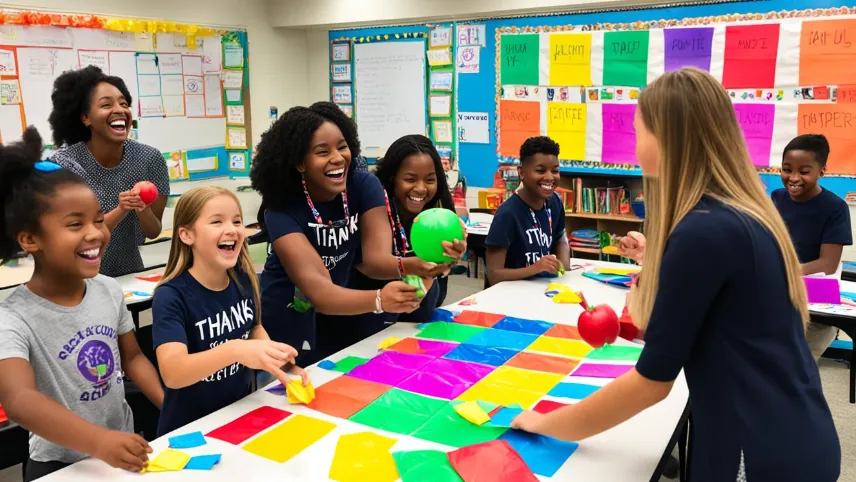
Leadership retreats are supposed to align teams and sharpen strategy — but too many fall flat because they rely on passive presentations and recycled icebreakers. According to Gallup’s meta-analysis of employee engagement, business units with high engagement see 81% less absenteeism than their disengaged counterparts. Meanwhile, McKinsey research on high-performing teams shows that well-aligned teams are 25% more productive. The gap between a forgettable retreat and one that actually shifts behavior often comes down to the activity format you choose.
Game shows deliver what lectures and trust falls do not: genuine interaction under time pressure, visible team dynamics in a low-stakes setting, and energy that carries into the working sessions that follow. For leadership groups across New Jersey, New York City, and Connecticut, It’s PlayTyme Game Shows provides fully produced, professionally hosted game show experiences designed for groups of 20 to 300+ people.
But picking the right format is not straightforward. Retreat planners face real obstacles: executive teams that resist anything that feels forced, mixed group sizes that make participation uneven, tight agendas that leave little room for setup and teardown, and the constant risk of choosing an activity that senior leaders dismiss as frivolous. The format needs to match the group’s culture, the retreat’s goals, and the venue’s constraints.
Planning a leadership retreat? Choose from our game show formats and we will host it for your leaders in NJ, NYC and CT.
Where Retreat Activities Fail With Senior Audiences
Not every team building activity translates to a leadership audience. The stakes are higher, the skepticism is louder, and the window of time is shorter. Here are the specific challenges retreat planners face when selecting interactive programming for senior teams.
Executive buy-in: Directors and VPs often view games as beneath them. The activity needs to feel polished and purposeful, not like a summer camp exercise.
Group size variability: A retreat with 15 people needs a different format than one with 200. Many vendors offer one-size-fits-all programs that leave half the room watching.
Time constraints: Leadership retreats pack strategy sessions, keynotes, and meals into tight schedules. The activity has to deliver impact in 60 to 90 minutes, including setup.
Venue logistics: Conference rooms, hotel ballrooms, and offsite venues each present different AV and space limitations. Bringing in outside equipment adds complexity.
Measurable outcomes: Event planners need to justify the spend. Activities that generate laughs but no observable team improvement are hard to defend in a post-event debrief.
The right game show format addresses every one of these challenges. Below are six specific formats from It’s PlayTyme that work for leadership retreats, each suited to different group dynamics and retreat objectives.
Game Show Format
Best For
Group Size
Duration
Energy Level
Face-2-Face Feud
Cross-departmental bonding
20-300+
60-90 min
High
The Challenge Trivia Show
Knowledge-based competition
20-300+
60-90 min
Medium-High
PlayPad Mania
Large groups, full participation
20-300+
45-75 min
Medium
60 Seconds of Fame
Physical energy, ice-breaking
20-300+
60-90 min
Very High
Word Play
Strategic thinkers, smaller groups
20-150
45-75 min
Medium
Name That Hit Song
Casual bonding, evening events
20-300+
45-75 min
High
Face-2-Face Feud: The Go-To Format for Cross-Departmental Teams
Modeled after the classic Family Feud format, Face-2-Face Feud puts two teams head-to-head with survey-based questions that demand fast thinking and group consensus. A professional host runs the show with a full game board, sound effects, and audience interaction built into every round.
This format works exceptionally well for leadership retreats because it forces quick decision-making under pressure, a dynamic that mirrors real boardroom discussions. Teams of five to eight compete while the rest of the group cheers, heckles, and watches leadership styles surface in real time. It is the single most requested format for corporate retreats across the tri-state area.
Why It Works for Leaders
Requires fast consensus, revealing natural decision-making patterns within a team
Survey questions are customizable to company culture, industry topics, or retreat themes
The head-to-head format creates friendly rivalry without putting individuals on the spot
Works in any room with enough space for two teams to stand at the front
Not sure which format fits your retreat? Tell us your goals and we will recommend the right show.
The Challenge Trivia Show: Knowledge Meets Strategy
The Challenge Trivia Show operates like a high-energy Jeopardy-style competition. Teams choose categories, wager points, and race to buzz in first. The format rewards both knowledge depth and strategic risk-taking, making it a natural fit for executive audiences who thrive on competition.
Categories are fully customizable. Retreat planners often mix industry-specific questions with pop culture, company history, and leadership scenarios. This blend keeps every participant engaged regardless of tenure or department. The buzzer system and live scoreboard add production value that distinguishes it from a DIY trivia night.
Why It Works for Leaders
Point wagering introduces strategic decision-making into every round
Custom categories let planners reinforce retreat themes (company values, strategic priorities, industry trends)
Scales from 20 to 300+ participants with team-based play
The competitive format appeals to goal-oriented executives
PlayPad Mania: Full-Room Participation With Wireless Technology
For larger leadership gatherings, PlayPad Mania solves the biggest logistical problem: getting every person in the room actively involved. Each participant or team uses a wireless response pad to answer questions displayed on screen, and scores update in real time on a central leaderboard.
This format eliminates the “spectator problem” that plagues most group activities. Every person in the room is playing simultaneously, which means no one checks their phone or mentally checks out. It is particularly effective for all-hands leadership summits where 100 to 300+ attendees need to feel included.
Why It Works for Leaders
100% participation rate: no spectators, every person plays every round
Anonymous response options allow honest answers on sensitive topics (useful for retreat surveys disguised as game rounds)
Real-time data on how the room thinks, which retreat facilitators use in follow-up sessions
Minimal space requirements: participants stay seated at their tables
60 Seconds of Fame: High-Energy Ice-Breaking for Stiff Rooms
60 Seconds of Fame draws from the Minute to Win It format. Participants tackle quick physical and mental challenges, one minute at a time, using everyday objects. The result is controlled chaos that breaks down formality faster than any other format.
This is the format retreat planners choose when they need to shake a group out of “conference mode.” After a morning of strategy presentations, 60 Seconds of Fame resets the energy in the room. The challenges are simple enough that no one feels excluded, but silly enough that even the most reserved VP ends up laughing.
Why It Works for Leaders
Physical movement breaks the sedentary pattern of conference sessions
Challenges are quick (60 seconds each), keeping the pace fast and attention high
The format is inherently equalizing: title and seniority offer no advantage
Works well as a mid-afternoon energizer between working sessions
Word Play: Strategic Problem-Solving in a Game Format
Word Play adapts the Wheel of Fortune concept into a team-based puzzle competition. Teams work together to solve word puzzles, with points awarded for speed and accuracy. The format rewards communication, pattern recognition, and collaborative thinking.
This is the quieter, more cerebral option on the list, and that is exactly why certain leadership teams prefer it. Not every executive group wants high-energy chaos. Word Play delivers competition and engagement without requiring anyone to leave their seat or shout across the room. It pairs well with strategy-focused retreats where the day’s theme centers on problem-solving or innovation.
Why It Works for Leaders
Rewards the kind of thinking leaders use daily: pattern recognition, communication, and collaboration under time pressure
Lower energy ceiling makes it appropriate for smaller groups or more reserved corporate cultures
Easy to run in a boardroom or small meeting space
Complements rather than competes with the intellectual tone of a strategy retreat
Name That Hit Song: The Social Connector for Evening Events
Name That Hit Song is a music-driven trivia experience where teams compete to identify songs from short clips. Rounds span decades and genres, pulling from hits that cross generational lines. The format thrives in looser settings: post-dinner events, cocktail hours, or the final night of a multi-day retreat.
Music is a universal connector. This format consistently generates the most organic conversation among participants who otherwise interact only in formal settings. For leadership retreats that include a social component, Name That Hit Song bridges the gap between structured programming and genuine relationship building.
Why It Works for Leaders
Music triggers nostalgia and personal stories, creating connections that feel natural rather than manufactured
The format is low-pressure: no one is put on the spot individually
Works well alongside food and drinks, fitting into evening programming
Decade-spanning playlists include every generation in the room
How to Match the Right Game Show to Your Leadership Retreat
Choosing the right format starts with three questions: What is the size of your group? What is the energy level you want to create? And where does the game show fall in your agenda?
For a morning opener that sets the tone for the day, Face-2-Face Feud or The Challenge Trivia Show delivers the competitive energy that carries into working sessions. For a mid-afternoon reset after hours of presentations, 60 Seconds of Fame physically wakes the room up. For large all-hands gatherings where participation is the priority, PlayPad Mania puts a controller in every hand. For an evening social event, Name That Hit Song keeps the energy up without feeling like work. And for smaller, more cerebral groups, Word Play matches the intellectual pace of a strategy retreat.
It’s PlayTyme handles all production logistics: AV equipment, game boards, buzzers, wireless pads, sound systems, and a professional host who reads the room and adjusts pacing on the fly. The company serves corporate clients across New Jersey, New York City, and Connecticut with over 3,000 events completed. To start planning your leadership retreat game show, reach out to the team directly or explore the full lineup of leadership offsite activities and team building programs.
Frequently Asked Questions (FAQs)
What game shows work best for leadership retreats?
Face-2-Face Feud and The Challenge Trivia Show are the most popular formats for leadership retreats because they combine competition with team collaboration. The best choice depends on your group size, energy goals, and where the activity falls in your agenda.
How long does a corporate game show take to run?
Most game show formats run 45 to 90 minutes, including setup and teardown. It’s PlayTyme brings all equipment and handles production, so there is no preparation required from the retreat planning team. The host adjusts pacing based on the group’s energy and the available time slot.
How many people participate in a game show at a retreat?
Group sizes range from 20 to 300+ depending on the format. PlayPad Mania supports the largest groups with wireless response pads for every participant. Face-2-Face Feud and 60 Seconds of Fame work best with groups under 300.
Are game show questions customizable for our company?
Yes. It’s PlayTyme customizes questions around company culture, industry topics, retreat themes, and inside jokes that make the experience feel personal. Many leadership teams use custom rounds to reinforce strategic priorities discussed earlier in the retreat.
What AV equipment is needed for a corporate game show?
It’s PlayTyme provides all necessary equipment: game boards, buzzers, wireless pads, sound systems, screens, and any props. The team arrives early to set up and coordinates with the venue in advance. The only requirement from the client is a room with enough space and a power source.
Why do so many leadership retreats fail to produce lasting behavior change?
Most retreats rely on passive presentations and recycled icebreakers that give participants no reason to actively interact or adapt under pressure. Without that dynamic, insights rarely carry beyond the room.
What does engagement research say about the business value of high-energy retreat formats?
Gallup’s meta-analysis found business units with high engagement see 81% less absenteeism. McKinsey research shows well-aligned teams are 25% more productive. Those numbers make the format of a retreat a direct business decision, not just a morale exercise.
According to Gallup’s 2025 workplace data, managers account for 70% of the variance in employee engagement. That single number explains why some teams operate with energy and focus while others stall. The qualities of a strong leader are not abstract traits listed on a performance review. They are observable behaviors that show up in how a team communicates, solves problems, and recovers from setbacks.
Meanwhile, McKinsey research found that only 7% of CEOs believe their companies are building effective leaders. That gap between knowing leadership matters and actually developing it is where most organizations get stuck. Reading about leadership qualities is easy. Building them into the daily rhythm of a team is the hard part.
If your organization struggles with meetings where only two people speak, projects where no one takes ownership until a deadline forces it, or teams that avoid honest feedback because the culture never made it safe, you are not dealing with a skills problem. You are dealing with a leadership development problem. The qualities that separate strong leaders from average managers do not develop in a conference room PowerPoint session. They develop through experiences that put people in situations where they have to practice those qualities under real pressure, with real stakes, alongside the colleagues they work with every day.
Want leaders and teams working side by side? Our hosted game shows put leadership into action, anywhere in NJ, NYC and CT.
Why Leadership Qualities Show Up in Team Results, Not Resumes
Most organizations evaluate leadership qualities during annual reviews or promotion cycles. A manager checks boxes next to “communication skills” and “decision-making ability.” But those check marks rarely reflect what happens when a project goes sideways or a client changes scope on a Friday afternoon.
Strong leadership qualities are visible in team outcomes. A leader with genuine communication skills runs a team where people speak up during brainstorms, not just after the meeting in private Slack channels. A leader who demonstrates accountability runs a team where missed deadlines trigger honest conversations instead of blame. The qualities of a strong leader are measured by the team’s behavior, not the leader’s self-assessment.
This is why experiential development works better than classroom instruction. When a group competes in a fast-paced game show challenge, the leader who communicates well does not just talk clearly. That person listens to teammates, adjusts strategy mid-round, and makes sure quieter voices get heard before time runs out. The team outcome (winning or losing) becomes direct feedback on how those leadership qualities performed under pressure.
What Holds Leaders Back From Building These Skills
Building leadership qualities sounds straightforward in theory. In practice, several obstacles make it genuinely difficult for organizations to move beyond surface-level development.
The “Too Busy” Trap
Leaders at every level are buried in operational work. Dedicating time to leadership development feels like a luxury when quarterly targets loom. The result: leadership growth gets pushed to annual retreats or optional webinars that half the team skips.
Feedback Avoidance
Most workplace cultures reward politeness over honesty. Leaders rarely receive candid feedback about how their communication style, decision-making speed, or emotional awareness affects the team. Without that mirror, blind spots persist for years.
Passive Learning Formats
Sitting through a presentation about the qualities of a strong leader does not build those qualities. Passive formats create awareness without practice. Leaders need to exercise these skills in dynamic, unpredictable situations where the outcome depends on how well they perform in the moment.
Disconnected Development
Leadership training that pulls individuals out of their teams and sends them to solo workshops misses a fundamental point. Leadership is relational. The qualities only matter in context, when applied to the specific people a leader works with every day. Development that separates leaders from their teams produces insights that rarely translate back to the office.
Communication: The Quality That Transforms a Game Show Night Into a Team Turning Point
Communication is the most frequently cited leadership quality, and for good reason. Every other quality depends on it. A decisive leader who communicates poorly creates confusion. An empathetic leader who does not articulate expectations leaves the team guessing.
The observable team outcome: teams led by strong communicators share information freely, ask clarifying questions without hesitation, and resolve disagreements before they become entrenched conflicts. In these teams, meetings end with clear action items because the leader modeled clarity from the start.
The activity that builds it: team-based trivia and game show competitions. When a group of eight coworkers has 30 seconds to agree on an answer, communication quality becomes instantly visible. Who listens? Who talks over others? Who checks in with the person who has not spoken yet? It’s PlayTyme Game Shows designs these exact moments into every event, creating structured situations where communication patterns surface and improve through repetition across multiple rounds. The competitive format adds urgency that mirrors real workplace pressure, making the communication practice transferable to actual project settings.
Decisiveness: How Quick Thinking Under Pressure Reveals Real Leaders
Decisiveness is the quality that separates leaders who move teams forward from those who hold teams back with analysis paralysis. Strong leaders gather available information, make a call, and adjust if new data proves them wrong. Weak leaders delay decisions hoping for perfect information that never arrives.
The observable team outcome: teams with decisive leaders execute faster. They spend less time in deliberation loops and more time learning from action. These teams also handle ambiguity better because their leader has established a pattern of making clear, timely choices and owning the results.
The activity that builds it: timed challenge rounds with escalating difficulty. In a game show format where each round demands faster answers and higher-stakes wagers, participants practice rapid decision-making with incomplete information. The team watches their leader choose between playing it safe or betting big, and they experience the consequences together. That shared experience of decisive action (and its outcome) builds a team’s comfort with speed over perfection.
Accountability: The Quality That Keeps Teams Moving Forward
Accountability is the leadership quality most organizations talk about and fewest practice authentically. True accountability is not about blame. It is about a leader who says “that was my call and it did not work” in front of the team, then redirects energy toward the next step.
The observable team outcome: teams with accountable leaders waste less time on politics. When something goes wrong, the team discusses what happened and what to do next, instead of spending energy figuring out who to blame. This creates psychological safety, the condition McKinsey identifies as foundational to high-performing teams.
The activity that builds it: team competitions with transparent scoring. Game show events where every answer, wager, and strategy call is visible to the entire group create natural accountability moments. When a team captain picks the wrong category or a group consensus leads to a wrong answer, there is nowhere to hide. But the low-stakes, high-energy environment makes those moments feel like learning instead of failure. Over the course of an event with multiple rounds, participants practice owning their contributions (both right and wrong) in a setting that rewards honesty over defensiveness.
Ready to see your leaders shine with their teams? Our game rounds reward strong teamwork.
Adaptability: Why Strong Leaders Adjust Before the Team Falls Behind
The business environment changes constantly. Leaders who cling to a plan after conditions shift drag their teams down. Adaptability is the quality that allows a leader to recognize when the current approach is not working and pivot without losing the team’s confidence.
The observable team outcome: adaptable leaders build resilient teams. These teams handle unexpected changes (budget cuts, scope shifts, personnel turnover) with composure because their leader has modeled flexible thinking. They treat obstacles as problems to solve, not reasons to stop.
The activity that builds it: multi-format game show events where rules and formats change between rounds. One round tests knowledge, the next tests physical coordination, the third requires creative problem-solving. Leaders who adapted their approach to each format performed better than those who tried to apply the same strategy throughout. This mirrors the workplace reality where a leadership style that works for a brainstorm session fails during a crisis response. The variety forces leaders to read the room and adjust on the fly, strengthening the adaptability muscle in a compressed timeframe.
Empathy: The Leadership Quality That Earns Trust, Not Just Compliance
Empathy is sometimes dismissed as a “soft” quality, but it produces hard results. Leaders who understand what their team members are experiencing (workload pressure, personal challenges, skill gaps) make better decisions about delegation, support, and recognition.
The observable team outcome: teams led by empathetic leaders have lower turnover, higher engagement, and stronger peer-to-peer support. People stay on teams where they feel understood. They also perform better because empathetic leaders assign work based on individual strengths rather than arbitrary rotation.
The activity that builds it: collaborative game show formats that require cross-functional teamwork. When a finance director and a junior marketing coordinator end up on the same team competing in a trivia challenge, hierarchy fades. The senior leader sees the junior employee contribute a winning answer about pop culture that no one else knew. That moment of genuine appreciation across levels builds empathetic connections that carry back to the workplace. It’s PlayTyme structures events to create exactly these dynamics, mixing teams across departments and seniority levels so leaders experience their colleagues as full people, not just roles on an org chart.
How Team Activities Strengthen Leadership Qualities in Practice
Each leadership quality produces a specific team outcome, and each outcome improves through a specific type of activity. The table below maps these connections.
Leadership Quality
Observable Team Outcome
Activity That Builds It
Why It Works
Communication
Open information sharing, fewer misunderstandings
Team trivia with timed consensus rounds
Forces clear, fast exchanges under pressure
Decisiveness
Faster execution, less analysis paralysis
Escalating wager rounds
Rewards timely choices with incomplete info
Accountability
Blame-free problem solving, psychological safety
Transparent team scoring
Makes every contribution visible in a safe setting
Adaptability
Resilience during change, flexible problem solving
Multi-format game show with shifting rules
Requires reading the room and adjusting strategy
Empathy
Lower turnover, stronger peer support
Cross-functional team mixing
Breaks down hierarchy, reveals individual strengths
The common thread across all five qualities: they develop through shared experience, not individual instruction. A leader who reads a book about communication learns concepts. A leader who navigates a high-energy team challenge with colleagues practices the actual behavior. That practice, repeated across multiple rounds in a single event, creates muscle memory that transfers to workplace situations.
What Makes Experiential Leadership Development Different
Traditional leadership development programs follow a predictable pattern: lecture, case study, discussion, action plan. Participants leave feeling inspired but rarely change their behavior in meaningful ways. The problem is not the content. The problem is the format.
Experiential development works differently because it involves three elements that passive learning lacks:
Real-time feedback. In a game show competition, the scoreboard provides immediate feedback. A leader’s communication quality shows up in the team’s score within minutes, not months.
Emotional engagement. Competition triggers genuine emotional investment. People care about winning. That emotional stake makes the experience memorable and the lessons sticky.
Team context. Leaders practice their qualities with their actual team members, not strangers in a workshop. The dynamics, relationships, and history that shape real workplace interactions are all present.
It’s PlayTyme Game Shows brings professional game show equipment, experienced hosts, and customizable formats to corporate events across New Jersey, New York City, and Connecticut. Events accommodate groups from 20 to 300+ participants and take place at the client’s chosen venue: conference rooms, hotel ballrooms, restaurants, or outdoor spaces. The format adapts to the group’s size, goals, and energy level.
How to Identify Which Leadership Qualities Your Team Needs Most
Not every team needs to develop the same leadership qualities at the same time. The right starting point depends on the specific challenges your team faces right now.
Start With the Symptoms
If meetings run long with no clear outcomes, communication is the priority. If projects stall because no one makes the call, focus on decisiveness. If mistakes trigger finger-pointing instead of solutions, accountability needs attention. If the team resists any change to established processes, adaptability is the gap. If turnover is high despite competitive pay, empathy deserves a closer look.
Ask the Team Directly
Anonymous surveys with specific behavioral questions (“When a project hits an obstacle, how does your manager typically respond?”) reveal more than generic engagement scores. The answers point to which qualities are present and which are missing.
Create a Development Experience
Once you identify the priority qualities, create an experience that puts those qualities to the test. A team game show event is one of the most efficient ways to surface and develop multiple leadership qualities in a single session. The competitive, time-pressured format naturally reveals communication patterns, decision-making styles, accountability levels, adaptability, and empathy, all within a few hours.
Ready to develop the qualities of a strong leader across your team? Contact It’s PlayTyme Game Shows to plan a leadership off-site activity that builds real skills through real team experiences. Every event is fully customized to your group’s size, location, and development goals, with corporate team-building formats designed to strengthen the exact qualities your team needs most.
Frequently Asked Questions (FAQs)
What are the most important qualities of a strong leader?
The five most impactful qualities of a strong leader are communication, decisiveness, accountability, adaptability, and empathy. Each one drives a specific team outcome: open information sharing, faster execution, blame-free problem solving, resilience during change, and stronger peer support. These qualities work together to build teams that perform consistently under pressure.
How do team-building activities develop leadership skills?
Team-building activities develop leadership skills by placing participants in situations that require real-time practice of communication, decision-making, and collaboration. Unlike passive training formats, experiential activities provide immediate feedback through outcomes like team scores. The competitive, time-pressured environment mirrors workplace dynamics, making the skills transferable to daily operations.
Why is experiential learning more effective than leadership workshops?
Experiential learning engages participants emotionally and requires active participation, which makes lessons more memorable than lecture-based workshops. Leaders practice their skills with their actual team members in dynamic situations. This context-rich practice builds behavioral habits rather than just conceptual awareness, resulting in measurable changes back at work.
How do game shows build communication skills at work?
Game shows build communication skills by requiring teams to reach consensus quickly under time pressure. Each round forces participants to listen, share knowledge, negotiate disagreements, and delegate decisions within seconds. Over multiple rounds, communication patterns become visible, giving participants and facilitators clear data on what works and what needs improvement.
What group sizes work best for leadership development events?
Leadership development events through game show formats work well for groups ranging from 20 to 300+ participants. Smaller groups (20 to 50) allow for deeper individual engagement and more visible leadership moments. Larger groups (100 to 300+) create energy and cross-departmental connections. The format scales by adjusting team sizes, round structures, and competition brackets to fit the group.
How can you tell when a leadership gap is actively hurting your team?
Look for meetings where only two people speak, projects where no one takes ownership until a deadline forces it, or teams that consistently avoid honest conversations. These are observable signs that leadership behaviors are not being practiced, not just personality issues.
Whether you organize professional development for school staff or corporate teams, the challenge is the same: filling the agenda with activities that teach something real without putting the room to sleep. Teachers dread another PowerPoint marathon. Sales teams tune out during lecture-style compliance reviews. The format matters as much as the content.
Most planners face a short list of recurring problems. Budgets are tight, so activities need to serve large groups without ballooning costs. Attendees arrive skeptical because past PD days wasted their time. And organizers struggle to find activities that bridge skill-building with genuine interaction. The result is a day that checks a box but changes nothing. This guide breaks down activities for professional development day programs that solve those problems, starting with the formats that consistently get the highest engagement scores from both educators and corporate professionals.
Planning a professional development day? Our hosted game shows bring energy to staff and teams, on site anywhere in NJ, NYC and CT.
What Kills Energy at Professional Development Days
Before choosing activities, it helps to understand why so many PD days disappoint. These are the obstacles that trip up even experienced planners.
Passive Formats That Kill Energy
Sitting through a 90-minute presentation is not professional development. It is an endurance test. Adults retain roughly 10% of what they hear in a lecture, compared to 75% of what they practice. Yet most PD agendas still default to slide decks and talking heads.
One-Size-Fits-All Content
A room full of teachers spans first-year newcomers and 20-year veterans. A corporate team includes marketers, engineers, and operations staff. Blanket content bores half the audience and overwhelms the other half.
No Measurable Outcomes
Without clear goals tied to each activity, organizers have no way to evaluate what worked. Attendees leave without knowing what they learned, and leadership sees no return on the investment.
Low Buy-In From Attendees
When people feel forced into a room, resistance is the default. PD days earn a reputation as wasted time, and that reputation follows every future event. Breaking the cycle requires activities that feel different from the first minute.
Interactive Game Show Activities for Professional Development
It’s PlayTyme Game Shows runs live, hosted game show experiences designed specifically for professional development settings. These are not icebreakers or trivia apps on a phone. A professional host runs the room with studio-quality buzzers, scoreboards, and custom question rounds built around your training objectives.
The format works because it taps into competition, collaboration, and recall simultaneously. Teams answer questions drawn from your actual training content (compliance policies, curriculum standards, product knowledge, safety protocols) while competing for points. The energy stays high because the game structure creates natural momentum. Participants remember what they learned because they actively retrieved it under mild pressure, which is one of the strongest memory-encoding techniques in cognitive science.
It’s PlayTyme serves schools, corporate offices, and organizations across New Jersey, New York City, and Connecticut. The game content is fully customizable, so a school district running a curriculum alignment day and a financial services firm running a quarterly development day both get programming built for their specific objectives.
Activities for School Staff Professional Development Days
School-based PD days have a unique constraint: teachers already spend all day facilitating learning for others. Asking them to sit passively while someone else lectures is counterproductive. The best activities put educators in the learner seat using the same active strategies they use with students.
Curriculum-Based Game Show Rounds
Game show formats let school staff review new standards, test their knowledge of updated policies, and practice instructional strategies in a competitive team format. Rounds cover topics like differentiated instruction, classroom management scenarios, and new technology tools. Teachers walk away with content knowledge reinforced through retrieval practice.
Collaborative Lesson Design Workshops
Small teams build lesson plans together under a time constraint, then present to the group. This mirrors the collaborative planning that strong schools use throughout the year and produces usable materials that teachers take back to their classrooms the next day.
EdTech Exploration Stations
Rotating stations let staff try new classroom technology tools (learning management systems, formative assessment apps, AI-assisted grading platforms) with guided practice rather than a demo video. Each station includes a hands-on task that teachers complete and evaluate.
Peer Observation Debriefs
Structured discussion protocols let teachers share what they observed during classroom visits. Protocols like “see, think, wonder” keep conversations productive and focused on instructional practice rather than personality.
Activities for Corporate Professional Development Days
Corporate PD days serve a different audience but face the same engagement problem. Employees show up expecting death-by-PowerPoint and mentally check out before lunch. These formats change that dynamic.
Team-Based Trivia Competitions
Custom trivia rounds built around company knowledge, industry trends, and professional skills keep teams engaged while reinforcing content that matters. Corporate game show events from It’s PlayTyme turn dry material (compliance training, product updates, HR policies) into something people actually want to participate in.
Cross-Department Problem-Solving Challenges
Teams made up of people from different departments tackle a real business problem together. This builds relationships across silos and often surfaces solutions that single-department thinking misses. Structure the challenge with a clear deliverable and a short presentation at the end.
Skills-Based Workshops With Immediate Application
Workshops on communication, negotiation, data analysis, or project management work best when participants practice the skill during the session. Role-play exercises, live data sets, and scenario-based decision-making keep the learning active.
Leadership Panels With Audience Q&A
Senior leaders answer unscripted questions from staff in a moderated panel format. This builds transparency, gives employees access to decision-makers, and surfaces concerns that surveys miss. Keep it to 30 minutes so it stays energized.
Activity Type
Best For
Group Size
Engagement Level
Prep Required
Live Game Show (It’s PlayTyme)
Schools & Corporate
20 to 300+
Very High
Low (host handles everything)
Collaborative Workshops
Schools & Corporate
10 to 40
High
Moderate
EdTech / Tech Stations
Schools
15 to 50
Moderate to High
High
Problem-Solving Challenges
Corporate
20 to 100
High
Moderate
Lecture / Keynote
Large Groups
50 to 1,000
Low
Low
Peer Discussion Protocols
Schools
8 to 30
Moderate
Low
Want PD your staff will enjoy? We can build game rounds around your training goals.
Game show formats are not just entertainment. They activate specific learning mechanisms that passive formats ignore.
Retrieval practice is the act of pulling information from memory rather than re-reading it. Every time a participant answers a game show question, they strengthen the neural pathway to that knowledge. Research consistently shows retrieval practice outperforms review for long-term retention.
Social accountability changes effort levels. When your answer affects your team’s score, you pay closer attention. The mild competitive pressure mirrors real workplace dynamics where individual performance affects group outcomes.
Immediate feedback closes the learning loop. Participants find out instantly whether their answer was correct, which prevents wrong information from solidifying. In a lecture, mistakes go unnoticed until a test weeks later.
Emotional encoding strengthens memory. Laughter, surprise, and the thrill of competition create emotional markers that make content stickier. People remember what they felt, and a well-run game show generates strong positive feelings tied directly to the training content.
Planning a Professional Development Day Schedule That Works
A strong PD day balances energy levels across the schedule. Front-load high-energy activities when attention is fresh. Place collaborative work in the mid-morning slot. Use post-lunch time for the most interactive format (this is where a game show session works perfectly, countering the natural afternoon dip). Close with reflection or action planning so participants leave with concrete next steps.
11:15 a.m. Live game show reinforcement round (45 minutes)
12:00 p.m. Reflection and action planning (30 minutes)
This structure keeps energy high because no single block exceeds 75 minutes, and each transition shifts the format. The game show slot is deliberately placed late in the morning to re-energize the room before the final session.
What to Consider When Selecting Your PD Activities
Start with your objectives, not your format. Define what participants should know, feel, or do differently after the day ends. Then match activities to those outcomes. If the goal is content retention (new policies, updated standards, product knowledge), a game show format outperforms every passive alternative. If the goal is relationship-building across teams, cross-department challenges and collaborative workshops deliver. If the goal is skill acquisition, hands-on practice workshops with immediate application are the right fit.
Budget and group size narrow the options further. A live game show from It’s PlayTyme scales from 20 to 300+ participants with a single host and full production setup, making it one of the most cost-effective high-engagement options available. Workshops require facilitators for every 15 to 20 participants, which adds cost at scale. Lectures are cheap but produce the lowest retention and engagement.
Finally, consider your audience’s history. If past PD days relied heavily on passive formats, lead with something dramatically different. A game show in the first slot signals immediately that this day will not repeat old patterns. That shift in perception changes how participants engage with every session that follows.
Ready to make your next professional development day one people actually talk about afterward? Contact It’s PlayTyme Game Shows to build a custom game show experience around your training objectives. We work with schools and corporate teams across New Jersey, New York City, and Connecticut.
How do game shows work for professional development?
A professional host runs a live competition using custom questions built from your training content. Teams compete using studio-quality buzzers and scoreboards. The format uses retrieval practice and social accountability to drive higher retention than traditional training methods.
Do game show activities work for both teachers and corporate employees?
Yes. The game show format is content-agnostic, so it adapts to any audience. School staff compete on curriculum standards and instructional strategies. Corporate teams compete on product knowledge, compliance, and industry trends. The engagement mechanics work identically for both groups.
How much does a professional development game show cost?
Pricing depends on group size, location, and customization level. It’s PlayTyme Game Shows serves groups from 20 to 300+ across New Jersey, New York City, and Connecticut. Contact their team directly for a quote tailored to your event’s specific requirements.
A poorly planned team building event wastes money and goodwill. A well-planned one transforms a group of coworkers into a connected, high-performing team. Gallup research shows that highly engaged business units are 21% more profitable than their disengaged counterparts. Yet most companies spend their event budgets without a real plan, and the results reflect it.
The data backs up what every good manager already senses: connection drives results. A landmark study published in Harvard Business Review found that face-to-face interaction patterns are the single most reliable predictor of team performance, more important than individual talent or experience. Team building events create exactly those patterns, but only when planned with intention.
Here is the problem most organizers face. Someone hands them the task with no playbook. They pick a random activity, send a calendar invite, and hope for the best. The result is a room full of people checking their phones, a budget that vanishes with nothing to show for it, and a team that leaves less enthusiastic than before. These 10 steps to plan a team building event give you a repeatable framework that produces real engagement every time.
Planning a team building event? Skip steps with a hosted game show for 20 to 300+ people, anywhere in NJ, NYC and CT.
Every organizer runs into the same obstacles. Ignoring them leads to the forgettable offsite everyone dreads.
No clear objective: Without a defined goal, the event becomes entertainment with no business purpose. Organizers struggle to justify the cost after the fact.
One-size-fits-all activities: What works for a sales team of 15 fails spectacularly for a cross-functional group of 200. Activities that exclude introverts, remote workers, or anyone with physical limitations breed resentment instead of connection.
Budget uncertainty: Hidden costs for venues, catering, equipment, and facilitators add up fast. Without a clear budget framework, organizers either overspend or cut corners that tank the experience.
Low participation and buy-in: Mandatory fun is an oxymoron. If people show up expecting a trust fall or an awkward icebreaker, they mentally check out before the event starts.
No follow-through: The event ends, everyone returns to their desks, and nothing changes. Without a follow-up plan, even a great event loses its impact within a week.
Set the Foundation: Goals, Audience, and Budget
Step 1: Define Your Goals
Start with one question: what should be different on Monday morning? A clear goal shapes every decision that follows. Common objectives include breaking down silos between departments, welcoming new hires, celebrating a milestone, or improving communication. Write the goal down in one sentence. If you struggle to do that, the goal is not specific enough.
Your goal also determines how you measure success later. “Have fun” is not a goal. “Get employees from engineering and marketing to collaborate on at least one shared challenge” is a goal. The more specific you are now, the easier every following step becomes.
Step 2: Know Your Audience
Your team is not a monolith. Consider the group size, age range, physical abilities, personality mix (introverts and extroverts), and whether anyone will attend remotely. A 25-person marketing department and a 200-person company-wide gathering need fundamentally different approaches. Survey your team or talk to department heads to learn what they actually enjoy, not what you assume they enjoy.
Step 3: Set a Realistic Budget
Map out every cost category: venue rental, food and beverage, activity or facilitator fees, transportation, decorations, and prizes. Allocate 60 to 70 percent of the budget to the activity and facilitation, because the experience is what people remember. A professional game show from It’s PlayTyme Game Shows gives you a flat, transparent rate that covers the host, equipment, and full production, so there are no surprise line items eating into your bottom line.
Lock in the Details: Date, Venue, and Format
Step 4: Pick the Right Date and Time
Avoid Mondays (heavy workloads) and Fridays (people mentally check out). Tuesday through Thursday, mid-morning or early afternoon, works best for energy and attendance. Give at least four to six weeks of lead time so people block their calendars. Check for conflicts with major deadlines, holidays, and school schedules if your team includes parents.
Step 5: Choose a Venue That Fits
The venue sets the tone. An offsite location signals that this is special, not just another meeting. Consider capacity (everyone should move comfortably), AV and tech capabilities, parking or transit access, and catering options. Hotel conference rooms, dedicated event spaces, and even your own office work as long as the space supports the activity format you choose. For companies in New Jersey, New York City, and Connecticut, there are venues at every price point within a short drive.
Step 6: Select an Activity Format That Fits Your Team
This is where most planners stall. The right format matches your goal, group size, and team personality. Here is a quick comparison of popular options:
Activity Format
Best For
Group Size
Time Needed
Engagement Level
Professional Game Show
All teams, all goals
20 to 300+
1 to 3 hours
Very high
Escape Room
Small teams, problem-solving
4 to 12 per room
1 hour
High
Outdoor Adventure
Active, younger teams
10 to 50
Half day
Medium to high
Cooking Class
Casual bonding
10 to 30
2 to 3 hours
Medium
Volunteer Project
Purpose-driven culture
10 to 100
Half day
Medium
A professional game show stands out because it scales to any group, includes everyone regardless of physical ability, and delivers consistently high energy. The format (think Family Feud, Jeopardy, Minute to Win It) is instantly familiar, so there is zero learning curve and no awkward warm-up period.
Want help with the rest of the plan? Tell us your date, group size and venue, and we will handle the show.
Step 7: Choose a Professional Facilitated Provider
This single decision determines whether your event is memorable or forgettable. A DIY approach puts enormous pressure on one internal person who becomes the host, tech support, and referee while everyone else watches uncomfortably. Hiring a professional changes the entire dynamic.
Look for a provider with a proven track record, verifiable client reviews, and deep experience with corporate groups. Ask these questions before you book:
How do you customize the experience for our specific group?
What is included in the price (host, equipment, setup, teardown)?
What group sizes have you handled successfully?
Do you offer a satisfaction guarantee?
It’s PlayTyme Game Shows checks every box. With more than a decade of experience and more than 3,000 corporate events produced across NJ, NYC, and CT, every show comes with a professional host, full AV production, customized questions tied to your company, and a 100% satisfaction guarantee. The event is turnkey: you show up, your team plays, and the host handles everything else. This is the step in your planning process that separates a good event from a great one.
Prepare, Execute, and Follow Up
Step 8: Handle the Logistics
Create a checklist that covers every detail: room setup time, AV requirements, catering delivery windows, parking instructions, name tags (if needed), and a run-of-show timeline. Assign one person as the point of contact for the venue and the activity provider. Confirm everything in writing at least one week before the event. When you follow these steps to plan a team building event thoroughly, the day itself runs smoothly for everyone.
Step 9: Build Anticipation
A team building event starts before anyone walks in the door. Send a save-the-date four to six weeks out. Follow up with a teaser one week before. Hint at the format (“think game show, not trust fall”) without revealing everything. When people are curious and excited, attendance and energy both go up. Share a short video clip or a few photos from a past event to give your team a taste of what is coming.
Step 10: Follow Up and Measure the Impact
The event is not over when the last round ends. Within 48 hours, send a short survey (three to five questions) asking what people enjoyed and what they would change. Share photos and highlights in a team channel or company newsletter. Report results back to leadership tied to the goals you set in Step 1. This final step closes the loop and makes it significantly easier to get budget approval for next time.
Getting Your Team Building Event Right the First Time
The difference between a forgettable afternoon and a team-defining experience comes down to preparation and partnership. These steps to plan a team building event work because they move you from vague intention to specific action at every stage. Start with a goal that matters, match the format to your people, and hand the execution to a provider who does this every day.
A facilitated experience removes the risk of awkward silences, technical breakdowns, and low participation. It frees your organizer to relax and lets your entire team engage without anyone feeling forced into something uncomfortable. If your group is in the NJ, NYC, or CT area, a hosted game show is the fastest path from “we need to do something for the team” to an event people genuinely talk about afterward.
Ready to put these steps to plan a team building event into action? Get in touch with It’s PlayTyme Game Shows to discuss your goals, your group size, and your preferred date. Your team deserves an event worth remembering.
How far in advance should I start planning a team building event?
Start at least four to six weeks before your target date. This gives you enough time to secure a venue, book a provider, and build anticipation with your team. For large groups over 100 people, eight weeks or more is better to coordinate schedules and logistics.
How do I get reluctant employees to participate?
Choose a format that does not require physical exertion or public vulnerability. Game shows work because the format is familiar, team-based (so no one is singled out), and genuinely fun. Building anticipation with teasers and framing the event as a reward rather than an obligation increases buy-in significantly.
What team building activities work for large groups over 100 people?
Professional game shows scale to 300+ participants, making them one of the few formats that work at that size. Escape rooms and cooking classes cap out at small groups. For large events, look for a provider experienced with big crowds who brings the AV equipment to keep everyone engaged from the front row to the back.
How do I measure whether the team building event was successful?
Send a short survey within 48 hours asking about enjoyment, connection with colleagues, and relevance to work goals. Track participation rates and compare them to previous events. Watch for qualitative signals over the following weeks: more cross-department conversations, higher meeting engagement, and improved collaboration on shared projects.
Most managers want the same thing: a team that shows up energized, owns its work, and pushes through hard weeks together. Yet only a fraction of employees feel genuinely engaged at work, according to Gallup’s State of the Global Workplace report, which estimates that low engagement costs the world economy trillions of dollars in lost productivity each year.
The good news is that motivation responds to deliberate action. Gallup also finds that recognition is one of the cheapest, highest-impact levers a leader has, as detailed in its analysis of employee recognition. When you understand the real drivers of motivation, you stop guessing and start building momentum.
If you manage people, you already know the daily friction: deadlines stack up, recognition slips through the cracks, remote and hybrid schedules thin out human connection, and a few disengaged voices drag down the room. You do not need another generic pep talk. You need motivators you can apply on purpose, and a setting where your team experiences them together.
Looking for a fresh way to motivate your team? A hosted game show brings energy and recognition, anywhere in NJ, NYC and CT.
Motivation is not a personality trait you either have or lack. It is the product of conditions. People give more when they feel seen, when they belong, when the work has meaning, and when winning feels within reach. Four drivers do most of the heavy lifting: recognition, connection, play, and healthy competition. Every tactic below maps back to one of these, and a well-hosted game show event delivers all four in a single afternoon.
1. Recognize Effort in Public, Often
Recognition is the fastest motivation win available to any manager. People repeat behavior that gets noticed. The catch is that praise buried in a one-on-one rarely lands the way public acknowledgment does. Build recognition into your weekly rhythm: call out a specific contribution by name, explain the impact, and do it where peers can hear it.
A hosted game show turns recognition into a shared event. When a quiet team member nails the winning answer and the room erupts, that moment of visible praise sticks far longer than a line in a status meeting. The format hands out spotlight moments to people who never get them.
2. Build Real Human Connection
Disengagement often starts with isolation. When colleagues only interact through tickets, threads, and calendar invites, the relationships that fuel motivation never form. People work harder for teammates they actually know.
Pair people from different departments on shared tasks.
Open meetings with two minutes of non-work conversation.
Create reasons for the whole group to gather in person.
Game-based events accelerate connection because they put people on teams, give them a shared goal, and lower the formality that usually keeps coworkers at arm’s length. Strangers become collaborators within minutes.
3. Bring Play Back Into the Workweek
Play is not the opposite of productivity. It is a reset button. A team that laughs together releases stress, drops its guard, and returns to work with sharper focus. Yet most workplaces treat fun as an afterthought, squeezed into an awkward happy hour nobody asked for.
A structured, facilitated game show gives play a clear shape. There are rules, rounds, and a host who keeps the energy high, so the fun feels purposeful rather than forced. People who would never volunteer for a trust fall happily shout answers in a fast-paced trivia round.
4. Use Friendly Competition the Right Way
Competition motivates when the stakes are light and the playing field is fair. It backfires when it pits people against each other in ways that damage trust. The fix is team-versus-team competition with a clear, low-pressure prize. Everyone wants their group to win, and that shared desire pulls effort upward without creating resentment.
Family Feud-style and collaborative trivia formats channel competitive energy into cooperation. Your team competes hard, then shakes hands and laughs about it. That balance of intensity and goodwill is exactly what keeps motivation healthy.
Want motivation that lasts past the event? Our game shows give your team a shared win to talk about.
Motivation drops when people feel like cogs. It climbs when they own decisions. Push authority down whenever you safely can. Ask for input before you set direction, and act on at least some of what you hear. A team that helps shape the plan defends the plan.
6. Connect Daily Work to a Bigger Purpose
People sustain effort when they understand why the work matters. Spell out the connection between a single task and the customer it serves or the goal it advances. Repeat it often. Purpose is not a one-time speech; it is a steady drumbeat that keeps motivation from drifting.
The Hard Parts of Sustaining Team Motivation
Knowing the drivers is one thing. Sustaining them under pressure is another. Several obstacles trip up even thoughtful managers:
Recognition fatigue: generic praise stops registering, so acknowledgment has to stay specific and genuine.
Hybrid distance: screens flatten emotion and erode the casual moments that build trust.
Time pressure: when every hour is spoken for, motivation work feels like a luxury and gets cut first.
Uneven participation: the loudest voices dominate while quieter contributors fade out.
A facilitated event clears several of these obstacles at once. An outside host removes the planning burden, the structure guarantees that everyone participates, and the shared experience rebuilds the human connection that distance erodes.
Why a Hosted Game Show Delivers Every Motivator at Once
Individual tactics work, but stacking them is hard inside a normal week. It’s PlayTyme Game Shows packages recognition, connection, play, and friendly competition into one professionally hosted event built for corporate teams across New Jersey, New York City, and Connecticut. A high-energy host runs the room, the games are tuned for groups of any size, and no app or laptop is required. Your team simply shows up and plays.
The result is motivation you can watch happen in real time. People who rarely speak up become the hero of a round. Departments that never mix end up cheering for each other. The energy generated in those ninety minutes carries back into the office for weeks.
Which Motivation Approach Fits Your Team Right Now
Start with your biggest gap. If your team feels invisible, prioritize recognition. If it feels fragmented, prioritize connection. If it feels burned out, prioritize play. If it feels flat, introduce light competition. Then pick a setting that hits more than one driver at once, because compounding the motivators produces faster, longer-lasting results than chipping at them one by one.
For most managers, the highest-return move is a single shared experience that delivers all four drivers together. Book a hosted game show through our contact page, or explore formats on our team building page to see how a live event fits your group. Give your people one afternoon of recognition, connection, play, and competition, and watch the motivation follow them back to their desks.
Frequently Asked Questions (FAQs)
What is the fastest way to motivate a team?
Public, specific recognition is the fastest lever because it costs nothing and takes effect immediately. Name the contribution, explain its impact, and do it where peers can hear. A shared event amplifies this by handing spotlight moments to many people at once.
How do game shows actually motivate employees?
A hosted game show delivers four motivators in one sitting: recognition, connection, play, and friendly competition. It puts people on teams, gives them a shared goal, and creates visible wins. That combination lifts morale faster than any single tactic applied alone.
How often should I run team motivation activities?
Build small recognition and connection habits weekly, and schedule a larger shared event each quarter. Steady reinforcement keeps motivation from fading, while periodic high-energy gatherings reset the team’s spirit and strengthen bonds across departments.
Do motivation tactics work for hybrid and remote teams?
Yes, though distance demands extra intention. Public recognition still works over video, and in-person gatherings become more valuable, not less. A periodic live event gives hybrid teams the face-to-face connection that screens cannot replace.