Quick answer: New York Labor Law Section 27-e requires retail employers with 10 or more employees to adopt a workplace violence prevention policy and run interactive training. Compliance is the easy part. Making the protocols stick takes active participation and regular review.
Governor Kathy Hochul signed the Retail Worker Safety Act in September 2024, and the resulting rules now sit in New York Labor Law Section 27-e, which reaches every retail employer with 10 or more employees. The reason behind the bill is not abstract: nearly 2 million American workers report being victims of workplace violence each year, according to OSHA.
Retail staff sit on the front line of that number. They handle cash, absorb angry customers, and close the store with a skeleton crew. The law sets a floor for policy and training. Your job is to clear that floor, then make sure the training survives contact with a real emergency.
Back-room video sessions rarely produce that result. Under pressure, people fall back on what they have practiced out loud with their coworkers. A quiz score does not build that reflex. Saying the steps in a room full of teammates does.
Want safety training employees remember? We can build a hosted game show around your training content, anywhere in NJ, NYC and CT.
What the New York Retail Worker Safety Act Requires
Section 27-e applies to employers with 10 or more retail employees. The state defines retail as a store that sells consumer commodities to the public. The New York State Department of Labor publishes the model policy and the model training program that employers can adopt directly.
Covered employers adopt a written workplace violence prevention policy. The policy names the risk factors present at your site and spells out emergency procedures. You hand it to every employee at hire and again at every training session.
Training must be interactive. It runs at hire and then on a fixed cycle. Employers with 50 or more employees train every year. Employers with fewer than 50 train every two years.
The curriculum covers active shooter response and de-escalation tactics, emergency procedures, and the specific risks of your location. De-escalation is the part staff reach for most, whether a customer is shouting across the counter or a theft is unfolding in the aisle. The curriculum also covers how your staff reports an incident and who they report it to.
The retail store panic button mandate arrives next. Starting January 1, 2027, retail employers with 500 or more retail employees nationwide must install silent response buttons at their New York locations. Pressing one alerts internal security, a manager, or a supervisor to that employee’s location. Train every shift on button placement and on when to use them.
Keep records. Audits move faster when sign-in sheets, policy acknowledgments, and training dates live in one folder.
Where Standard Compliance Delivery Falls Short
A completed module gets you a compliance certificate. It does not guarantee that a part-time cashier recalls the lockdown steps at 7 p.m. on a Friday. Four obstacles show up again and again.
Clicking Through Is Not Learning
Employees click slides, skim a video, and pick the obvious answer so they can get back on the floor. The format itself tells the brain this is paperwork. Information delivered to a disengaged room leaves with the room.
The Quiz Does Not Match the Register
Knowing a rule on paper differs from using it while a customer shouts across a counter. Modules carry no urgency and no social pressure. Staff pick the right multiple-choice answer, then freeze when they have to say the de-escalation line out loud.
Check-the-Box E-Learning Modules Train People to Work Alone
Safety is a shift-wide job. Someone secures the door, someone hits the button, someone moves customers to the back. A check-the-box module skips the one skill the moment demands, which is coordinating with the people standing next to you.
Turnover, Split Shifts, and Language Gaps Break the Cycle
Retail headcount changes constantly, so a store that trained in January can be half new by summer. Scheduling works against you too: the people who most need to rehearse together are rarely rostered together, which is why full-team sessions keep slipping. Add a sales floor where English is a second language for part of the crew, and a dense slide deck becomes the weakest possible way to transmit emergency procedures. Short, spoken, repeated review handles all three better than a longer module does.
Reinforce the Protocols With Active Participation
Great events are not measured by how many attend. They are measured by how many participate. That is the gap experiential compliance training closes.
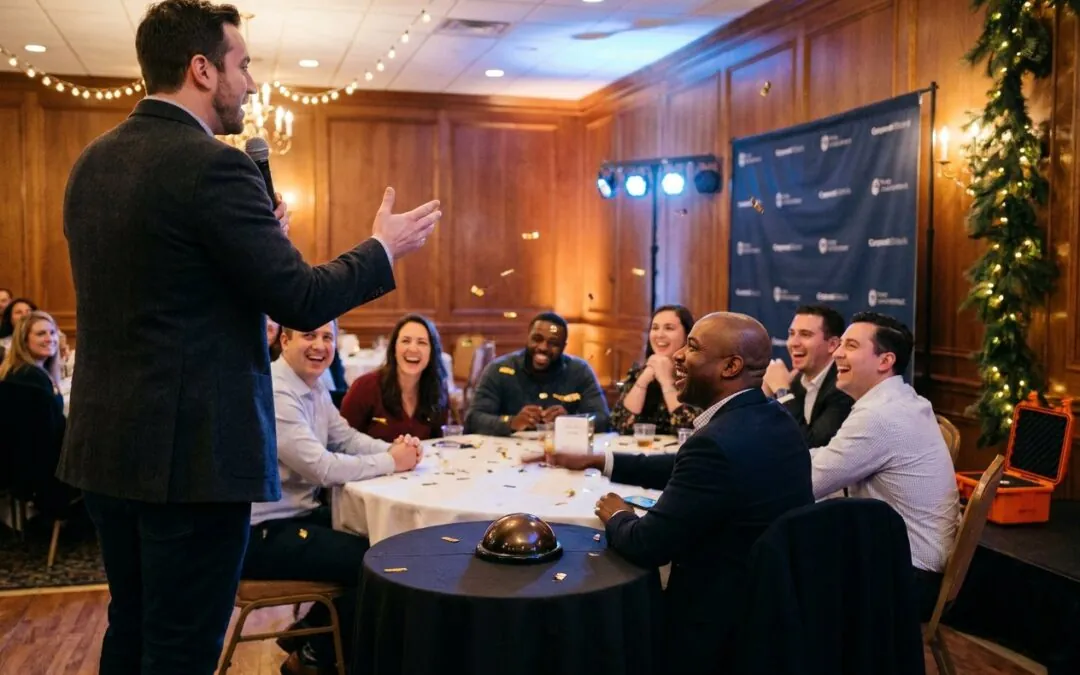
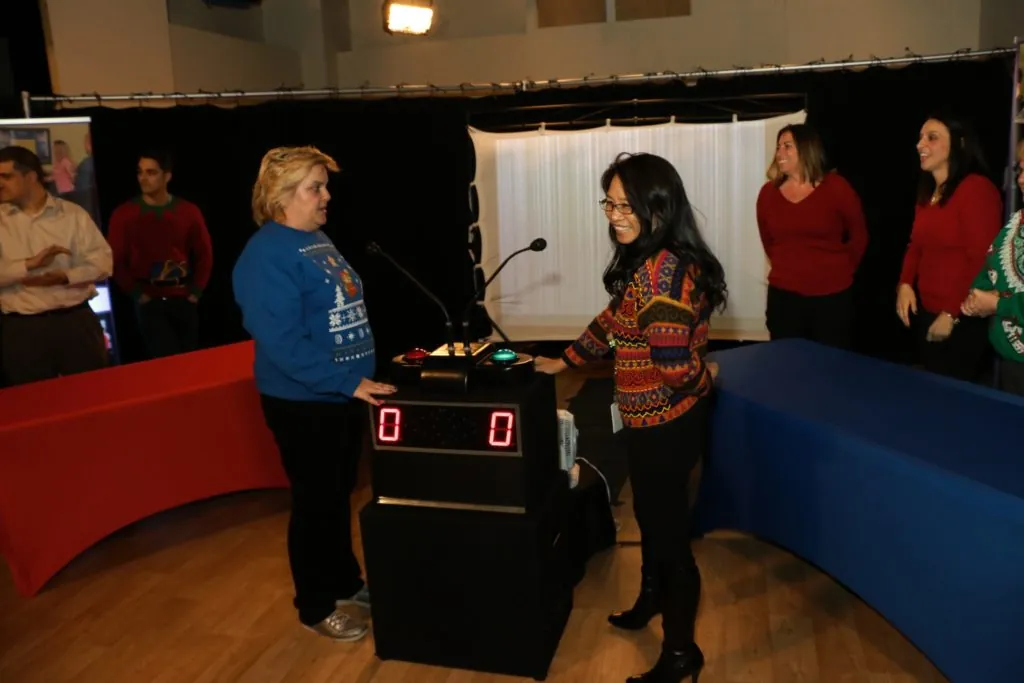
Since 2012, It’s Playtyme Game Shows has produced more than 3,000 live events, getting groups of 20 to 500+ talking, competing, and connecting across New Jersey, New York City, New York State, and Connecticut. We bring a professional host, a game-show set, and the full audio-visual production to your site. On a serious topic like store safety, that format turns policy language into knowledge your team can repeat.
A hosted review session reinforces your mandated training. It never replaces the state-required curriculum. Your staff completes the official course first. Then you bring everyone together and compete on your store’s lockdown steps, exit routes, de-escalation scripts, and button locations.
Corporate training game shows run the same way in New York City as they do in a suburban strip-mall store: one host, one room, every shift answering out loud. Sessions run 60 or 90 minutes, starting at $2,995, and you can size one on the pricing estimator. Planning sits with us, not with you.
Ready to make required training more engaging? Our game rounds turn key lessons into team competition.
Comparing Reinforcement Formats for Retail Safety Training
Each format does a different job. Match the format to the outcome you need.
Format
How It Runs
Group Participation
Best Use
It’s Playtyme Game Shows
Hosted live game show at your site, 60 or 90 minutes
The whole shift competes in teams, out loud
Refreshing policy recall after the mandated course
Self-paced e-learning module
Online slides plus a quiz
Solo
Meeting the interactive training requirement at hire
Manager-led safety meeting
Short briefing at shift change
Low, mostly one-way
Policy updates between training cycles
Consultant tabletop exercise
Scenario walk-through with a facilitator
Moderate, usually leadership only
Pressure-testing the chain of command
Build a Year-Round Review Strategy
Readiness needs three pieces: the legal foundation, a site-specific plan, and a reason to revisit both before the next deadline.
Step 1: Deliver the Mandated Curriculum
Run the Section 27-e training through your HR channels, using the state model training program or your own equivalent. Collect a signed policy acknowledgment from every employee. Walk the team through the hazard evaluation for your specific address, not a corporate template.
Step 2: Schedule a Reinforcement Event
Do not let the topic go quiet until next year’s refresher. Put a mid-cycle review on the calendar the way you would any other production date, because the corporate event planner checklist covers the rostering work that usually stalls it. Then find out what people actually retained. When the host calls a rapid-fire question about button placement, the whole room leans in.
Step 3: Pick Formats That Force Collaboration
Format drives retention as much as content does. Face-2-Face Feud and The Challenge work well for safety reviews. A team has to confer, settle on the right protocol, and answer against a clock. That is the same decision pattern a live incident demands.
Step 4: Put Supervisors on the Spot
Managers and shift leads carry extra weight during an incident. They direct the floor and handle the aftermath. Write leadership scenarios into the review and let supervisors answer in front of the team. Junior staff learn the chain of command by watching it work.
Decide What Your Next Safety Review Has to Prove
Pick the format by the outcome you have to defend, not by whatever is easiest to book.
You need the compliance record. Run the state model training program through HR and file the acknowledgments.
You need one policy change understood. A manager briefing at shift change is enough.
You need proof the protocols stuck. Bring the full shift together and make them answer out loud, in teams, against a clock.
Headcount settles the rest. Reviewing with 20 people is a meeting; reviewing with 300 needs a format built for a full room and a host who can hold it.
Frequently Asked Questions (FAQs)
What is the New York Retail Worker Safety Act?
It is a state law under Labor Law Section 27-e, signed in September 2024. It requires retail employers to adopt a workplace violence prevention policy and train employees on risk factors, emergency procedures, and de-escalation.
Who must provide retail workplace violence prevention training in New York?
Any retail employer with 10 or more employees. Training runs at hire, then annually for employers with 50 or more employees and every two years for employers with fewer than 50.
Does New York require panic buttons in retail stores, and when does the mandate start?
Yes, for the largest employers. From January 1, 2027, retail employers with 500 or more retail employees nationwide must install silent response buttons at their New York locations.
Can a game show replace state-mandated safety training?
No. A hosted game show reinforces the mandated curriculum. It works as a review session that proves what your team retained after the official course.
How does interactive review improve retention?
Answering out loud forces recall instead of recognition. Competing on a team under a clock mirrors the pressure of a real store incident, so the right response comes faster.
How long does a reinforcement session take, and what does it cost?
Shows run 60 or 90 minutes, starting at $2,995. We host on site across New Jersey, New York City, New York State, and Connecticut for groups of 20 to 500+.
Quick answer: Holiday party entertainment in New Jersey works best when it is interactive rather than passive. A fully hosted live game show puts every guest on a team, needs no rehearsal, and scales from groups of 20 to 300 plus. It’s Playtyme Game Shows runs these shows for companies across New Jersey, New York City, and Connecticut, with no deposit to book.
Office managers and HR directors across New Jersey start this search every fall, usually after a December that nobody mentioned again in January. In 14 years of hosting interactive game shows, we have produced more than 3,000 live events since May 2012, and the pattern holds in every room: the parties people remember are the ones they played in.
Prefer to celebrate after the rush? Many teams hold their post-holiday party in January, once the December rush is over.
Corporate parties fall flat when nobody has a reason to interact. Camaraderie needs structure, not hope. Great events are not measured by attendance. They are measured by how many people actually play.
Planning holiday party entertainment in New Jersey? We host game shows for 20 to 300+ guests across the state.
Most office parties lean on passive acts. A planner books a cover band or a stand-up comedian, and the room settles in to watch.
People sit at assigned tables, talk to the same three coworkers they already know, and check their watches. Treat the audience as spectators and you lose the whole point of bringing everyone together. A show nobody participates in will never get a quiet room mingling.
The Disconnected Hybrid Workforce
Putting remote staff and in-office staff in one room creates friction. New hires stand in the buffet line next to 10-year veterans and say nothing.
Adults do not break out of their social circles on their own. A structured opening activity removes that pressure. Put colleagues on a team, hand them a question to answer together, and the room loosens up inside two minutes.
The Multi-Generational Room
One December party can seat a first-year analyst beside a colleague who joined before the company had a website. Entertainment that lands with one group often reads as awkward to the other, which is why so many employee engagement ideas work on paper and die in the room.
A hosted game show sidesteps the taste problem. The formats are already familiar to everyone, so nobody has to learn rules or fake enthusiasm for a reference they do not get. Teams mix ages by design, and the competition handles the rest.
Fourth-Quarter Screen Fatigue
By December your staff has spent the quarter on video calls, dashboards, and year-end reporting. One more slideshow, even a festive one, asks for the same attention they have been spending since September.
Live competition in a real room works differently. People stand up, hit a buzzer, argue with teammates over an answer, and look at each other instead of a screen. That shift is why interactive team building entertainment outperforms a projector at a holiday party.
The Logistics Burden on Planners
Office managers and executive assistants already carry full workloads. An end-of-year celebration lands on top of everything else.
Coordinating separate vendors for sound, staging, hosting, and activities creates a timeline nobody wants to manage. You need one team that arrives ready to run. The planner should eat dinner and enjoy the party with everyone else.
Top Corporate Holiday Party Ideas in New Jersey
Corporate event planners in Bergen, Essex, Morris, Middlesex, and Hudson counties generally choose from two categories.
Background acts: casino tables, magicians, photo booths, a cover band or a DJ. They fill time and dress up the room, and they rarely start a conversation that lasts past the parking lot.
Interactive formats: hosted game shows and structured team competition that put the full room in play. These are the end-of-year company party activities people quote back at each other in January.
Our production team is based in Teaneck and travels to offices across New Jersey, New York City, and Connecticut. The complete show comes to your space.
Other companies rent a banquet hall, a restaurant, or a hotel ballroom. Venues in northern and central New Jersey pair strong catering packages with room to move.
Either way, our team brings everything the show needs: a professional host, a game-show set, audience keypads or buzzers, podiums, prizes, and a sound engineer who makes it all work in your room.
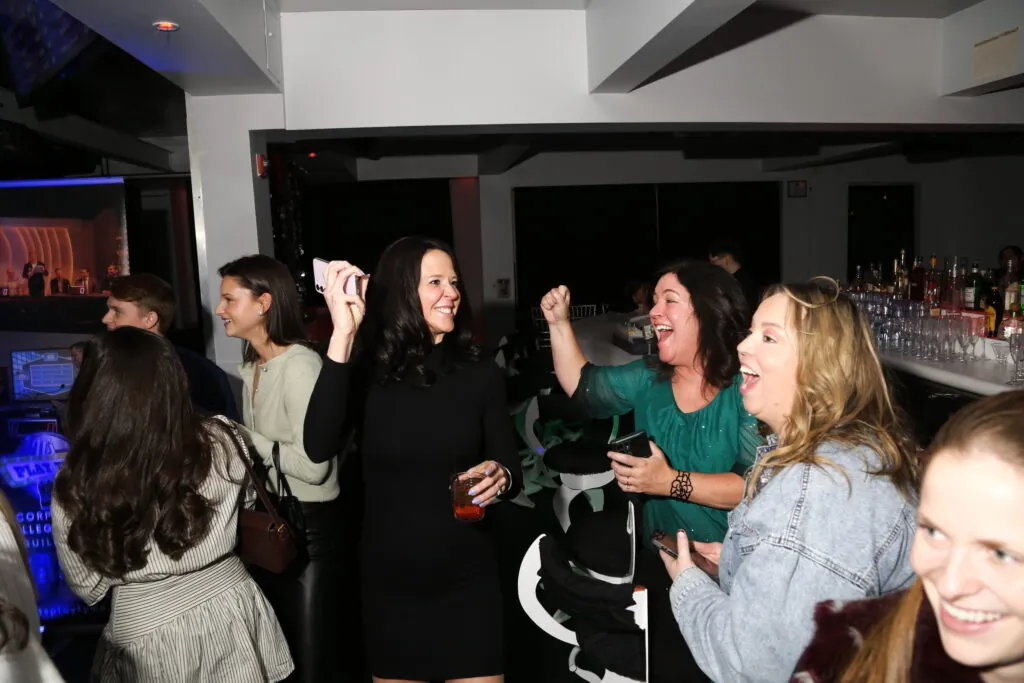
Holiday party guests cheer on a teammate at the buzzer
Timing and Booking Lead Time
End-of-year events reward early planning. Corporate event planners who settle the date, head count, and budget approval by early fall spend the fourth quarter on the enjoyable parts: the invitation, the theme, the prize table.
Tell us your date, your room size, and what you want the night to do for your team, and we return a custom production plan within two business days. Plan in the first half of the year and the whole process stays calm.
Questions to Ask an Entertainment Company
Booking holiday party entertainment your New Jersey office remembers starts with operational questions. Not every provider works in corporate environments. Ask these six before you sign.
Do You Carry Liability Insurance?
Any vendor entering a corporate building or a rented hall needs proper coverage. Venues ask for a certificate of insurance before a crew touches the loading dock. Confirm it on the first phone call.
How Long Does Setup Take?
Your run of show depends on the production timeline. Ask when the crew arrives and how long equipment testing runs. A reliable vendor coordinates directly with venue staff so the room is finished before your first guest arrives.
Who Provides the Sound Equipment?
Never assume a banquet hall has a working microphone. Ask whether the vendor brings its own audio gear and an engineer to run it. We bring both to every show, so the host stays clear in any room.
What Group Sizes Can You Accommodate?
Different activities fit different crowds. Verify the vendor handles your head count. Since our founding in May 2012, we have run shows for groups of 20 to 300+ participants and scale the format so nobody sits on the sidelines.
What Is Included in the Pricing?
Hidden fees wreck event budgets. Ask for a full breakdown of the quote. Our shows run 60 or 90 minutes, starting at $2,995, with a custom quote for groups over 300. The show price covers the host, the set, audio and visual equipment, the sound engineer, and prizes. Setup and breakdown, travel, customization, and gratuity sit outside it, so ask any vendor where those lines land.
Do You Require an Upfront Deposit?
Many vendors demand a large nonrefundable deposit months out. We work the other way. We back every show with a 100% Satisfaction Guarantee and take no deposit. You pay once you are satisfied, which keeps the financial risk off the planner and the budget owner.
Pick the Format Your Team Will Still Talk About in January
Your choice of activity decides what people remember. A dinner with background music feeds the room and little else. If feeding your staff is the whole goal, a passive reception does the job and you can stop here.
If you want your team laughing together and leaving with stronger working relationships, the night needs structure. A professionally hosted game show supplies that framework and pulls in the people who would otherwise stay at their table all evening. The payoff shows up Monday morning in shared inside jokes and colleagues who now have a reason to talk to each other.
Ready to give your group a party they bring up all year? Send us your date, room size, and head count, and we will build the show around them. Visit our holiday party entertainment page to check availability and request a custom quote.
Frequently Asked Questions (FAQs)
What are the best corporate entertainment providers in New Jersey for holiday parties?
The strongest providers run interactive formats instead of passive shows. Look for a company that supplies its own professional host, sound equipment, sound engineer, and structured games. That combination gets your staff participating rather than watching.
What are the most unique corporate holiday party ideas in NJ?
The ideas that stand out are the ones where your people are the show. A hosted game show, a tablet-based team competition like PlayPad Mania, or a Lip Sync Challenge gives a corporate crowd something to do rather than something to sit through. All three work in a cafeteria or a banquet hall.
How much does a corporate game show cost?
Price depends on show length and group size. Our 60-minute and 90-minute shows start at $2,995. Groups over 300 participants get a custom quote built around their logistics.
What group sizes can participate in these events?
We scale each show to the audience in the room. The formats work for a 20-person office team and for a 300+ guest corporate banquet. Everyone gets a shot at the action.
Where do you provide services?
We travel to your venue or your office. Our service areas are New Jersey, New York City, and Connecticut. The team brings the podiums, sound equipment, and host to your location.
Quick answer: A B2B client appreciation event thanks your best accounts with a hosted, interactive experience instead of a shipped gift. The formats that work put clients and staff on mixed teams, run 60 or 90 minutes, and give the budget owner something concrete to report in January.
Two things sink a December client event before the catering is booked: the invitation that never gets an RSVP, and the room where clients and account managers spend the night in separate huddles. A branded fruit basket sidesteps both by asking nothing of anybody. It also never starts a conversation with the person who sent it.
Experiential thanks pays better than a shipped gift.
You want clients to remember you in January. Filling the room is step one. Participation is the actual product, so count how many people played, not how many people showed up.
Planning a client appreciation holiday event? A hosted game show gets clients and your team playing together, anywhere in NJ, NYC and CT.
What Makes a December Client Event Hard to Pull Off
A client gathering in December stacks up several problems at once.
The mixed room. You are putting internal staff and external clients in one space, and most of them barely know each other. Without a structured activity, people stand with their own colleagues, which defeats the point of the night.
The calendar crush. Your clients get a dozen invitations in three weeks. A dinner reservation does not win an RSVP from an executive who already has three other obligations that week.
The reluctant guest. Plenty of senior buyers are tired of open-bar networking and will skip anything that sounds like another mixer. The invitation has to promise something to do, not just somewhere to stand.
The hosting burden. When account managers run the entertainment, they spend the night chasing logistics and starting small talk. They never get to enjoy the party or connect with their accounts.
Passive entertainment. A cover band or a background DJ leaves the room watching. Watchers check their phones and leave early to beat the traffic.
Mixed personalities. The same activity has to work for the client who commands a room and the engineer who would rather not speak into a microphone. Team formats carry quieter guests; open-mic formats expose them.
The return question. Whoever signed the approval has to tell leadership what the spend bought. “Everyone had a nice dinner” does not survive a budget review in February.
How to Host Several Clients at Once
Trade the physical gift for a shared experience. Hosting a group of clients together takes intentional planning around two things: the venue and the activity.
You are building a space for conversation. Whether you book a waterfront business events venue in Red Bank, NJ or clear out your own corporate cafeteria, what happens inside the room matters far more than the address.
Your account managers need to talk with partners without shouting over music. When you are collecting interactive corporate holiday event ideas, put group participation first and work backward to the room.
Set the room up for movement, laughter, and real interaction between people who normally meet only on a video call. Experiential B2B marketing comes down to this: the thank-you is something your client does, not something they unwrap.
Timing Your Gathering: Early December, Lunch, or Open House
The date drives your turnout. Mid-December evenings compete with family obligations and every other corporate party on the calendar. Move your event up to late November or the first week of December, before the fatigue sets in.
Look at an extended lunch or a late-afternoon open house. Those slots respect your clients’ evenings and still feel festive. A 90-minute afternoon block asks far less of a busy executive than a three-hour evening gala.
Open-house formats work especially well for large groups and for interactive holiday networking events where guests arrive at different times. Busy partners drop in, play a round, and get back to their day without feeling trapped. Run several short rounds and the client with only 45 minutes still competes, feels the energy of the room, and leaves with a story.
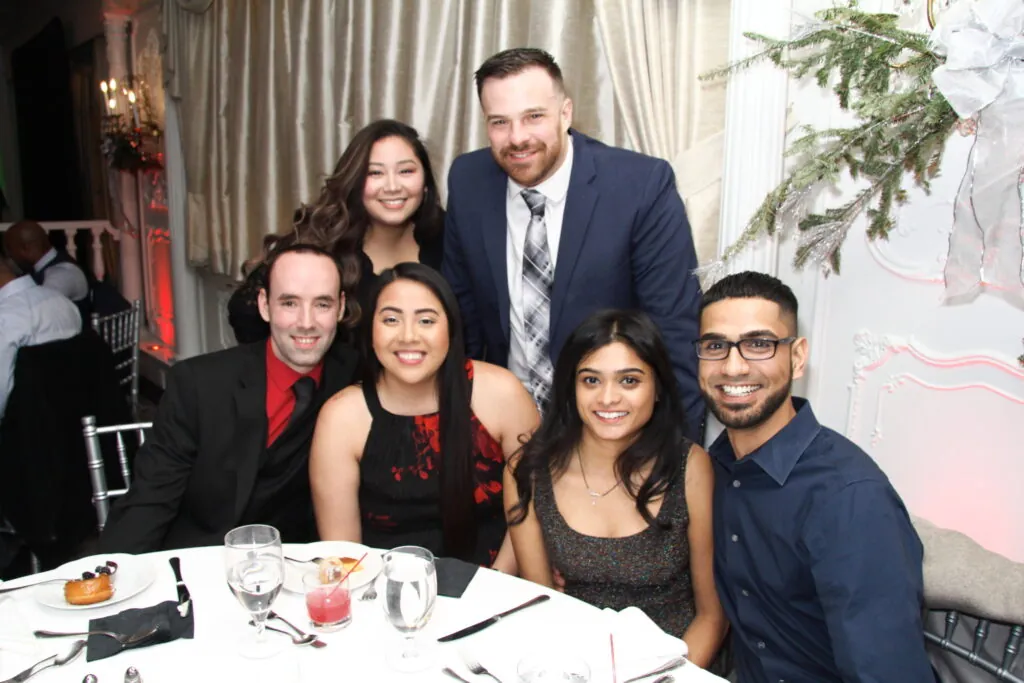
Mixing clients and staff at the same table starts conversations
Entertainment That Gets Clients and Staff Talking
How you structure the interaction is the biggest decision on your run of show. A mixed room needs one shared focus before anybody relaxes.
At It’s Playtyme Game Shows, live game shows are the vehicle for group engagement. We have been turning awkward corporate mixers into rooms where everybody plays since May 2012, going on 14 years.
Put clients and internal staff on the same team and the small-talk pressure disappears. They collaborate, laugh, and compete together. We bring the show to your venue or office across New Jersey, New York City, New York State, and Connecticut, so immersive corporate entertainment in New York City and a holiday lunch in suburban New Jersey run the same way.
When a senior executive and a brand-new client race the clock together, the org chart disappears. The game show is the equalizer, and our formats give every personality a way to shine: Face-2-Face Feud, The Challenge, Word Play, 60 Seconds of Fame, Name That Hit Song, PlayPad Mania, and fully custom game shows.
Our professional hosts run the entire room. That takes the pressure off your marketing leads and lets them play alongside their clients instead of working the party. If the same group also needs corporate team-building in the first quarter, the mixed-team structure carries straight over.
Want a holiday event clients remember? We build custom rounds around your brand and guests.
Here is how the common December options stack up on the measure that matters: how many of your guests actually take part.
Option
Who runs the room
Guest participation
Mixes clients with your team
Best fit
It’s Playtyme Game Shows
Professional host, start to finish
Everyone plays on mixed teams
Yes, teams are mixed on purpose
Groups of 20 to 300+ who need to connect fast
Gift baskets and branded swag
Nobody
None
No
A small thank-you after a deal closes
Cocktail hour or open mixer
Your account managers
Self-directed small talk
Rarely, guests cluster with colleagues
A quick, low-prep hello
Seated dinner
Your account managers
Table-level conversation only
Limited to the seating chart
Groups under 20
Band or DJ
Performer on stage
Watching and listening
No
Background energy during a reception
Casino or trivia night rental
Dealers or a quizmaster
Partial, the strongest players dominate
Some
Guests who already know each other well
Interactive entertainment gives clients something to talk about
Managing Budget and Guest Count
Budget owners need clear numbers before they walk into an approval meeting. Transparent pricing makes the ask simple for the office managers and executive assistants who carry the risk when they sign a vendor.
We serve groups from 20 to 300+ guests. Our holiday party entertainment page covers formats and starting prices, and our guide to corporate event entertainment covers client events year-round. Our fully hosted shows run 60 or 90 minutes and start at $2,995, with a custom quote for crowds above 300. A 60-minute show fits a midday lunch, and 90 minutes gives you room for multiple formats and deeper team play. Full details sit on our pricing page.
We back every event with a 100% Satisfaction Guarantee and take no deposit.
Next to the cost of a premium venue and a full bar, a fully hosted interactive show puts the money straight into participation.
Following Up and Showing the Return
The work is not finished when the last guest leaves. The next two days are your best window to reinforce what you just built.
Send a personal note about a specific moment from the show. If a client ran the table in PlayPad Mania or stole the win in Name That Hit Song, say so by name. Hired a photographer? Include a candid shot of their team competing. Visual proof turns a form thank-you into a message people answer.
The return on a client retention event is far easier to defend when you decide what to count before the invitations go out. Four numbers travel well to a leadership review: how many invited accounts attended, how many guests actually played rather than watched, how many replied to the follow-up, and how many renewal or expansion conversations opened in the first quarter. B2B relationship building activities earn their budget when a named account moves, and a shared memory gives your account managers a specific reason to call in January.
Decide What Your Guests Will Be Doing, Then Send the Invite
Pick the format by what it asks of your guests. Count the people who will be doing something, check the time slot against your clients’ evenings, and hand the room to a professional host so your own team can be guests too.
If the answer to “what will people be doing?” is “eating and listening,” choose a different format. If the answer is “competing on a team with a client they have only ever met on a video call,” you have the right one.
Frequently Asked Questions (FAQs)
What are the best alternatives to corporate holiday gift baskets?
A hosted experience your clients take part in. Live game shows, interactive tastings and group challenges all beat a shipped package, because they create a shared memory with your team in the room. The strongest alternatives to corporate gifting put clients and staff on the same side.
How do you engage clients at a corporate holiday party?
Give the room one shared focus. Mixing clients and staff onto teams for a live game show creates instant camaraderie, removes the awkward silences, and takes the small-talk duty off your account managers.
How do you measure the ROI of a client appreciation event?
Decide the measures before you send invitations. Track attendance by named account, the share of guests who actively played, follow-up reply rates, and renewal or expansion conversations opened in the following quarter. Those four numbers give a budget owner something defensible to show leadership.
When should we host our December client gathering?
Late November or the first week of December draws the highest attendance. Extended afternoon lunches and open-house formats perform well because they stay clear of your clients’ evening commitments.
Does the entertainment come to our chosen venue?
Yes. Our professional hosts bring the full game-show experience to your venue or corporate office and handle setup and logistics. We serve New Jersey, New York City, New York State, and Connecticut.
How much does large-group interactive entertainment cost?
Cost depends on your guest count and program length. Our fully hosted shows run 60 or 90 minutes and start at $2,995 for groups of 20 to 300+, with custom quotes for larger crowds.
Quick answer: Companies are moving the holiday party to January because December is crowded with family plans, travel and end-of-quarter deadlines. A January date clears those conflicts, buys off-peak venue and catering rates, and reframes the night as a first-quarter kickoff. Attendance and participation both climb.
Fitting an office celebration into December is a four-week fight. Family obligations, travel, and end-of-quarter deadlines all land in the same window. Venue prices climb, caterers fill their calendars, and RSVPs slip as personal plans win.
Moving the party to January fixes the calendar problem and changes the point of the event. You stop competing with private family gatherings. You get a rested room that wants to reconnect.
A January company party removes the December conflict, opens up off-peak venue options, and turns the celebration into a Q1 kickoff party. People come back from the break, show up in bigger numbers, and leave aligned on the year ahead.
Moving your holiday party to January? Book a hosted game show for 20 to 300+ guests, anywhere in NJ, NYC and CT.
The December Squeeze: Why Year-End Parties Underperform
Office managers, HR directors and executive assistants run into the same six roadblocks every fall.
Premium holiday pricing: venues and caterers charge their highest rates for dates between Thanksgiving and New Year’s. That money comes straight out of the food and the entertainment.
Overlapping time-off requests: December PTO requests stack up across departments, and every approved week knocks another name off the guest list before the date is even locked.
The attendance problem: people want to celebrate with their coworkers. Then a family dinner, a school concert, or a flight out of Newark wins the date.
Fourth-quarter burnout: sales is closing deals and finance is closing books. The room shows up drained, and drained rooms do not mingle.
A spent budget: by mid-December the annual budget is committed, so the party competes with year-end invoices. A January event draws on a fresh first-quarter budget instead.
Vendor availability: December dates at the popular venues are committed by early fall. If headcount or priorities shift in November, organizers are stuck.
Is It Acceptable to Hold the Holiday Party in January?
Yes. More companies now treat January as the better date, not the backup date. A post-holiday corporate event asks nobody to give up personal time, and it does not compete with anyone’s family plans. The party becomes the bright spot in the quietest month on the calendar.
Measure the event by participation, not by headcount on a sign-in sheet. If half the staff skips the December date or leaves after one drink, the budget bought very little. A January date puts rested people in the room with the bandwidth to talk, compete, and laugh.
What a January Company Party Delivers
Calmer Calendars
Once December clears, schedules open up. Your team comes back from the break ready to socialize, and RSVP rates reflect that. A full room is the starting requirement for real connection, and January gets you the numbers.
Post-Peak Venue Pricing
January is off-peak for most restaurants, hotels, and banquet halls in the region. Calendars open and negotiating room returns. Put what you save on holiday surcharges into better catering and stronger holiday party entertainment.
A Fresh-Start Theme
A January date reframes the whole gathering. Instead of recapping a year everyone just lived through, you launch the next one. Tie the night to first-quarter goals, introduce the new initiatives, and send people out with momentum.
A January party gets your team's full attention
Comparing Entertainment Formats for a January Kickoff
The format you book decides whether people participate or just watch. Here is how the common options compare for a group of 20 to 300+.
Format
Who participates
Group size
Planner workload
Financial terms
It’s PlayTyme Game Shows
Everyone plays, team against team
20 to 300+
None, a professional host runs the room
No deposit, 100% Satisfaction Guarantee
DJ or band
Guests who want to dance
Any
Medium, you still drive the agenda
Deposit terms vary by vendor
Comedian or magician
Audience watches
Any
Low
Deposit terms vary by vendor
Food, bar, and open mingling
People who already know each other
Any
High, you work the room all night
Venue and catering minimums
DIY trivia or opening activities
Volunteers only
Best under 50
High, you host, score and manage the energy
Low cost, high time investment
Want a January party people look forward to? We bring the host, the games and the prizes.
Q1 Corporate Kickoff Event Ideas That Drive Engagement
The goal is a room of 20 to 300+ people talking to each other. Watching a performer does not build culture. You want a format where everyone plays and new hires end up on a team with veterans.
A live, hosted game show gives the night structure. Professional hosts run formats like Face 2 Face Feud, The Challenge, and Word Play. Teams compete, answer, and laugh together instead of standing through another cocktail hour. The planner gets to be a guest.
Since May 2012, across more than 3,000 live events, It’s PlayTyme Game Shows has brought that kind of participation to corporate groups in New Jersey, New York City, New York State, and Connecticut. The show travels to your office or your venue, which makes it a practical fit for winter team building activities and for the sales kickoff where you would otherwise spend the night keeping 200 people interested.
Pairing Year-End Awards With Interactive Entertainment
Plenty of companies use the winter gathering as an employee appreciation event and recognize top performers. Read names off a list at a podium and the room checks out by the third one. Mix recognition into a fast-moving format and the applause stays real.
Hand out departmental awards between rounds of 60 Seconds of Fame or Name That Hit Song. The pacing keeps the program moving, a stiff ceremony turns into a celebration, and the game show carries the energy from one segment to the next.
Year-end wins celebrated after the holiday rush
How to Announce the Date Shift to Your Staff
Communication matters when you change a long-standing tradition. Frame the move around your people. Leadership respects their December and wants the party on a date everyone can actually enjoy.
Send the save-the-date early in the fourth quarter. Say plainly that the budget is going into a bigger January event. Tell them what to expect: interactive office holiday party ideas built around real games, good food, and no claim on their personal time. Set that expectation early and people arrive looking forward to it.
What Should Drive Your January Date Decision
Four factors settle it:
Participation target: if you need the whole room involved, book a fully hosted format instead of a performance people sit and watch.
Group size: confirm your headcount first. A format that works for 30 people and one that works for 300 are not the same show.
Budget allocation: off-peak January rates free up money. Decide now whether it goes to food, entertainment, or both.
Price certainty: our fully hosted 60-minute and 90-minute shows run starting at $2,995, and the quote comes back as a custom production plan within two business days.
Frequently Asked Questions (FAQs)
How do you plan a corporate holiday party in January?
Lock your venue for a mid-to-late January date while rates are off-peak. Send invitations in November so the new date lands before people make other plans. Then book entertainment built on participation rather than performance.
What should you call a January company holiday party?
Name it for the start of the year, not the end of the last one. Winter Kickoff, Q1 Celebration, New Year Game Night and Annual Team Kickoff all read as intentional. Keep the word “holiday” out of the title and the date stops looking late.
How do you rebrand a holiday party for January?
Give the reason in the announcement, tie the agenda to first-quarter goals, and change the format so the night feels different from a December dinner. A hosted game show, team awards and a new name carry the repositioning on their own.
Who offers interactive holiday party entertainment in New Jersey?
It’s PlayTyme Game Shows runs hosted experiences built around group participation, and the show travels to your office, hotel or banquet hall anywhere in New Jersey, New York City, New York State or Connecticut. Formats like PlayPad Mania and Face 2 Face Feud get the entire room playing.
Which corporate entertainers work best for large New Jersey groups?
The ones who focus on participation instead of a show you sit and watch. It’s PlayTyme Game Shows specializes in getting corporate groups of 20 to 300+ guests to play, compete, and interact with each other.
Quick answer: The key 2027 tri-state HR dates are the January 1 wage increases in New Jersey and Connecticut, W-2 and 1099-NEC on Monday, February 1, ACA e-filing on March 31, and Form 941 on April 30, August 2 and November 1. Save in-person events for the kickoff, Employee Appreciation Day (March 5), mid-year and December.
HR teams in the tri-state area run two calendars at once. One tracks filing deadlines. The other keeps people connected to the work and to each other.
This calendar puts the 2027 filing deadlines, state wage changes, training reminders and workplace observances for New Jersey, New York and Connecticut in one place, month by month, with a note on which dates deserve a real event.
This guide is general information, not legal or tax advice. Confirm every date and rule with your legal counsel or tax adviser before you act on it.
Planning your 2027 awareness events? We can build hosted game shows around your HR and awareness topics, anywhere in NJ, NYC and CT.
Why Compliance and Morale Compete for the Same Hours
Running payroll across New Jersey, New York and Connecticut means three sets of wage rules, three training mandates and one federal filing schedule on top. Minimum wages move on different formulas. Training clocks start on different triggers.
Then the federal dates shift. When a deadline lands on a Saturday or Sunday, it rolls to the next business day, and 2027 moves three of the big ones. Rebuilding that calendar by hand eats administrative hours nobody budgeted.
Morale takes the hit. Team events get scheduled last, planned fast and run flat. A room of 150 people watching a slideshow is attendance, not participation. Large groups connect when everyone in the room has something to do.
The tri-state footprint makes that harder. Staff split between a New Jersey office, a Manhattan floor and home desks in Fairfield County rarely sit in the same room, so the few dates when they do sit together have to earn the trip. Those dates also compete with mandatory training, which usually reaches people as one more recorded module at the end of a day already spent on screens.
State wage updates: New Jersey’s minimum wage rises to $16.48 per hour for most employees on January 1, 2027 (NJ DOL). Connecticut’s becomes $17.48 per hour the same day (State of Connecticut). New York is not scheduled for an inflation increase on January 1, 2027 under current guidance, so it stays at $17.00 in New York City, Long Island and Westchester and $16.00 elsewhere, though that could still change (NY DOL). Confirm the figures before you load payroll.
New York leave rules: New York private-sector employees get 20 hours of paid prenatal leave per 52-week period. The requirement took effect January 1, 2025, so your accrual and reporting setup should already carry it.
Large-group corporate entertainment (NJ and NYC): Open the year with people on their feet with a New Year kickoff. A fully hosted corporate team-building session fits groups of 20 to 300+. Shows run 60 or 90 minutes, starting at $2,995.
February
Federal tax filings: Form W-2 and Form 1099-NEC are due January 31. January 31, 2027 is a Sunday, so the deadline moves to Monday, February 1, 2027 under the IRS weekend and holiday rule. Form 941 for the fourth quarter of 2026 moves to February 1, 2027 as well (IRS employment tax due dates).
Healthcare reporting: The paper deadline for Forms 1094-C and 1095-C is February 28. February 28, 2027 is a Sunday, so paper filers get until Monday, March 1, 2027. Paper filing only applies below the IRS 10-return threshold. Everyone else files electronically.
Cultural awareness: February is Black History Month. Book a speaker, fund a community partner and name the Black professionals moving your industry forward.
March
Electronic filing deadline: Forms 1094-C and 1095-C are due electronically by March 31, per the IRS ACA reporting guidance. March 31, 2027 is a Wednesday, so this one does not shift.
Employee appreciation: Employee Appreciation Day is a private observance, not a federal one, and it lands on the first Friday in March. In 2027 that is Friday, March 5. Give the whole staff one hour where nobody checks a laptop; our Employee Appreciation Day ideas have more.
Leadership recognition: March is Women’s History Month. Put women leaders in front of the company and open mentorship pairings while attention is on the topic.
Want awareness events employees remember? Our game rounds turn key messages into team competition.
Quarterly tax submissions: Form 941 for the first quarter is due Friday, April 30, 2027. Reconcile the January wage changes for all three states before your provider files.
Workplace safety awareness: April is Sexual Assault Awareness Month (NSVRC). Re-send your reporting channels and name the people who handle complaints.
State training mandates: New York State requires annual interactive sexual harassment prevention training for every employee. New York City requires it annually for employers with 15 or more employees. Connecticut requires two hours of training for all employees at employers with three or more workers, within six months of hire.
May
Wellness initiatives: May is Mental Health Awareness Month. Push your Employee Assistance Program details out again and brief managers on what to say when someone raises a problem.
Payroll audit: Pull a sample of pay stubs and confirm the January rates posted correctly in each state. Catching a wage error in May costs far less than catching it at year end.
Spring employee experience: Hybrid and fully remote staff spread across the three states can go an entire quarter without meeting face to face. Put one in-person date on the calendar before summer schedules scatter everyone, and pick a format where people compete in teams instead of sitting in rows.
June
Physical safety protocols: June is National Safety Month, run by the National Safety Council. Walk the floor for hazards and offer ergonomic reviews to remote staff too.
Time-off management: Summer coverage breaks down fast. Restate your time-off and overtime rules for non-exempt staff in New Jersey, New York and Connecticut.
Team retreats: A mid-year retreat resets focus. One caution: no event, game or activity makes a company compliant or satisfies a legal requirement. Retreats improve how people work together, nothing more.
Third Quarter Planning
July
Second quarter filings: Form 941 for the second quarter is due July 31. July 31, 2027 is a Saturday, so the IRS deadline moves to Monday, August 2, 2027.
Vacation tracking: Watch PTO balances against peak summer weeks so no office drops below minimum coverage.
Mid-year check-ins: Run short informal reviews now. Managers still have two quarters to change course.
August
Compliance audits: Audit I-9 files and exempt versus non-exempt classifications before fall. Fix the gaps while the calendar is quiet.
Training verification: Check every Connecticut hire from the past six months against the two-hour training requirement. The clock runs from the start date, not the calendar year.
Summer camaraderie: Schedule a late-summer lunch with no agenda. Open enrollment season takes the next three months.
September
Cultural celebrations: Hispanic Heritage Month runs September 15 through October 15 (HispanicHeritageMonth.gov). Plan activities that put Hispanic and Latino employees and community partners at the center, not the margin.
Benefit planning: Draft open enrollment communications now. Early, plain-language notice cuts the volume of questions in November.
Budget finalization: Lock your 2028 budget. Fund compliance training and the engagement calendar in the same pass so neither gets cut in January.
Fourth Quarter Planning
October
Third quarter submissions: Form 941 for the third quarter is due October 31. October 31, 2027 is a Sunday, so the deadline moves to Monday, November 1, 2027.
Awareness initiatives: October is National Disability Employment Awareness Month (U.S. Department of Labor) and Cybersecurity Awareness Month (CISA). Hispanic Heritage Month closes October 15.
Security engagement: The required IT refresher is the training people click through fastest, because it lands as another video at the end of a screen-heavy day. Pair it with interactive cybersecurity awareness month activities. People remember a phishing question they answered out loud in front of their team.
November
Veteran recognition: Veterans Day falls on Thursday, November 11, 2027. Recognize the veterans on staff by name, with their permission, and point to the benefits they qualify for.
Year-end payroll prep: Finalize bonus structures and confirm your payroll system carries the January wage and withholding changes.
Event logistics: Lock headcounts, venue details and catering for year-end gatherings.
December
Holiday celebrations: December is peak party season, and a catered dinner leaves half the room talking to the same four people they sit near all year. A live hosted game show beats most office holiday party ideas for one reason: it puts every table in the game.
Schedule distribution: Publish the 2028 company holiday schedule so people can plan around it.
Address verification: Have every employee confirm their home address in the payroll system. Address errors are a common cause of returned W-2s in January.
Which 2027 Dates Get a Real Event, and Which Just Get an Email
Most of this calendar is an email. The January wage notice, the open enrollment packet, the 2028 holiday schedule: send them, log them, move on. Three or four dates are different. The kickoff, the mid-year reset, Employee Appreciation Day on March 5 and the December party are the only times the whole company is in one place, and once a date is spent it does not come back.
So judge those four by two questions. How many people will be in the room, and does the format give every one of them something to do rather than something to watch? If 150 people are going to sit in rows and face a screen, pick a different format while the date is still open. Filing deadlines set the administrative rhythm of 2027. They do not build a culture. Great events are not measured by how many people show up, but by how many people play.
When are federal tax forms due if the deadline falls on a weekend?
The IRS moves the due date to the next business day. In 2027 that shifts three filings: W-2, 1099-NEC and Form 941 for the fourth quarter of 2026 all move to Monday, February 1, Form 941 for the second quarter moves to Monday, August 2, and Form 941 for the third quarter moves to Monday, November 1.
What are the 2027 minimum wage rates in New Jersey, New York and Connecticut?
From January 1, 2027, New Jersey’s minimum wage is $16.48 per hour for most employees and Connecticut’s is $17.48. New York is not scheduled for an inflation increase on January 1, 2027 under current guidance, so it stays at $17.00 in New York City, Long Island and Westchester and $16.00 elsewhere, though that could change. Confirm with each state labor department before you update payroll.
What sexual harassment training does the tri-state area require?
New York State requires annual interactive training for all employees. New York City requires it annually for employers with 15 or more employees. Connecticut requires two hours of training for all employees at employers with three or more workers, completed within six months of hire.
How does paid prenatal leave work for New York employees?
New York private-sector employees receive up to 20 hours of paid prenatal leave per 52-week period, effective January 1, 2025. The hours cover pregnancy-related medical appointments and are separate from standard paid sick leave.
Can a team-building event satisfy official compliance training mandates?
No. No event, game or activity makes a company compliant or satisfies a legal requirement. Interactive sessions raise awareness and retention of the material, but the mandated training still has to meet the state and federal standards on its own.
How far in advance should NJ and NY employers book large-group holiday entertainment?
Put the date in writing when you lock your Q4 budget, which this calendar places in September, then confirm headcount, venue and catering in November alongside the rest of your year-end logistics. Shows run 60 or 90 minutes for groups of 20 to 300+, starting at $2,995.